.png)
When selecting the appropriate packaging to use on a heavy weight product, it is not only the carrying capacity that is of concern but also the safety, durability, cost efficiency, and brand security. In case of products such as cement, fertilizers, chemicals, grains, minerals, or industrial raw materials, failure to package correctly may lead to the loss of money, safety risk, and damaged image.
This is where pp woven bags have become the industry’s most trusted solution. Being strong and flexible, and able to have a long-lasting performance, the bags are commonly used in the industries, which have to work with heavy loads on a daily basis.
In this guide, we will walk you through how to select the right pp woven bags for heavy weight product packaging, covering material strength, GSM, lamination, stitching, and manufacturer selection so you make a confident and informed decision.
What Are PP Woven Bags and Why Are They Ideal for Heavy Weight Products?
PP woven bags, also known as polypropylene woven bags, are made by weaving polypropylene tapes into a strong, fabric-like structure. This woven structure makes the bags have unusual tensile strength and tear resistance.
Unlike paper or thin plastic packaging, woven polypropylene bags distribute weight evenly, making them ideal for carrying heavy and bulky materials. Their elasticity enables them to take in the impact during transportation but still retain structural integrity.
Industries that rely on pp bags for heavy loads include cement manufacturing, agriculture, food grains, animal feed, chemicals, and construction materials.
How Much Weight Can PP Woven Bags Carry Safely?
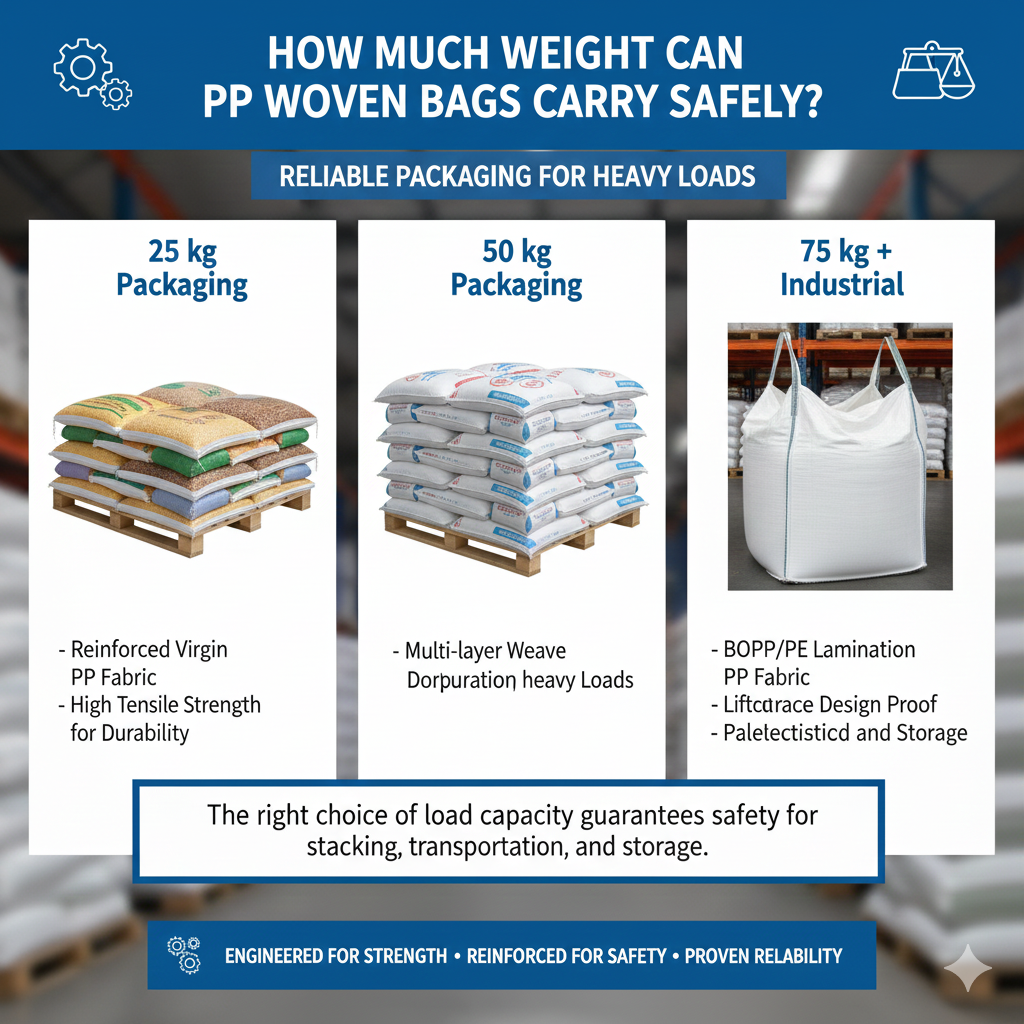
One of the most common questions buyers ask is whether pp woven bags can handle heavy loads reliably.
The answer depends on design specifications, but standard pp woven sacks are commonly used for:
- 25 kg packaging
- 50 kg packaging
- 75 kg and above for industrial applications
Heavy duty woven polypropylene bags are engineered with higher GSM fabric, stronger stitching, and reinforced seams. The right choice of load capacity guarantees safety of the stacking, transportation, and storage.
Bags of low quality or overloading can decrease life expectancy and expose them to breakages.
How Does GSM Affect the Strength of PP Woven Bags?
GSM (grams per square meter) is a major consideration when selecting a packaging of a heavy weight product.
The increased GSM indicates increased thickness of the fabric and increased loading capacity. An average heavy usage would normally be recommended:
- Medium controlled indoor storage GSM.
- Large GSM of coarse handling and long transportation.
Nevertheless, GSM is more expensive when it is higher. The trick is to find that balance between the longevity and cost by aligning GSM with the use conditions in the real world.
What Fabric Strength Makes PP Woven Bags Heavy-Duty?
Not all woven polypropylene bags are created equal. Fabric strength depends on:
- Tape width and denier
- Weaving density
- Tensile and burst strength
Fabric that is tightly woven is more resistant to tearing and puncturing. For industrial usage, pp woven fabric bags with high tensile strength ensure that the bag holds its shape even under pressure.
A reliable woven bags manufacturer will always test fabric strength before bulk production.
Should You Choose Laminated or Non-Laminated PP Woven Bags?
This is a very important choice in packaging heavy products.
Laminated pp woven bags have an added polypropylene layer that provides:
- Moisture resistance
- Protection against contamination
- Better print durability
In products that are stored outside or exposed to moisture, lamination is a significant product in the lengthening of bag life. On the other hand, non-laminated bags are applicable in dry materials that are kept in controlled conditions.
In the case of heavy products, lamination can help to add functional and aesthetic values.
Are Printed PP Woven Bags Suitable for Heavy Weight Products?
Branding is also assumed by many buyers to be a weakness, yet this is untrue.
Printed pp woven bags are manufactured using high-quality inks and advanced printing techniques that do not weaken the fabric. Indeed, printing enhances brand recognition, and also ensures durability.
Printed bags provide the advantages of packaging with professional presentation to businesses that are involved in exporting or selling in competitive markets, and without compromising performance.
Why Stitching Quality Matters for Heavy Weight Packaging

Even the strongest fabric can fail if stitching is poor.
For heavy duty woven polypropylene bags, stitching should include:
- Double stitching for added strength
- Reinforced bottom seams
- Consistent stitch density
Advanced options like block bottom or valve stitching improve weight distribution and stacking stability. This reduces stress on seams and prevents sudden tearing during handling.
How Does Bag Design Improve Handling of Heavy Products?
Design of bags has an important role in performance.
Key design features include:
- Correct bag dimensions for weight balance
- Gussets for improved volume and stacking
- Pallet efficiency- flat or block bottoms.
Well-designed pp woven sacks reduce handling effort and minimize stress points, making transportation safer and more efficient.
Is UV Protection Necessary for Heavy Weight PP Woven Bags?
In case heavy goods are stored outdoors or transported through long distances, they need to be covered by UV protection.
UV-stabilized pp woven bags resist degradation caused by sunlight exposure. Bags that are not treated with UV can get brittle and they can unexpectedly break.
The UV stabilization is particularly necessary in agricultural products, cement and construction material.
How to Choose the Right PP Woven Bags Manufacturer?
Selecting the right pp woven bags manufacturer is just as important as choosing the bag specifications.
A reliable manufacturer should offer:
- Consistent quality control
- Customization options
- Load testing and fabric certification
- Industry experience
Working with an experienced woven bags manufacturer ensures that your packaging meets both safety and compliance standards.
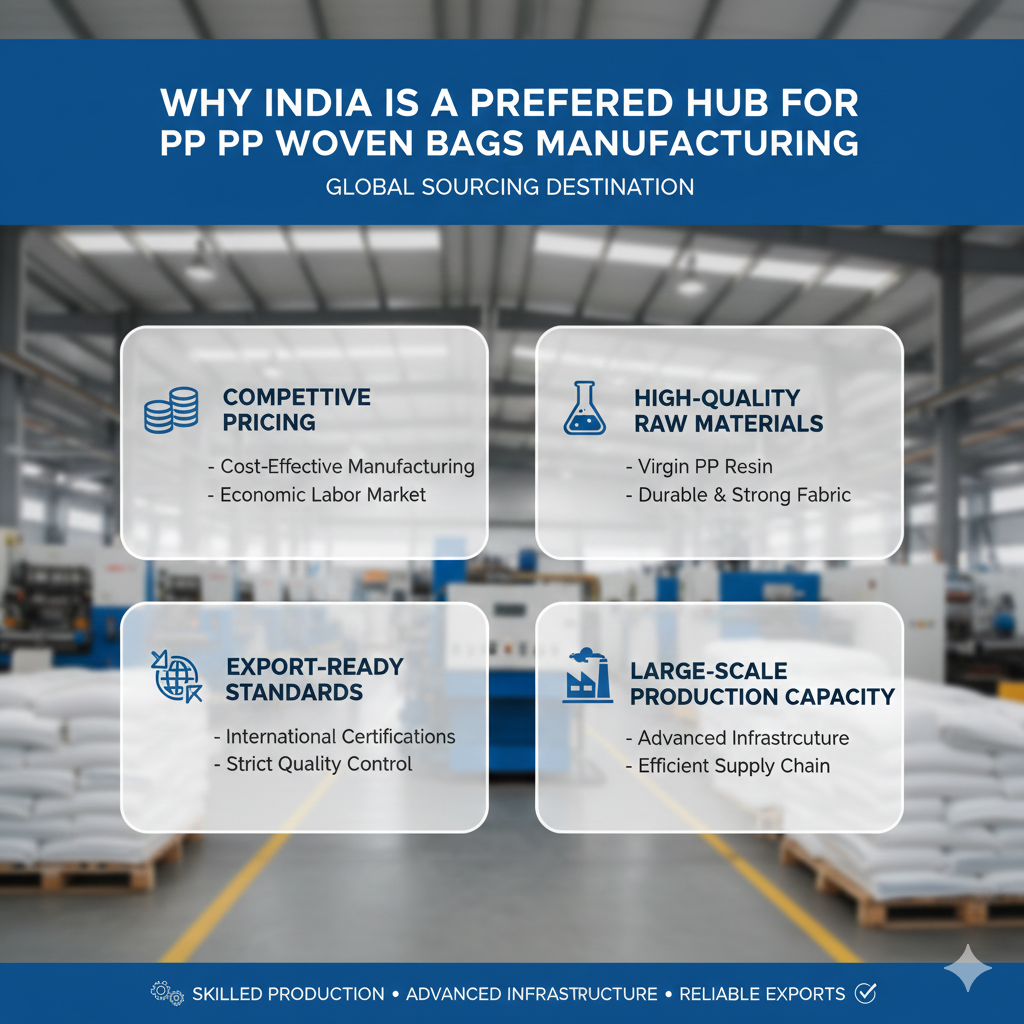
Why India Is a Preferred Hub for PP Woven Bags Manufacturing
India has become a global sourcing destination for** polypropylene woven bags** due to advanced manufacturing infrastructure and skilled production capabilities.
Indian manufacturers offer:
- Competitive pricing
- High-quality raw materials
- Export-ready standards
- Large-scale production capacity
This makes India an ideal choice for businesses looking for reliable heavy-duty packaging solutions.
Common Mistakes to Avoid When Selecting PP Woven Bags for Heavy Weight Products
Many businesses make avoidable mistakes, such as:
- Choosing low GSM to reduce cost
- Ignoring stitching quality
- Not considering storage conditions
- Overlooking UV or lamination needs
Avoiding these errors ensures longer bag life and reduced product loss.
How PP Woven Bags Reduce Overall Packaging Costs
Although heavy-duty pp bags may have a slightly higher upfront cost, they deliver long-term savings through:
- Reduced product damage
- Reusability
- Lower replacement frequency
Compared to alternative packaging materials, woven polypropylene bags provide superior cost efficiency over time.
Final Thoughts: Selecting the Right PP Woven Bags for Heavy Loads
Selecting the right pp woven bags for a heavy weight product requires careful consideration of GSM, fabric strength, bag type, lamination, stitching, and environmental conditions. The appropriate packaging is also the one that keeps your product safe and also saves supply chain efficiency.
Partnering with a trusted pp woven bags manufacturer ensures you receive durable, tested, and application-specific solutions that meet industry demands. Through informed decision making, businesses are able to reduce the risk, enhance safety and gain long-term packaging reliability.
Frequently Asked Questions (FAQs)
Are PP woven bags suitable for 50 kg and above loads?
Yes, heavy duty woven polypropylene bags are designed to handle 50 kg and higher loads when manufactured with proper GSM and stitching.
Which GSM should be used to package heavy weight products?
Normally 90-120 GSM is prescribed, based on the product and conditions of handling.
Do laminated PP woven bags improve strength?
Lamination can enhance moisture resistance and surface endurance, which indirectly leads to load safety.
Can printed PP woven bags be used for heavy products?
Yes, printed pp woven bags can handle heavy loads when fabric strength and stitching are properly designed.