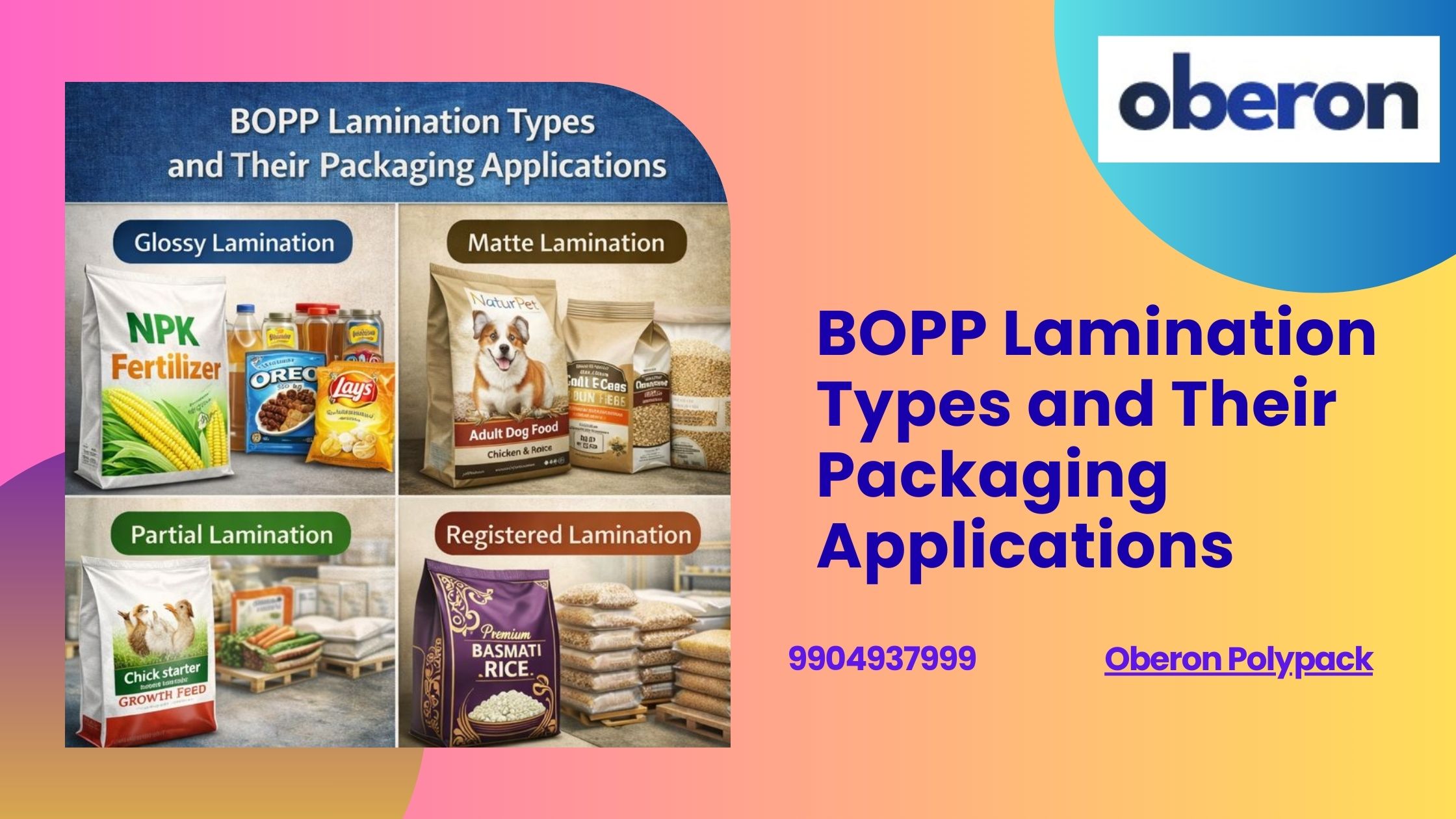
The purport of the packaging in the current competitive world is no longer associated with protection. It has turned out to be a strong branding, communication, and customer experience tool. With the interest of businesses in enhancing the shelf appeal and increasing the product life, BOPP lamination has become one of the most trusted and commonly used lamination methods in the packaging sector.
Lamination solutions based on BOPP can be used in food products and FMCG goods, pharmaceuticals, and industrial packaging with the benefit of durability, clarity, and appearance. Knowledge on the types of BOPP lamination and how they are used in packaging enables the manufacturers and brands to identify the most appropriate type of lamination in terms of performance, appearance and cost efficiency.
The blog is an elaborate detailed practical description of BOPP lamination, its types, processes, benefits and applications in industries.
What Is BOPP Lamination?
BOPP lamination is the process of applying a thin film made from biaxially oriented polypropylene over printed or unprinted packaging material. The movie is welded in a heat, pressure, or adhesive system to form a protective covering.
The primary purpose of BOPP film lamination is to enhance surface strength, improve resistance to moisture and abrasion, and protect printed graphics from damage. Laminated packaging appears more durable and attractive to the eye hence its storage, handling and transportation.
Because of its flexibility and strength, BOPP lamination is widely used in cartons, labels, flexible pouches, and bags.
Why Is BOPP Lamination Important in Modern Packaging?
The modern packaging has to fulfill more than one requirement. It should be able to guard the product, convey brand value and resist environmental factors. BOPP lamination for packaging fulfills all these requirements efficiently.
The most important aspect that has made it popular is that it can be functional and also be beautiful. Not only do laminated surfaces look better but they also work better in the logistics and display of retail.
Key Advantages of BOPP Laminated Packaging
- Improves surface durability and strength
- Improves vividness and output of print.
- Gives it moisture protection and dust protection.
- Lessens wear and tear in the process of handling.
- Increases shelf life of printed packaging
These benefits make BOPP laminated packaging suitable for both mass-market and premium products.
What Are the Different Types of BOPP Lamination?
There are multiple BOPP lamination types, each designed to meet specific packaging requirements. Lamination will be determined by the type of product, the conditions of use, and branding objectives.
Such knowledge of these differences assists enterprises in choosing the appropriate solution without having to overspend or sacrifice on performance.
What Is Glossy BOPP Lamination?
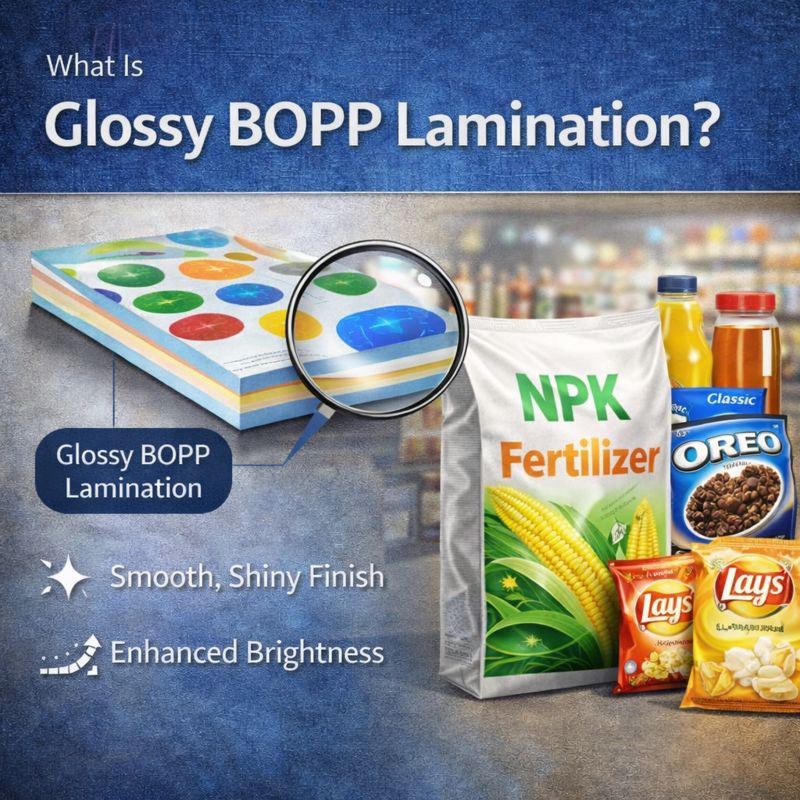
Glossy BOPP lamination creates a smooth, shiny surface that enhances the brightness and contrast of printed designs. This form of lamination is usually utilized in cases where the visual impact is an important issue.
The reflective finish causes colors to look brighter and capture consumer interests on the shelves of retail outlets.
Packaging Applications of Glossy BOPP Lamination
- FMCG product packaging
- Retail cartons and boxes
- Promotional packaging
- Printed marketing materials
This option is widely chosen for printed packaging lamination where branding and shelf visibility are critical.
What Is Matte BOPP Lamination?
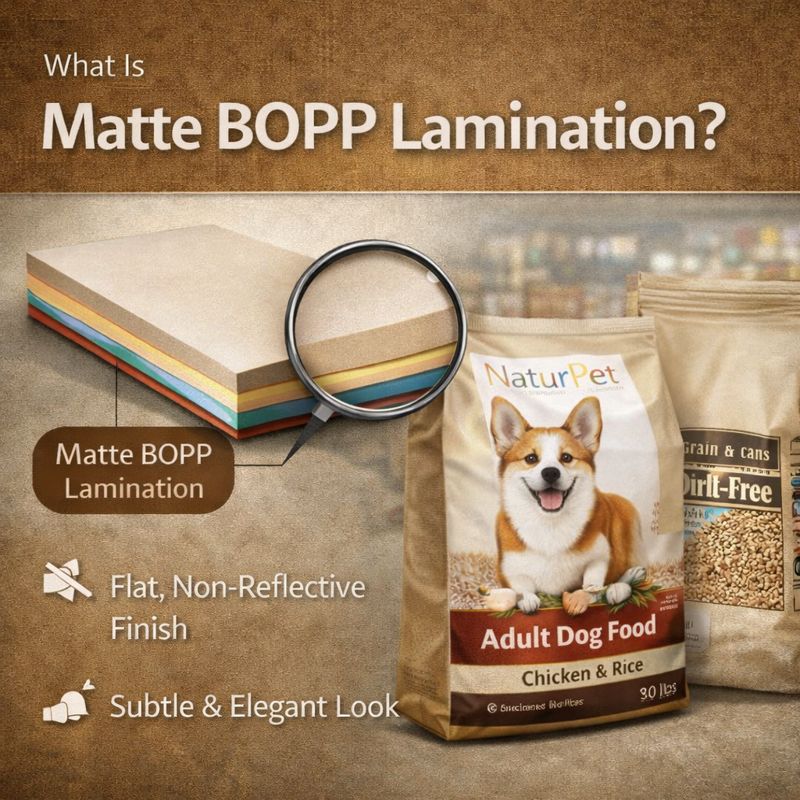
Matte BOPP lamination offers a soft, non-reflective finish that gives packaging a refined and premium appearance. It minimizes glare and prints and is therefore suitable in high end products.
This type of lamination is commonly chosen by brands that do not desire glitz but a modest elegance.
Packaging Applications of Matte BOPP Lamination
- Luxury product packaging
- Personal care and cosmetics boxes.
- Premium food packaging
- Company-based and branded packaging.
The matte finishes play well especially with the minimalistic design and dull colors.
What Is Thermal BOPP Lamination?
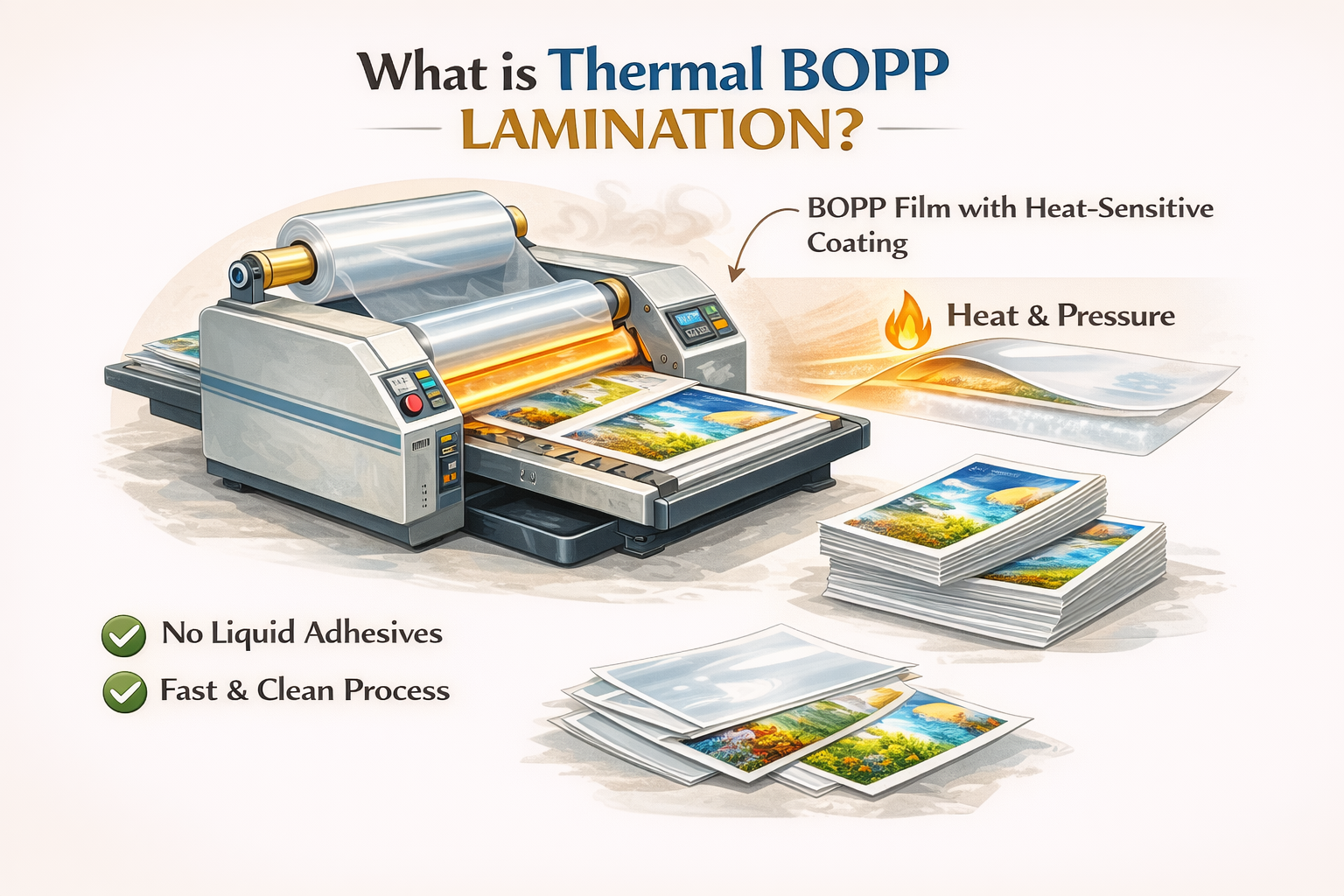
Thermal BOPP lamination uses heat and pressure to bond the film to the substrate without the need for liquid adhesives. The movie is already pre-laminated with a heat-sensitive coating, which makes the process less dirty and quicker.
The technique is also used in high volume production and where consistency and efficiency is a factor.
Benefits of Thermal BOPP Lamination
- Strong and uniform bonding
- Faster processing time
- Reduced adhesive handling
- Clean and precise finish
The process of thermal lamination is common in commercial and industrial packaging.
How Does the BOPP Lamination Process Work?
The BOPP lamination process involves several controlled steps to ensure quality and durability.
The printed substrate is first prepared and checked on the surface quality. The selected BOPP laminated films are then aligned and bonded using heat or adhesive systems. The surface is pressured to make sure that all adhesions are uniform.
The laminated material is cooled and checked after bonding to ensure that there are no defects like bubbles, wrinkles and finish irregularities. The correct control of the process guarantees the lamination of flexible packaging with high reliability when it is used in various ways.
What Are BOPP Laminated Films Used For?
BOPP laminated films act as a protective and decorative layer in packaging. They improve performance as well as appearance, thus, can be used in hard environments.
Common Uses Include
- Food packaging lamination
- Packaging solutions that are flexible.
- Printed cartons surface protection.
- Improvement and branding.
They are durable and clear meaning that they can be stored over long-term and handled repeatedly.
How Does BOPP Lamination Improve Food Packaging?
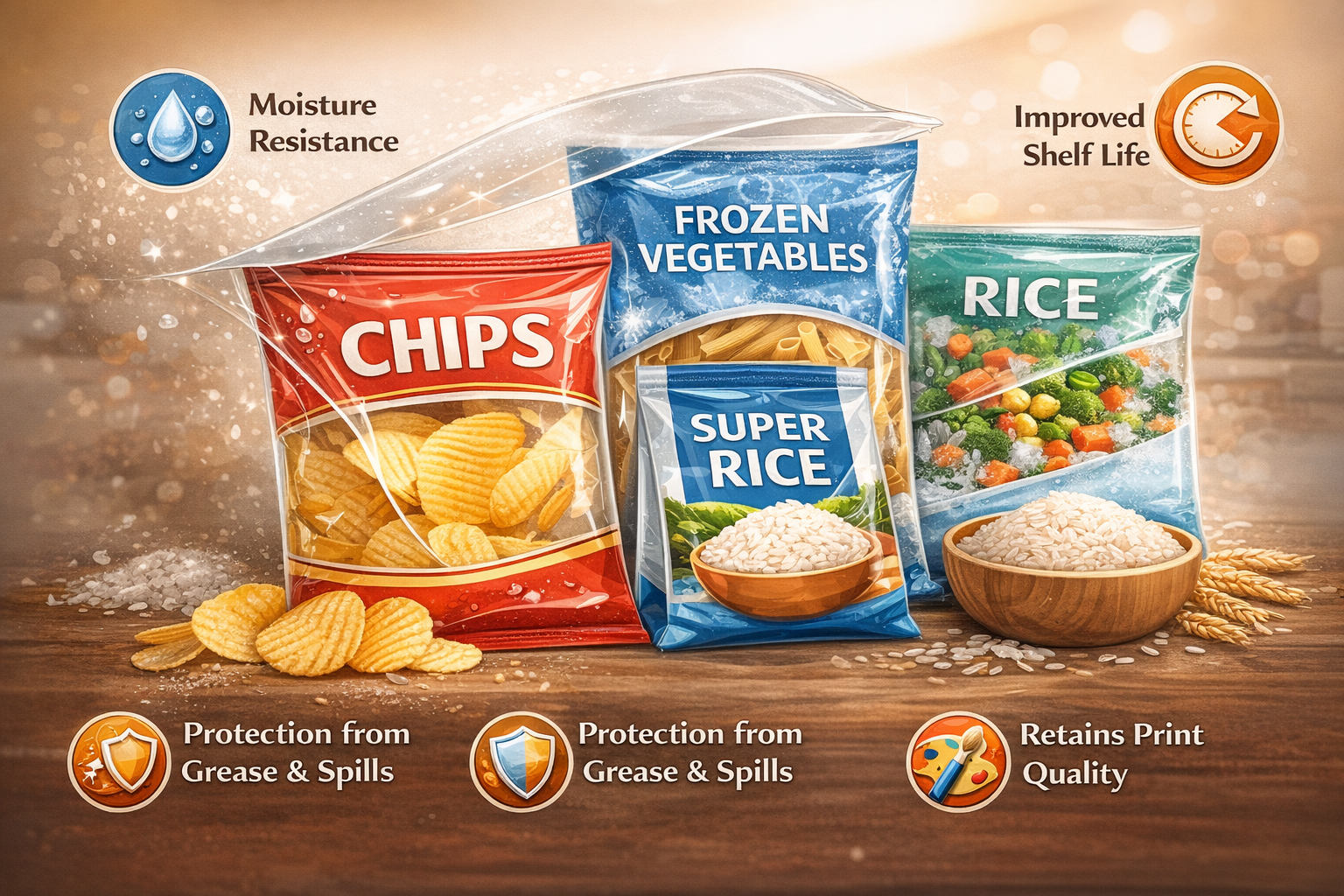
Foodstuffs also need to be packaged in a way that does not interfere with their freshness and at the same time keeps them hygienic and appealing to the eye. Lamination of food packaging with BOPP films is an inherent barrier (moisture and contamination) to food packaging.
Benefits for Food Packaging
- Packaging that is moisture resistant.
- Improved shelf life
- Protection against grease and spills
- Retention of print quality over time
Because of these benefits, BOPP lamination is widely used for dry foods, snacks, grains, and frozen food packaging.
Why Is BOPP Lamination Preferred in Flexible Packaging?
Lamination of flexible packaging needs materials that can be bent, folded and closed without cracking or peeling. BOPP films are very flexible and strong.
They are often applied in pouches, wraps, and multi-layered packaging systems in which security and aesthetics are tremendously vital.
How Does BOPP Lamination Enhance Print Quality?
The quality of print is also very important in brand perception. Lamination of printed packaging prevents the risk of abrasion, fading and smudging of ink.
The lamination then covers the print under a transparent film and this will give uniform appearance to the product throughout its lifecycle. This is especially relevant in packaging that is subjected to handling, transportation and change of environmental conditions.
What Role Does BOPP Lamination Play in Moisture-Resistant Packaging?
Exposure to moisture is one of the usual problems in packaging, particularly during storage and transportation. BOPP lamination plays an important role in creating moisture resistant packaging by forming a protective layer over the printed surface. This coating is used to avoid moisture, condensation, and water in contact with the packaging material.
Moisture resistance is very necessary in food packaging, agricultural products, and FMCGs goods to save the quality of products and shelf life. BOPP films are also used in food packaging to laminate the printed design in order to prevent smudging or fading of the printed design whenever water is exposed. Also, laminated packaging is stronger and retains its shape better than non-laminated ones when it is in the humid environment. By reducing moisture-related damage, BOPP lamination helps minimize product loss and improves overall packaging reliability.
How Do Lamination Finishing Options Affect Branding?
The design of the packaging is a significant factor in the perception of the consumers towards a brand and the lamination finishing options are important in this perception. Shiny finishes amplify the color vividness and beauty and make the packaging more visible in the retail shelves. This is mostly applied to high visibility consumer products and promotional packaging.
Contrastingly, matte finishes are also a sleek and sophisticated look that can fit the high-end and luxury brands. Matte BOPP lamination also reduces glare and fingerprints, helping packaging maintain a clean look during handling. In addition to being aesthetical, lamination in printed packaging preserves branding components of logos and text which ensures a consistent appearance between the time of manufacturing and sale. The selection of the correct finish, enables a brand to align appearance with packaging and its identity and audience.
Which Industries Use BOPP Laminated Packaging?
BOPP laminated packaging is widely used across industries due to its adaptability and reliability.
Key Industries Include
- Food and beverage
- FMCG and retail
- Pharmaceuticals
- Cosmetics and personal care
- export and industrial packaging.
Each industry benefits from the balance of protection, durability, and aesthetics offered by BOPP lamination.
How Does BOPP Lamination Support Sustainable Packaging Practices?
Sustainability is an increasing priority in packaging, and BOPP lamination supports this goal by improving packaging durability and reducing waste. Laminated packaging is resistant to tearing, moisture destruction, and surface wear and will, therefore, have a longer useful life.
Printed packaging lamination preserves printed surfaces eliminating reprinting and repacking raw materials and conserving energy. The enhanced packaging also reduces the chances of damage to the product during the handling and transportation process, which reduces the material waste. Moreover, the advanced process of flexible packaging lamination enables manufacturers to reach the necessary performance features and to use the minimum material thickness to accept and correspond to responsible packaging and keep the product safe.
Why Oberon Polypack Is a Reliable Partner for BOPP Lamination Solutions
Oberon Polypack is a reputable brand in the packaging industry that has been able to provide lamination solutions based on the latest packaging requirements using BOPP.
With advanced processing facilities and strict quality standards, Oberon Polypack ensures consistent performance across all BOPP lamination types. The company emphasizes the accuracy, customization and application solutions and assists companies to attain long lasting and attractive packaging.
Their experience with BOPP laminated films and packaging applications makes them a dependable partner for brands seeking long-term packaging reliability.
Conclusion
Understanding BOPP lamination types and their packaging applications is essential for businesses looking to enhance product protection and brand presentation. BOPP-based solutions are available in all types of industry, including glossy and matte finishes as well as thermal lamination procedures.
When selecting the appropriate lamination type and working with a knowledgeable supplier, the business is able to attain a higher level of longevity, increased shelf life, and customer confidence. As packaging requirements continue to evolve, BOPP lamination remains a proven and future-ready solution.
FAQs
1. What is BOPP lamination mainly used for?
It is applied to shield printed packaging in order to increase surface stability and looks.
2. Which BOPP lamination type is best for premium packaging?
Matte BOPP lamination is commonly used for premium and luxury packaging.
3. Is BOPP lamination suitable for food packaging?
Yes, it is common in lamination packaging of food.
4. How does BOPP lamination improve moisture resistance?
It forms a protective layer which does not allow the moisture to penetrate.
5. What is the difference between glossy and matte BOPP lamination?
Glossy has a shiny quality that can be used and a matte finish is subtle and elegant.
6. Can BOPP lamination be customized?
Yes, lamination finishing options can be selected based on application and branding needs.