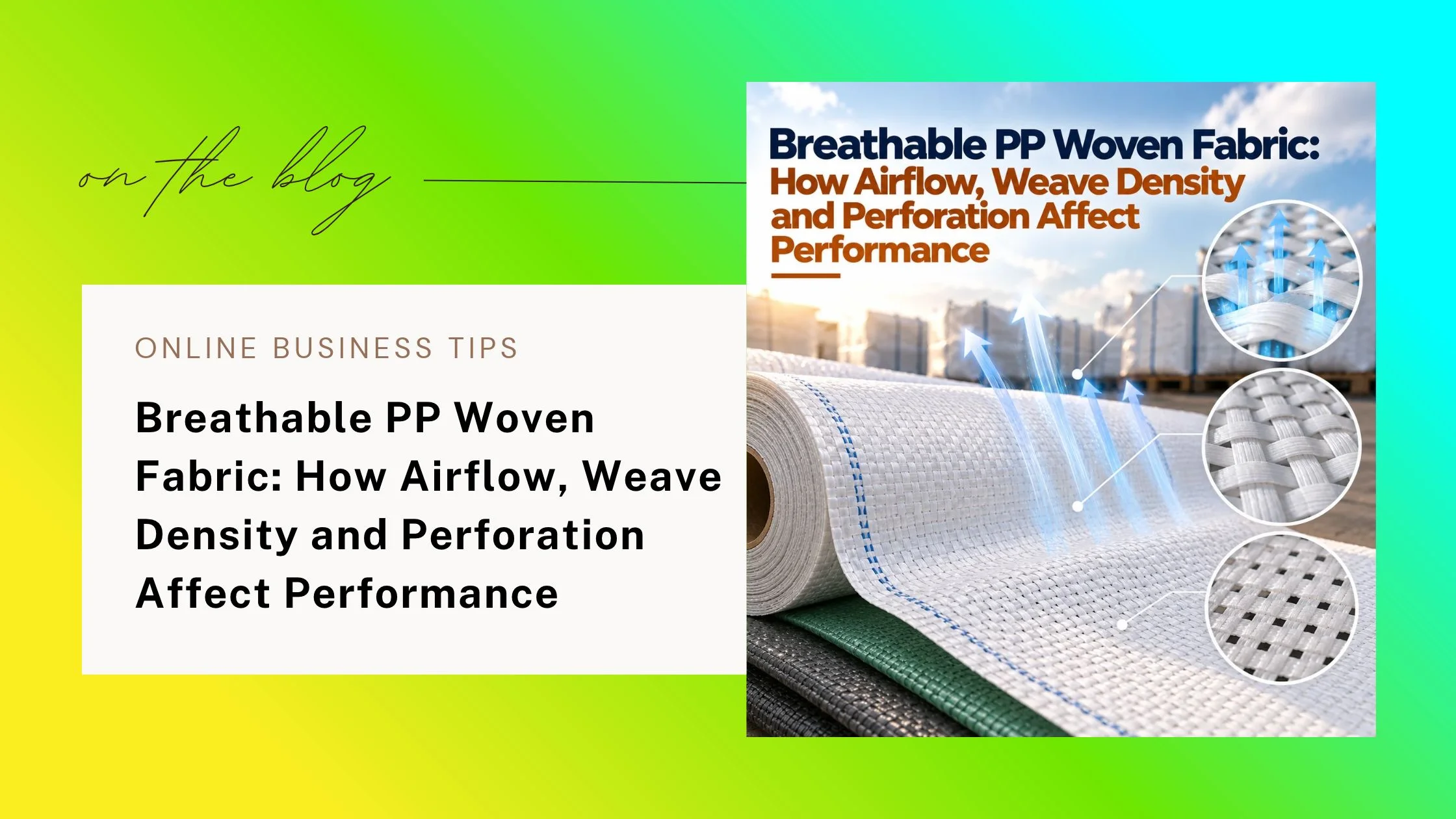
When a packaging material needs to do more than simply hold a product, airflow becomes a serious design consideration. This is especially true for agricultural products such as onions, potatoes and other produce where trapped moisture and poor ventilation can affect storage and transport conditions.
Breathable PP Woven Fabric offers a practical way to combine the structural benefits of woven polypropylene with controlled airflow. But "breathable" does not describe one single construction. Air movement can be influenced by weave structure, mesh density, perforation, fabric design and whether the material is laminated or lined. Oberon Polypack's PP woven fabric range includes breathable and perforated options, with specifications that can be customised according to requirements.
What Is Breathable PP Woven Fabric?
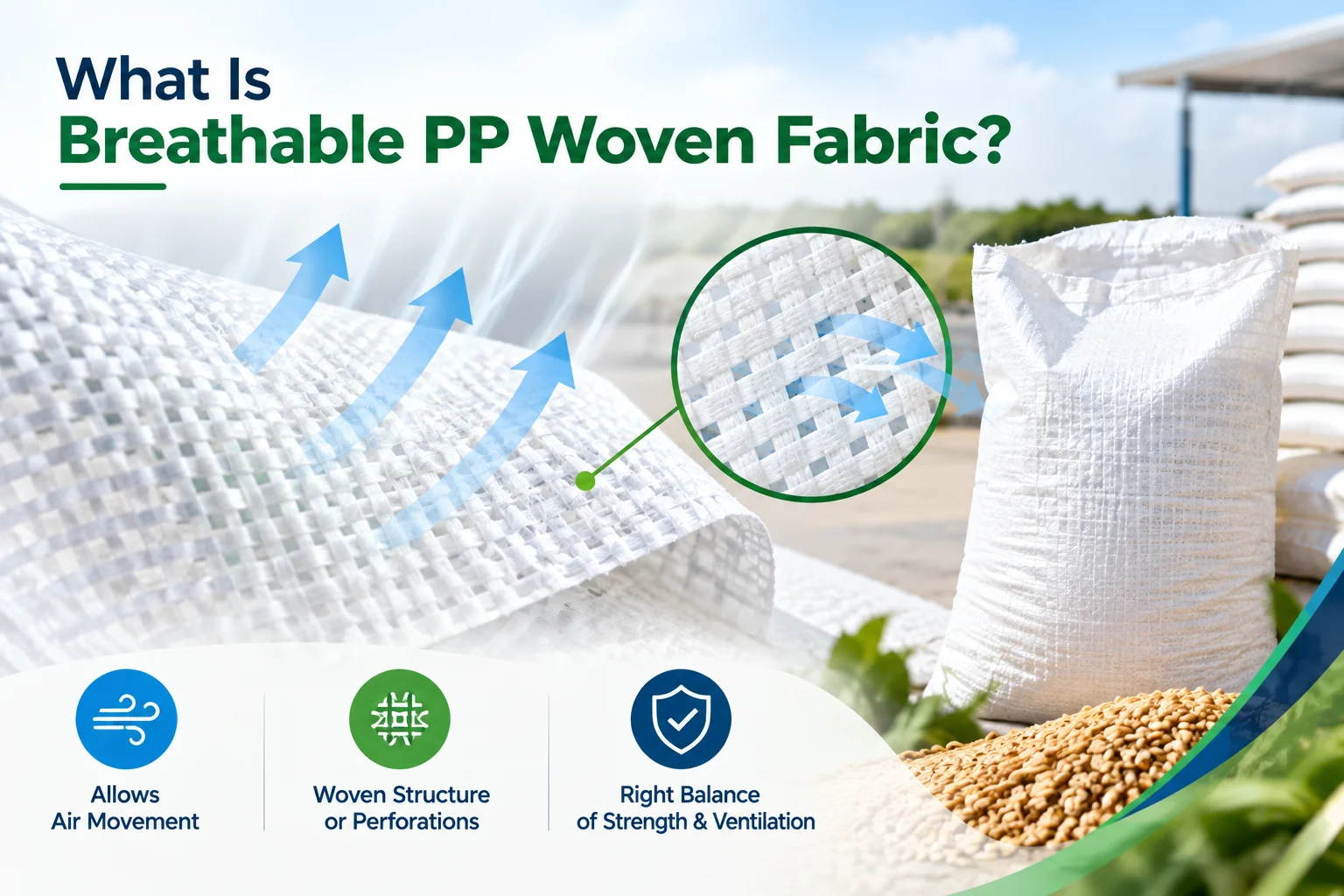
Breathable PP Woven Fabric is polypropylene fabric designed to permit air movement through its woven structure or through additional openings such as perforations. Unlike a completely sealed plastic film, the material can provide a pathway for air to move between the inside and outside of a package or covered area.
The amount of airflow depends on the construction. A relatively open weave may permit more air movement than a tightly woven fabric, while deliberately perforating the material can create additional ventilation. The final performance therefore depends on the relationship between the fabric structure and the application's requirements.
This distinction matters because breathable packaging is not simply about creating as many openings as possible. Too much open area can change strength, containment and product protection. The objective is to achieve the right balance.
Why Does PP Woven Fabric Airflow Matter?
PP woven fabric airflow can be particularly important when packaging agricultural produce that continues to exchange heat and moisture after harvesting. Fresh produce can generate moisture, and restricted ventilation may contribute to condensation or an unsuitable internal environment.
For this reason, PP woven fabric ventilation is often considered when packaging onions, potatoes and similar agricultural products. Oberon Polypack's published information also describes perforated PP woven products as suitable for agricultural produce where ventilation is important.
However, airflow should not be viewed in isolation. The package needs enough structural strength for handling, stacking and transportation, while the ventilation design needs to suit the product. A fabric that allows maximum airflow is not automatically the right choice for every application.
How Does Weave Density Affect Breathability?
Weave density is one of the basic factors affecting how air interacts with woven polypropylene fabric. The tapes are arranged in warp and weft directions, creating a network of openings between them.
A more open construction generally provides greater pathways for air movement, while a denser weave can restrict the open area. But the relationship is not as simple as "looser equals better." The actual airflow also depends on tape dimensions, mesh configuration, fabric weight and whether additional processing has been applied.
For buyers, PP woven fabric weave density should therefore be considered alongside GSM, mesh and intended use. Oberon Polypack lists mesh options from 8 × 8 to 12 × 12 in its PP woven fabric technical specifications, illustrating how fabric construction can be specified according to requirements.
Weave Density and Performance
| Fabric characteristic | More open construction | More dense construction |
|---|---|---|
| Airflow potential | Generally higher | Generally lower |
| Open area | Greater | Lower |
| Material structure | More open | More compact |
| Typical consideration | Ventilation-focused applications | Applications prioritising coverage and structure |
| Strength considerations | Must be evaluated for the application | Can provide a more substantial fabric structure |
| Best approach | Match to required airflow and product | Match to required protection and strength |
The table is a guide rather than a universal performance rule. Actual PP woven fabric performance depends on the complete construction and should be evaluated against the application.
Perforated PP Woven Fabric: When Extra Airflow Is Needed
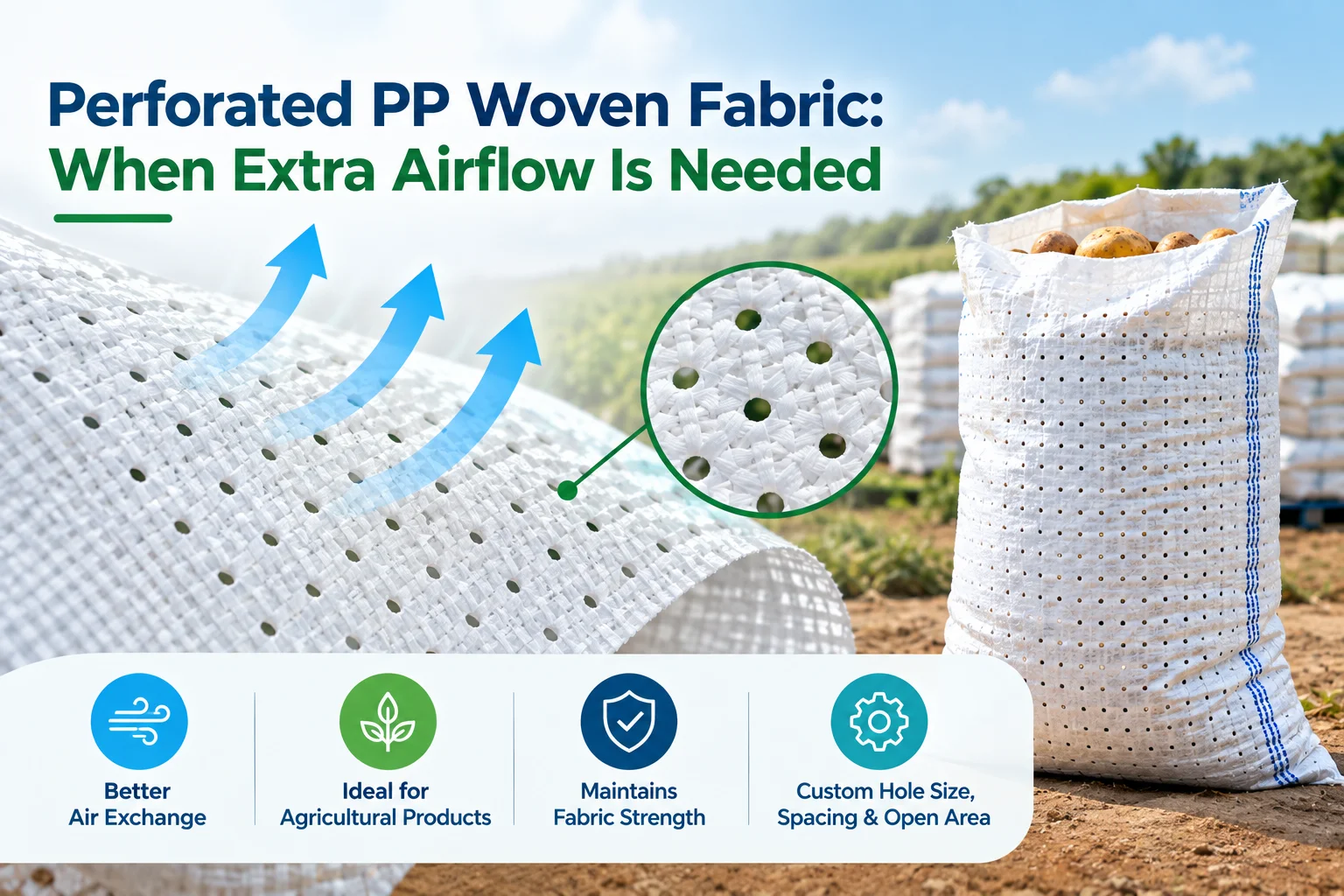
Perforated PP woven fabric takes ventilation a step further by introducing intentionally created holes into the woven material. These openings can increase air exchange beyond what the basic weave provides.
This can be useful for producing packaging where airflow is an important part of the packaging design. Oberon Polypack specifically lists perforated fabric as an available option and describes perforated PP woven bags as suitable for agricultural products requiring ventilation.
The important point is that perforation should be designed rather than improvised. Hole size, spacing, distribution and total open area can all influence the finished material. The fabric still needs to retain sufficient integrity for cutting, stitching, filling, handling and transportation.
PP Woven Fabric Perforation vs Natural Breathability
These two concepts are related but not identical.
A woven fabric can allow some air movement naturally through the spaces created by its weave. Perforation adds additional openings to increase or control ventilation. In practical terms, a manufacturer may use the existing weave characteristics when moderate airflow is sufficient or introduce perforation when the application requires greater ventilation.
PP woven fabric perforation can therefore be considered a design feature rather than a substitute for good fabric construction.
For example, a product packaging application may require a carefully distributed perforation pattern to improve ventilation while maintaining adequate mechanical performance. A different application may only require the natural breathability of a suitable woven structure.
What Is PP Woven Fabric Permeability?
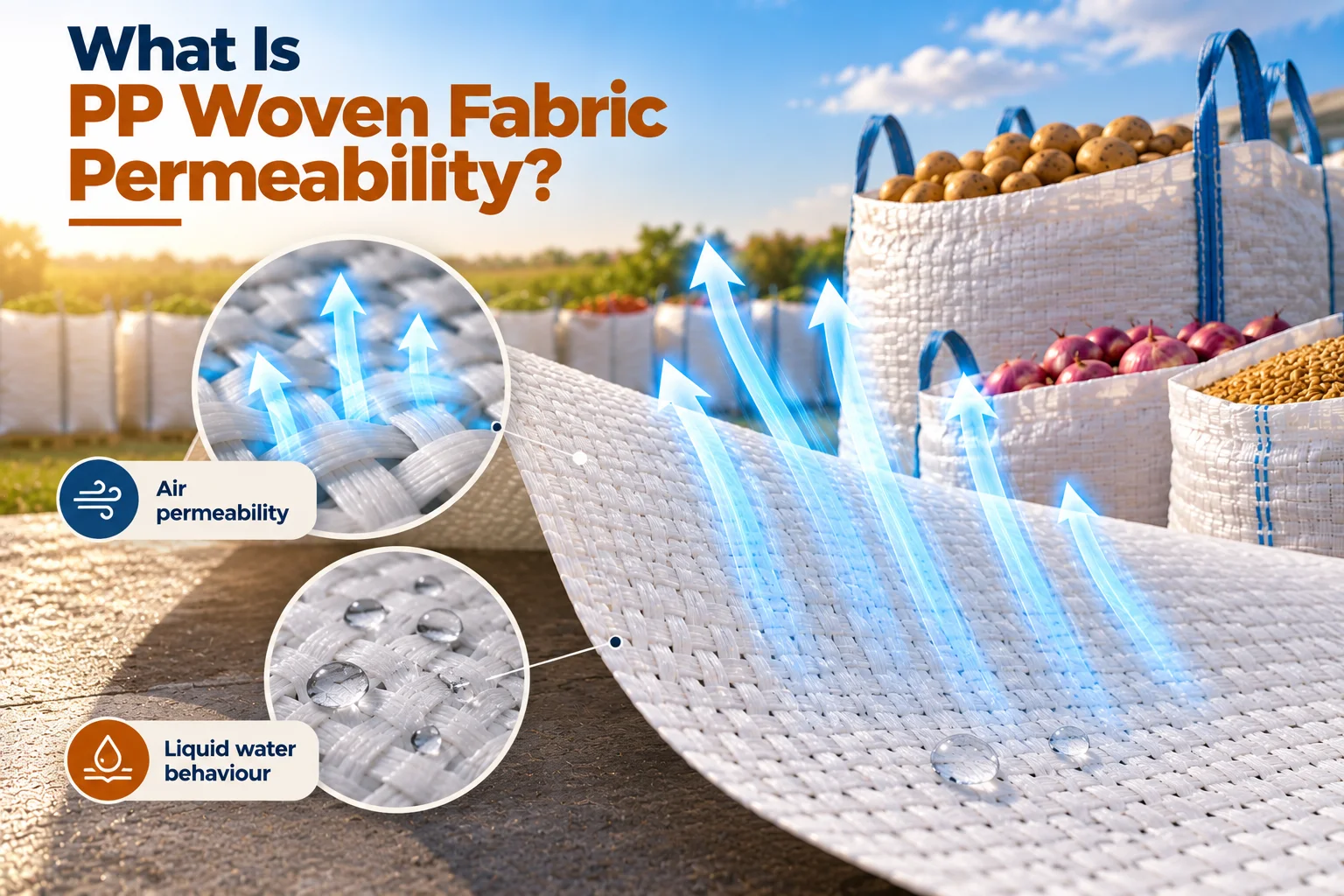
PP woven fabric permeability refers broadly to the ability of air or another medium to pass through the fabric. In breathable packaging, permeability is relevant because the material's open structure affects how air and moisture vapour can move.
It is important not to confuse air permeability with waterproofing. A material may permit air movement while still behaving differently toward liquid water, depending on its construction and any coating, lamination or liner.
This is particularly relevant when selecting breathable polypropylene woven fabric for agricultural use. Buyers need to define whether their priority is airflow, moisture management, physical protection or a combination of these requirements.
How GSM Influences Breathable PP Woven Fabric
GSM, or grams per square metre, is another important specification. It indicates the mass of the fabric per unit area, but it does not independently determine how breathable the material will be.
Two fabrics with similar GSM can have different tape dimensions, mesh configurations or weave structures. Likewise, a heavier fabric does not automatically provide lower airflow, because construction details can vary.
When sourcing Breathable PP Woven Fabric, GSM should therefore be evaluated together with mesh, weave density and perforation. Oberon Polypack lists PP woven fabric from 40 to 150 GSM and offers different width, denier and mesh specifications.
This is why a good technical specification should describe the complete fabric rather than simply stating a target weight.
Breathable PP Woven Fabric for Agricultural Applications
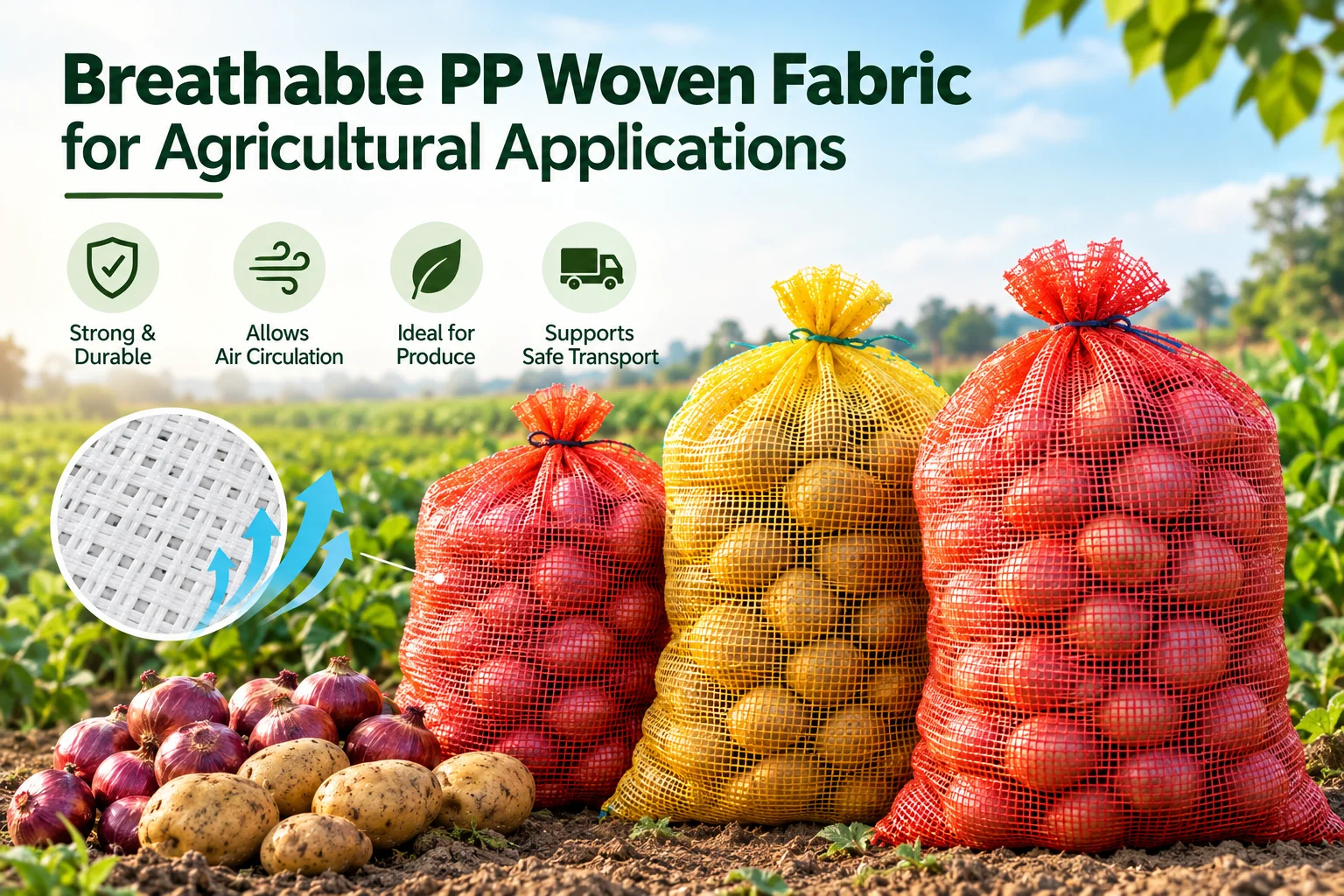
Agriculture is one of the clearest applications for breathable woven polypropylene. Harvested produce often needs packaging that provides structural support without creating an unnecessarily closed environment.
PP woven fabric for agricultural applications can be used in packaging systems where strength, handling and ventilation all matter. Produce such as onions and potatoes is commonly associated with perforated woven packaging because air circulation can be important during storage and transportation.
The exact construction should still be selected according to the product, packaging size, filling weight, handling method and expected storage conditions. What works for one crop or distribution chain may not be ideal for another.
Breathable PP Woven Fabric for Produce Packaging
For PP woven fabric to produce packaging, the main question is not simply "How breathable should it be?" A better question is: How much ventilation does the packaged product and distribution environment actually require?
Consider the product's moisture behaviour, packaging weight, storage duration, transportation conditions and expected temperature range. Then determine whether natural fabric breathability is sufficient or whether perforation is required.
A well-designed package needs to balance ventilation with mechanical performance. If the fabric is too open, it may not provide the desired structural characteristics. If it is too closed, the airflow may be insufficient for the application.
This balance is where fabric specification becomes more useful than generic product descriptions.
6 Factors to Check Before Buying Breathable PP Woven Fabric
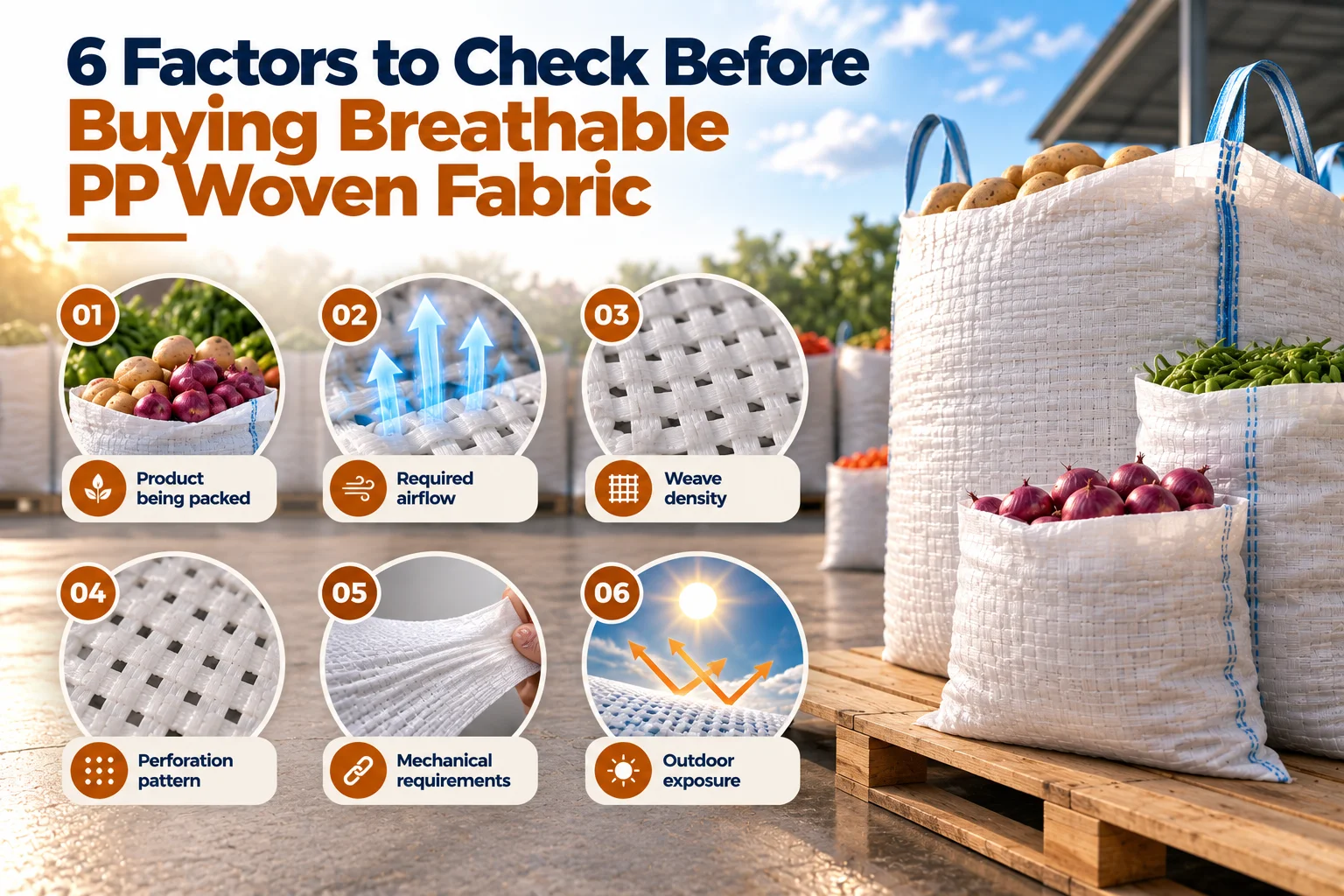
Before ordering Breathable PP Woven Fabric, buyers should define the application first and then work backwards to the material specification.
- Product being packed: Identify whether the material is intended for fresh produce, agricultural commodities, industrial products or another application.
- Required airflow: Determine whether natural woven breathability is sufficient or whether additional perforation is needed.
- Weave density: Check the mesh and overall construction rather than looking only at GSM.
- Perforation pattern: If perforation is required, confirm hole size, spacing and distribution.
- Mechanical requirements: Consider tensile strength, tear resistance, filling weight and handling conditions.
- Outdoor exposure: If the material will experience sunlight, discuss UV stabilisation and expected exposure with the supplier.
A clear specification makes it much easier for a manufacturer to recommend an appropriate construction.
How Perforation Can Affect Fabric Strength
One common misconception is that adding holes automatically makes a woven material unsuitable for demanding applications. The reality is more nuanced.
The effect of PP woven fabric perforation depends on the size, spacing and distribution of the openings, as well as the underlying fabric construction. A carefully designed perforation pattern can provide ventilation while retaining useful mechanical performance.
Oberon Polypack describes its perforated PP woven products as designed to provide air circulation while maintaining the strength needed for agricultural packaging.
For a buyer, the practical lesson is simple: do not evaluate perforation separately from the fabric. Assess the finished construction as a complete system.
Breathable Packaging Fabric vs Laminated PP Woven Fabric
Lamination changes the behaviour of woven polypropylene. A laminated surface can provide additional protection against moisture and dust, but it may also alter the airflow characteristics of the fabric.
That means breathable packaging fabric and laminated fabric should not automatically be treated as interchangeable products. If ventilation is the priority, ask the supplier whether the selected coating or lamination is compatible with the required airflow.
Oberon Polypack's product specifications distinguish between laminated/coated and breathable fabric options, while also listing PE lining as an optional requirement.
The right construction depends on whether the application prioritises ventilation, moisture protection, containment or a combination of these functions.
How to Choose the Right Breathable PP Fabric Rolls
When ordering breathable PP fabric rolls, consider the complete production and conversion process.
First, confirm the required width. Oberon Polypack lists widths from 30 cm to 140 cm for its PP woven fabric range.
Next, consider roll length and handling. Longer rolls may reduce changeovers, but the appropriate length depends on your equipment, storage area and converting process.
Finally, define the fabric's construction clearly. Include GSM, width, denier, mesh, perforation requirements, colour and any UV or finishing requirements where applicable. A detailed purchase specification reduces ambiguity between the sample and the final production order.
PP Woven Fabric Performance Depends on the Whole Construction
It is tempting to judge a breathable fabric by one characteristic. A buyer might focus on mesh, while another focuses on perforation. Someone else might compare GSM and assume that the heavier option must perform better.
In practice, PP woven fabric performance is the result of several interacting characteristics. Tape construction, weave density, GSM, perforation, finishing and manufacturing consistency all contribute to the final material behaviour.
Oberon Polypack states that its PP woven fabric is manufactured for consistent performance and can be customised across specifications including GSM, width, denier, mesh and perforation.
That makes application-specific specification particularly important for buyers sourcing fabric for specialised packaging.
How to Evaluate a PP Woven Fabric Supplier
A supplier should be able to discuss your application in technical terms rather than simply quoting a price per roll.
Ask about the available fabric construction, mesh, GSM, denier and perforation options. If the fabric is intended for agricultural produce, explain the ventilation requirement and expected handling conditions.
You should also ask how the manufacturer maintains consistency across production. For repeat orders, variation between batches can be just as important as the specification of the initial sample.
Oberon Polypack currently identifies PP woven fabric as one of its core products and states that it serves global markets with customised woven packaging solutions. Its published contact information also specifically invites enquiries about woven fabrics and customised packaging.
Common Mistakes When Selecting Breathable PP Woven Fabric
One mistake is assuming that more perforation always means better ventilation. Excessive open areas may change the material's mechanical properties and may not be necessary for the application.
Another is comparing fabrics solely by GSM. Weight is useful, but it does not tell you everything about weave density, mesh or airflow.
A third mistake is ignoring the difference between breathable and laminated constructions. If moisture protection is added without considering airflow requirements, the final material may behave differently from the original woven fabric.
Finally, buyers sometimes specify the fabric without explaining the end use. A manufacturer can make a more useful recommendation when it understands what the fabric will actually package, how it will be handled and how long it is expected to remain in service.
Conclusion
Breathable PP Woven Fabric is not defined by one specification. Airflow and ventilation can be influenced by weave density, mesh, perforation, GSM, tape construction and finishing. For agricultural and produce packaging, the goal is to find the right balance between ventilation and the mechanical performance needed for filling, handling, storage and transportation. A properly defined specification makes that balance much easier to achieve.
If you are sourcing Breathable PP Woven Fabric for agricultural packaging, produce handling or another ventilation-focused application, discuss your required airflow, fabric construction and roll specifications with the manufacturer before ordering. Explore Oberon Polypack's PP woven fabric range or contact Oberon Polypack to discuss a customised requirement.
FAQs
1. What is Breathable PP Woven Fabric?
Breathable PP Woven Fabric is polypropylene fabric designed to permit air movement through its woven structure or through additional perforations. It is commonly considered for applications where ventilation is important alongside strength and handling performance.
2. How does weave density affect PP woven fabric airflow?
PP woven fabric weave density influences the size and distribution of openings between polypropylene tapes. A more open structure can generally allow greater airflow, while a denser construction can restrict it. Actual airflow depends on the complete fabric design.
3. What is perforated PP woven fabric used for?
Perforated PP woven fabric is commonly used when additional ventilation is needed. Agricultural produce packaging is one example, with perforations helping air circulate through the package.
4. Is breathable polypropylene woven fabric suitable for agricultural packaging?
Yes, appropriately specified breathable polypropylene woven fabric can be used for agricultural packaging applications where ventilation, strength and handling are important. The correct construction depends on the product and storage or transportation conditions.
5. Does higher GSM make PP woven fabric less breathable?
Not necessarily. GSM measures fabric weight, but breathability also depends on mesh, tape dimensions, weave density, perforation and other construction details. Therefore, GSM should not be used as the sole indicator of airflow.
6. How should I choose a breathable PP woven fabric supplier?
Start by explaining your application and required airflow. Then compare the supplier's available GSM, mesh, width, denier, perforation and finishing options. For repeat orders, also assess manufacturing consistency, technical support and the ability to produce according to a defined specification.