
Introduction
Choosing the right packaging isn’t just about price, it's about strength, safety, and efficiency. One key factor is GSM (grams per square meter), which determines the thickness and durability of bags.
In the debate of 60 GSM vs 75 GSM woven bags, even a small difference can impact load capacity and performance. Understanding this pp woven bags GSM comparison helps businesses select the most suitable option for their packaging needs.
While 60 GSM woven bags are lightweight and cost-effective, 75 GSM woven bags offer better strength and durability. The right choice depends on your product type, weight, and handling conditions.
What Does GSM Mean in PP Woven Bags?
GSM (grams per square meter) is a standard measurement used to define the weight and density of fabric used in packaging. In simple terms, it indicates how much a square meter of material weighs, which directly affects the thickness, strength, and durability of the bag.
In polypropylene woven bags GSM, a higher GSM means a thicker and stronger fabric, while a lower GSM indicates a lighter and more flexible material. This is why understanding GSM is essential when doing a proper pp woven bags GSM comparison.
For example, in the case of 60 GSM woven bags, the fabric is lighter, making it suitable for low to medium-weight products. On the other hand, 75 GSM woven bags are denser and more robust, offering better resistance to tearing and higher load-bearing capacity.
GSM also plays a key role in woven bag thickness comparison, helping buyers determine how well the bag will perform under different conditions like transportation, stacking, and storage. Choosing the right GSM ensures optimal balance between cost, durability, and application needs.
Overview of 60 GSM Woven Bags
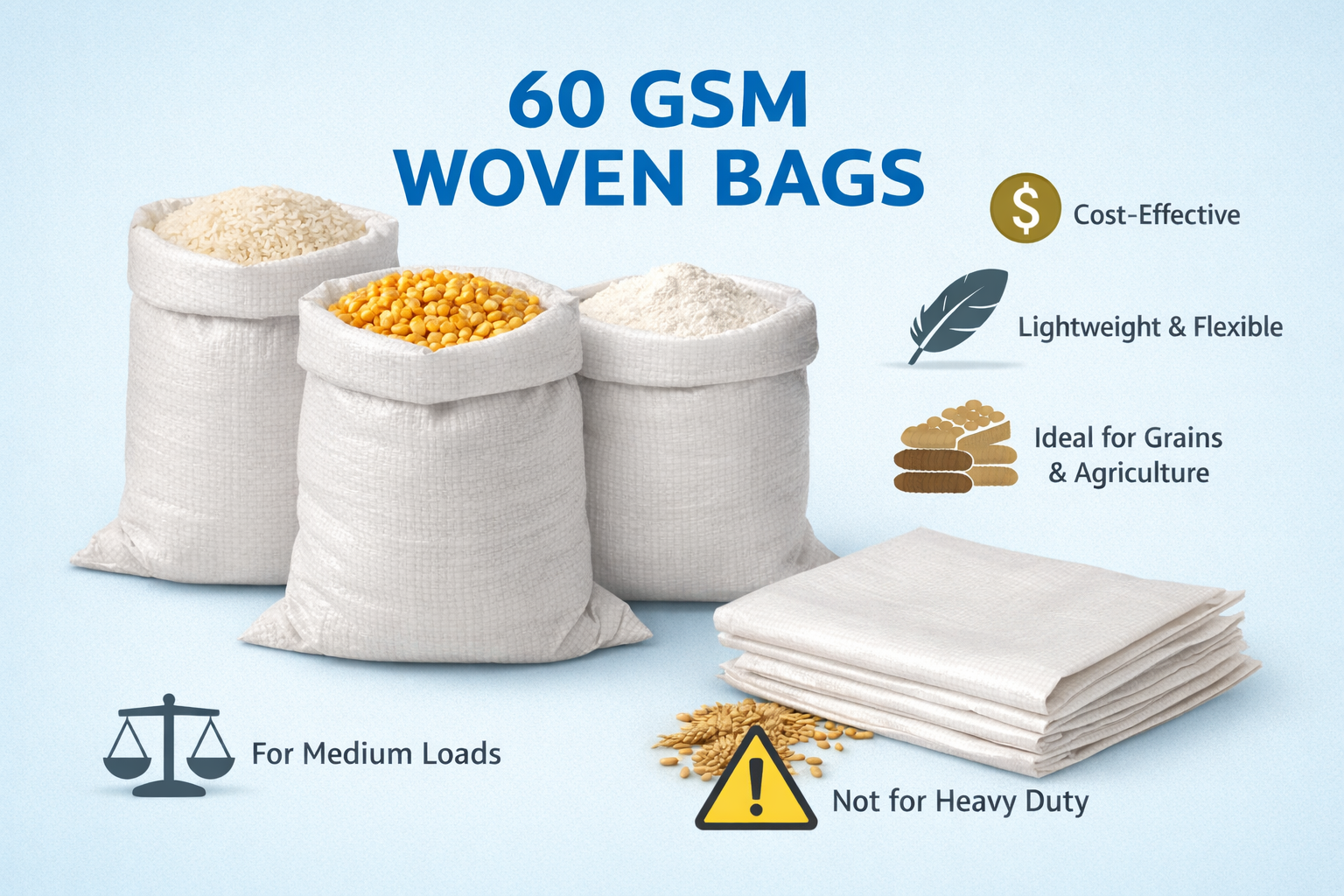
60 GSM woven bags are lightweight polypropylene bags designed for efficient and cost-effective packaging. Due to their lower fabric density, they are easy to handle, store, and transport, making them a popular choice for many industries.
These bags are widely used for packaging products that do not require very high strength, such as food grains, sugar, flour, seeds, and other agricultural materials. Their flexibility and lighter weight make them ideal for bulk usage where cost optimization is important.
One of the key advantages of 60 GSM woven bags is their affordability. Since they use less material, they help reduce packaging costs without compromising basic functionality. They also offer decent strength for medium-load applications, making them suitable for everyday packaging needs.
However, in a woven bag thickness comparison, these bags are thinner and may not be ideal for heavy-duty or high-stress conditions. When compared in a pp woven sack GSM difference, they have lower durability than higher GSM options and may be more prone to wear and tear under heavy loads.
Overall, 60 GSM woven bags are best suited for lightweight to medium-weight products where budget, flexibility, and ease of handling are the main priorities.
Overview of 75 GSM Woven Bags
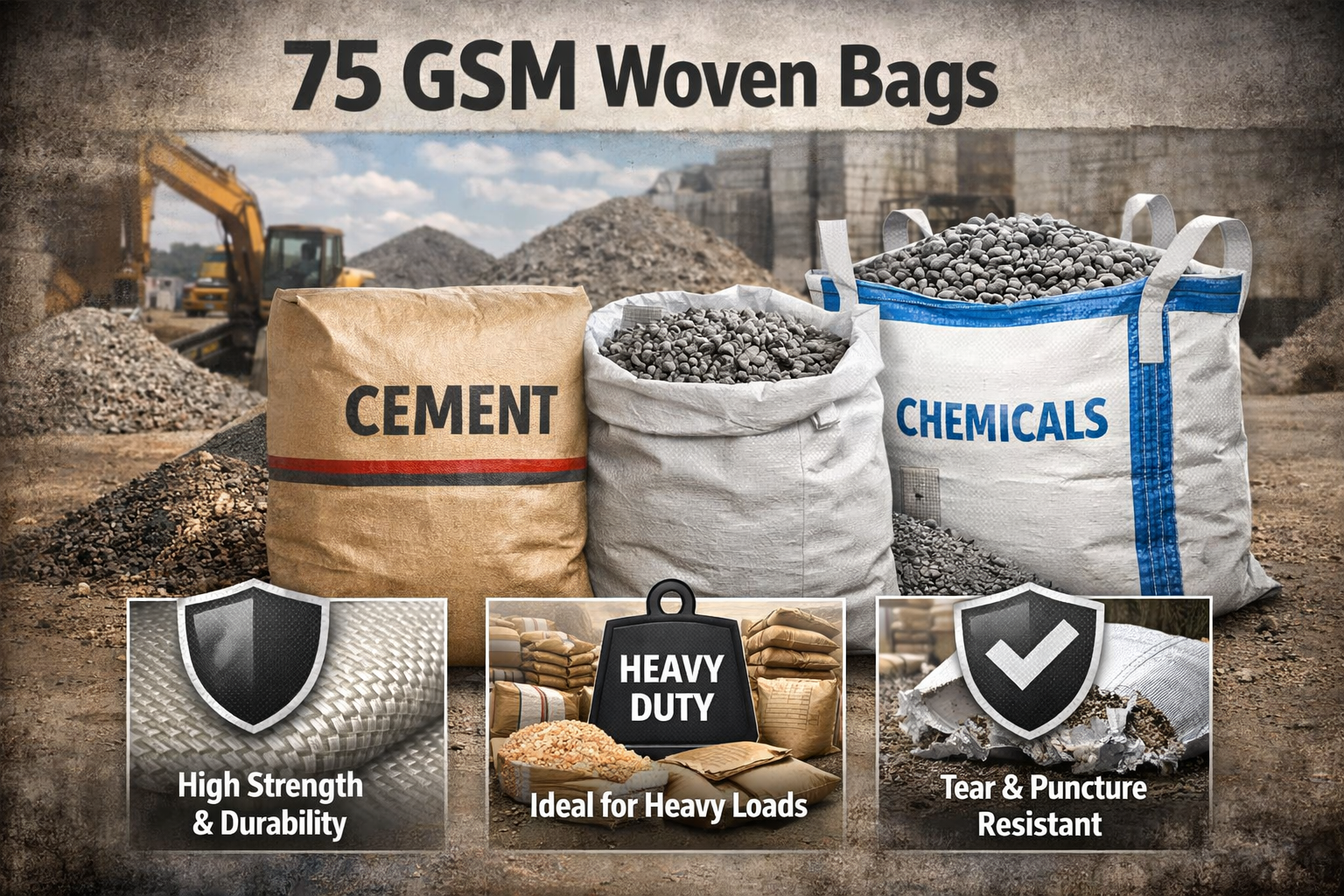
75 GSM woven bags are stronger and more durable polypropylene bags designed for heavy-duty packaging requirements. With higher fabric density, these bags offer improved thickness, better tensile strength, and enhanced resistance to tearing and punctures.
They are commonly used in industries that require reliable packaging for heavier materials such as cement, chemicals, minerals, and construction products. Their robust structure ensures that goods remain सुरक्षित during transportation and storage, even under challenging conditions.
One of the biggest advantages of 75 GSM woven bags is their superior strength. In a pp woven bags GSM comparison, these bags clearly perform better in terms of load-bearing capacity and durability. This makes them ideal for applications where product safety and long-term handling are critical.
Additionally, in a detailed woven bag thickness comparison, 75 GSM bags are noticeably thicker than lower GSM options, providing extra protection against external damage. However, they are slightly heavier and more expensive compared to lighter variants.
Overall, 75 GSM woven bags are the preferred choice for businesses looking for durability, strength, and reliability, especially when dealing with heavy or high-value products.
60 GSM vs 75 GSM Woven Bags: Key Comparison
| Factor | 60 GSM Woven Bags | 75 GSM Woven Bags |
|---|---|---|
| Strength & Durability | Suitable for light to medium loads | High strength, ideal for heavy loads |
| 60 GSM vs 75 GSM durability | Lower durability under stress | Superior durability and tear resistance |
| Thickness | Thinner and more flexible | Thicker and more robust |
| Woven Bag Thickness Comparison | Lightweight fabric structure | Dense and strong fabric |
| Cost Efficiency | More affordable, cost-effective | Slightly higher cost but better value |
| Flexibility & Handling | Easy to handle and transport | Less flexible but more stable |
| Load Capacity | Medium load capacity | High load-bearing capacity |
| Application | Food grains, seeds, agriculture products | Cement, chemicals, industrial materials |
| PP Woven Sack GSM Difference | Lower GSM, lighter performance | Higher GSM, stronger performance |
| Best Use Case | Lightweight packaging | Heavy-duty packaging |
Lightweight vs Heavy Woven Bags: Which One Should You Choose?
When deciding between lightweight vs heavy woven bags, the choice ultimately depends on your product type, handling conditions, and budget. Both options serve different purposes, and selecting the right one ensures better efficiency and cost control.
Lightweight options like 60 GSM woven bags are ideal for products that do not require high strength. They are easy to carry, stack, and transport, making them perfect for industries such as agriculture, food packaging, and retail distribution. If your priority is reducing packaging costs while maintaining basic durability, lightweight bags are a practical choice.
On the other hand, heavy-duty options such as 75 GSM woven bags are designed for strength and reliability. These bags perform better in demanding conditions, especially when handling bulky or heavy materials like cement, chemicals, or construction supplies. In a detailed pp woven bags GSM comparison, heavier bags clearly offer better resistance to tearing and long-term wear.
To decide which GSM is better for woven bags, consider these key factors:
- Product Weight: Heavier goods require higher GSM for safety
- Transportation Conditions: Rough handling needs stronger bags
- Storage Duration: Long-term storage benefits from durable materials
- Budget: Balance between cost and performance
In short, if your focus is affordability and ease of handling, go for lightweight options. But if durability and load capacity are critical, heavy woven bags are the smarter investment.
Best GSM for PP Woven Bags Based on Application
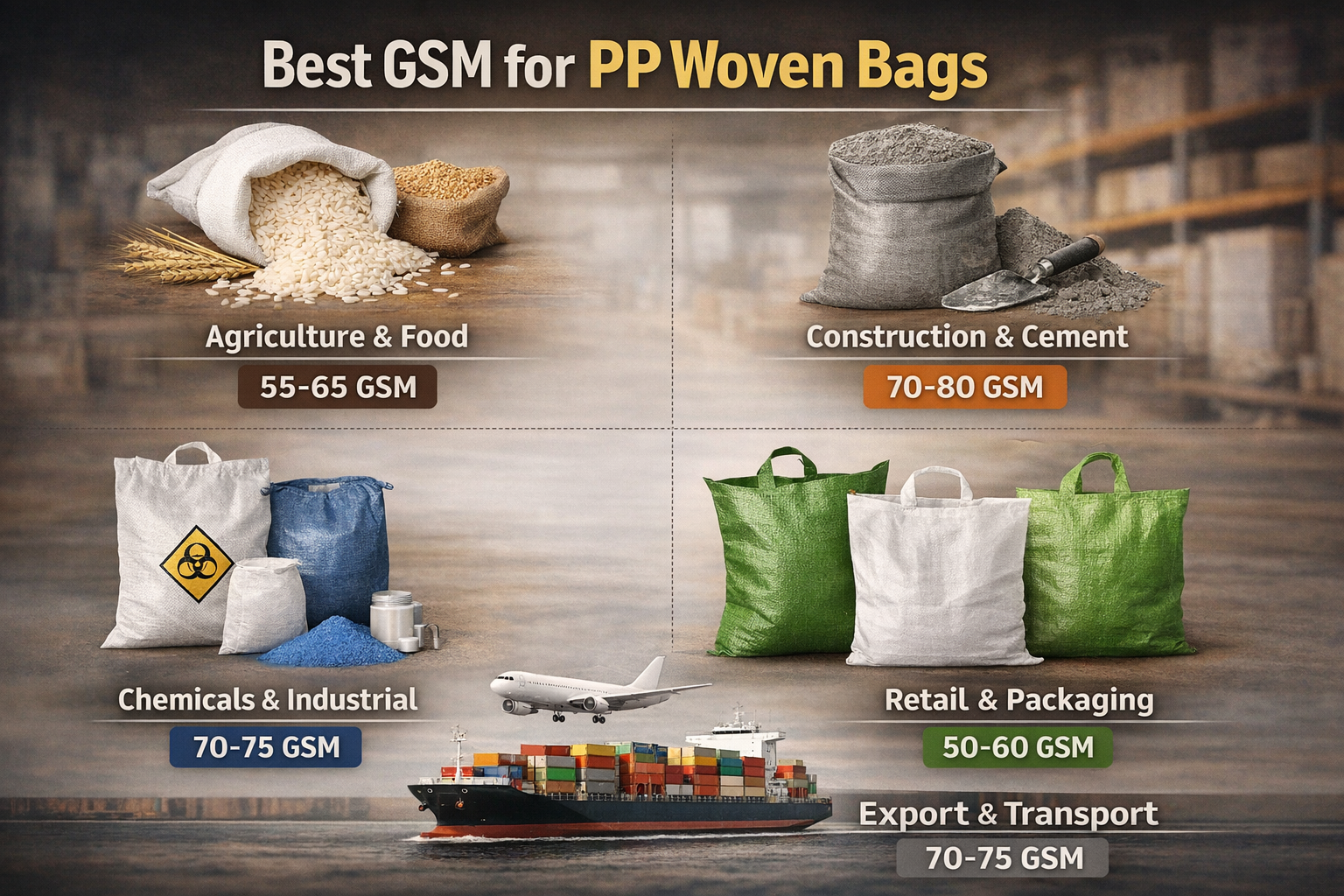
Selecting the best GSM for pp woven bags is not a one-size-fits-all decision. It depends heavily on the type of product, handling conditions, storage duration, and transportation environment. A smart choice requires a clear understanding of how different GSM levels perform in real-world applications.
In any pp woven bag weight guide, GSM acts as a critical factor that directly impacts durability, cost, and efficiency. Let’s break it down by industry and usage:
1. Agriculture & Food Packaging
For products like rice, wheat, flour, sugar, and seeds, 60 GSM woven bags are generally sufficient. These products are relatively lightweight and do not require extreme durability.
- Recommended GSM: 55–65 GSM
- Why: Cost-effective and easy to handle
- Benefit: Reduces packaging expenses in bulk supply
However, if the bags are reused multiple times or exposed to rough handling, slightly higher GSM may be considered.
2. Construction & Cement Industry
Heavy materials such as cement, sand, adhesives, and minerals demand stronger packaging. In such cases, 75 GSM woven bags are a more reliable choice.
- Recommended GSM: 70–80 GSM or higher
- Why: High tensile strength and tear resistance
- Benefit: Prevents leakage, breakage, and product loss
In a pp woven sack GSM difference, this category clearly shows how higher GSM improves safety and performance.
3. Chemicals & Industrial Products
Chemicals, fertilizers, and industrial raw materials often require both strength and resistance to external factors.
- Recommended GSM: 70–75 GSM
- Why: Better durability and stacking strength
- Benefit: Ensures safe storage and long-distance transport
For hazardous or fine materials, laminated woven bags with higher GSM are often preferred.
4. Retail & Lightweight Commercial Use
For retail packaging, promotional products, or light commercial goods, lightweight bags work efficiently.
- Recommended GSM: 50–60 GSM
- Why: Lightweight, flexible, and economical
- Benefit: Easy handling and lower shipping costs
This is where lightweight vs heavy woven bags becomes a key decision factor for businesses.
5. Export & Long-Distance Transportation
Export packaging requires durability due to extended handling, stacking, and environmental exposure.
- Recommended GSM: 70–75 GSM
- Why: Better resistance to wear and tear
- Benefit: Maintains product integrity during transit
Key Insight: How to Choose the Right GSM
A practical pp woven bag weight guide should always consider:
- Load Capacity: Heavier products need higher GSM
- Handling Conditions: Rough use demands stronger bags
- Storage Time: Longer storage requires durability
- Budget Balance: Optimize between cost and performance
Final Recommendation
In a detailed pp woven bags GSM comparison, there is no universally “perfect” GSM.
- Choose 60 GSM woven bags for lightweight, cost-sensitive applications
- Choose 75 GSM woven bags for heavy-duty, high-strength requirements
Ultimately, the best GSM for pp woven bags depends on matching the bag’s strength with your product’s specific needs.
PP Woven Sack GSM Difference Explained
Understanding the pp woven sack GSM difference is essential for making the right packaging decision. Even a small variation in GSM such as between 60 and 75 can significantly impact the bag’s strength, durability, and overall performance.
At its core, GSM reflects how densely the polypropylene fibers are woven together. In polypropylene woven bags GSM, a higher value means more material per square meter, resulting in a thicker and stronger fabric. This directly influences how much weight the bag can carry and how well it resists tearing or punctures.
Key Differences Between 60 GSM and 75 GSM
- Material Density: 75 GSM bags have a tighter weave and higher material density compared to 60 GSM bags, making them more robust.
- Load Capacity: In a practical pp woven bags GSM comparison, 75 GSM bags can handle heavier loads without deformation, while 60 GSM bags are better suited for lighter goods.
- Durability: When analyzing 60 GSM vs 75 GSM durability, higher GSM bags perform better under stress, repeated handling, and long-term storage.
- Resistance to Damage: Thicker bags (75 GSM) offer better protection against tearing, moisture exposure (when laminated), and rough transportation conditions.
- Cost Impact: Lower GSM bags are more economical, but higher GSM bags reduce the risk of product loss, which can be more cost-effective in the long run.
Real-World Perspective
For example, a business packaging rice may find 60 GSM woven bags sufficient for short-distance distribution. However, for cement or chemical products transported over long distances, 75 GSM woven bags provide the necessary strength and reliability.
Why This Difference Matters
Ignoring the pp woven sack GSM difference can lead to:
- Product damage or leakage
- Increased replacement or logistics costs
- Reduced customer satisfaction
By understanding how GSM affects performance, businesses can make smarter, more cost-efficient packaging decisions while ensuring product safety across the supply chain.
How to Choose the Right GSM: Buyer’s Guide
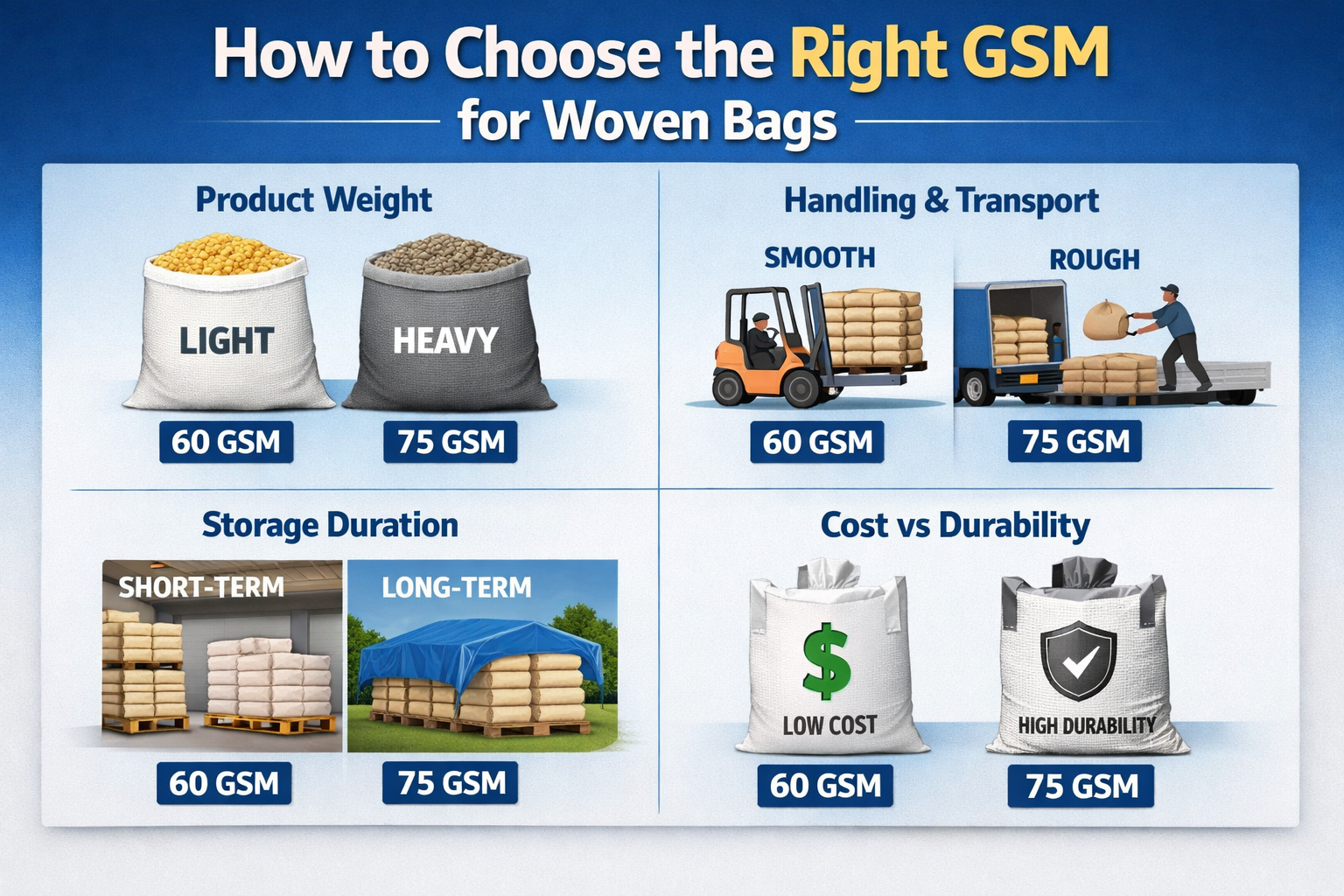
Choosing the correct GSM is a crucial step in ensuring your packaging performs efficiently without unnecessary costs. A practical pp woven bag weight guide helps businesses evaluate their needs based on real-world conditions rather than guesswork.
To decide between 60 GSM vs 75 GSM woven bags, you need to consider multiple factors that directly affect performance, durability, and cost.
1. Understand Your Product Weight
The first and most important factor is the weight of the product you plan to pack.
- Lightweight products (grains, seeds, flour): 60 GSM woven bags are usually sufficient
- Heavy materials (cement, chemicals): 75 GSM woven bags are recommended
Choosing the wrong GSM can lead to bag failure or unnecessary expense.
2. Evaluate Handling & Transportation Conditions
If your products go through rough handling, long-distance shipping, or multiple loading/unloading cycles, durability becomes critical.
- Smooth handling: Lower GSM works well
- Rough conditions: Higher GSM provides better protection
This is where 60 GSM vs 75 GSM durability becomes a key decision factor.
3. Consider Storage Duration
Storage conditions also play a big role in selecting the right GSM.
- Short-term storage: 60 GSM is cost-efficient
- Long-term or outdoor storage: 75 GSM ensures better strength and resistance
Higher GSM bags maintain their structure over time, especially in stacked conditions.
4. Balance Cost vs Performance
While lower GSM bags are cheaper, they may not always be the best choice.
- 60 GSM woven bags: Lower upfront cost
- 75 GSM woven bags: Higher durability, fewer losses
A smart buyer focuses on total cost, not just initial price.
5. Match GSM with Application
A proper pp woven bags GSM comparison should always align with your industry needs:
- Agriculture: 60 GSM
- Construction: 75 GSM
- Industrial use: 70–75 GSM
- Retail/light packaging: 50–60 GSM
6. Avoid Common Buying Mistakes
When choosing GSM, avoid these errors:
- Selecting based only on price
- Ignoring load capacity requirements
- Not considering transportation stress
- Overestimating or underestimating durability needs
Final Buyer Tip
If you are unsure which GSM is better for woven bags, always consult an experienced manufacturer. They can recommend the ideal GSM based on your product, usage, and budget.
By following this pp woven bag weight guide, businesses can make informed decisions that improve packaging efficiency, reduce losses, and ensure long-term reliability.
Common Mistakes to Avoid When Selecting GSM
Choosing the right GSM may seem simple, but many businesses make critical errors that lead to product damage, higher costs, or inefficient packaging. Understanding these mistakes can help you make a smarter decision when comparing 60 GSM vs 75 GSM woven bags.
1. Choosing Based Only on Price
One of the most common mistakes is selecting bags purely because they are cheaper.
- 60 GSM woven bags may reduce upfront cost
- But using them for heavy products can lead to tearing and losses
Always balance cost with performance in a proper pp woven bags GSM comparison.
2. Ignoring Product Weight
Not matching GSM with product weight is a major issue.
- Lightweight products work well with lower GSM
- Heavy materials require stronger options like 75 GSM woven bags
Ignoring this can directly impact safety and durability.
3. Overlooking Durability Needs
Many buyers underestimate how important durability is during transportation and storage.
In terms of 60 GSM vs 75 GSM durability, higher GSM bags perform better under pressure, stacking, and repeated handling.
4. Not Considering Transportation Conditions
If your goods are shipped over long distances or handled roughly, lower GSM bags may fail.
- Poor handling conditions demand higher GSM
- Export and bulk logistics require stronger packaging
5. Ignoring Woven Bag Thickness Comparison
Thickness directly affects performance, yet many buyers overlook it.
A proper woven bag thickness comparison helps you understand how different GSM levels impact strength and flexibility.
6. Not Consulting Experts or Manufacturers
Skipping expert advice can lead to wrong decisions.
Experienced manufacturers understand the pp woven sack GSM difference and can guide you toward the right choice based on your application.
Final Takeaway
Avoiding these common mistakes ensures you select the right GSM for your needs. Whether you choose 60 GSM woven bags or 75 GSM woven bags, the goal should always be to match the bag’s strength with your product requirements for maximum efficiency and safety.
Conclusion
Choosing between 60 GSM vs 75 GSM woven bags ultimately comes down to understanding your specific packaging needs. Both options serve important roles, but selecting the wrong GSM can lead to increased costs, product damage, or inefficiencies in your supply chain.
60 GSM woven bags are ideal for lightweight and cost-sensitive applications where flexibility and easy handling are priorities. On the other hand, 75 GSM woven bags offer superior strength and durability, making them the preferred choice for heavy-duty and high-load packaging.
A proper pp woven bags GSM comparison shows that there is no single “best” option for all uses. Instead, the right choice depends on factors such as product weight, transportation conditions, and storage requirements. By following a reliable pp woven bag weight guide, businesses can make informed decisions that balance cost and performance effectively.
In the end, understanding the pp woven sack GSM difference ensures better packaging efficiency, improved product safety, and long-term value. Partnering with an experienced manufacturer like Oberon Polypack can further help you choose the right GSM tailored to your exact requirements.
Questions People Also Ask (FAQ Section)
1. Which GSM is better for woven bags?
The answer depends on your application. For lightweight products like grains or seeds, 60 GSM woven bags are usually sufficient. However, for heavy materials such as cement or chemicals, 75 GSM woven bags are a better choice due to their higher strength and durability.
2. What is the difference between 60 GSM and 75 GSM woven bags?
The main difference lies in thickness, strength, and load capacity. In a 60 GSM vs 75 GSM woven bags comparison, 75 GSM bags are thicker, stronger, and more durable, while 60 GSM bags are lighter, more flexible, and cost-effective for lighter applications.
3. Are 75 GSM woven bags stronger than 60 GSM?
Yes, 75 GSM woven bags are stronger because they have higher material density. In terms of 60 GSM vs 75 GSM durability, they offer better resistance to tearing, punctures, and heavy loads.
4. Can 60 GSM bags handle heavy materials?
Generally, 60 GSM woven bags are not recommended for heavy materials. They are designed for lightweight to medium-weight products. Using them for heavy loads can increase the risk of damage or failure.
5. How do I choose the right GSM for packaging?
To choose the right GSM, follow a simple pp woven bag weight guide:
- Check product weight
- Consider handling and transport conditions
- Evaluate storage duration
- Balance cost with durability
This approach helps you decide which GSM is better for woven bags based on your specific needs.