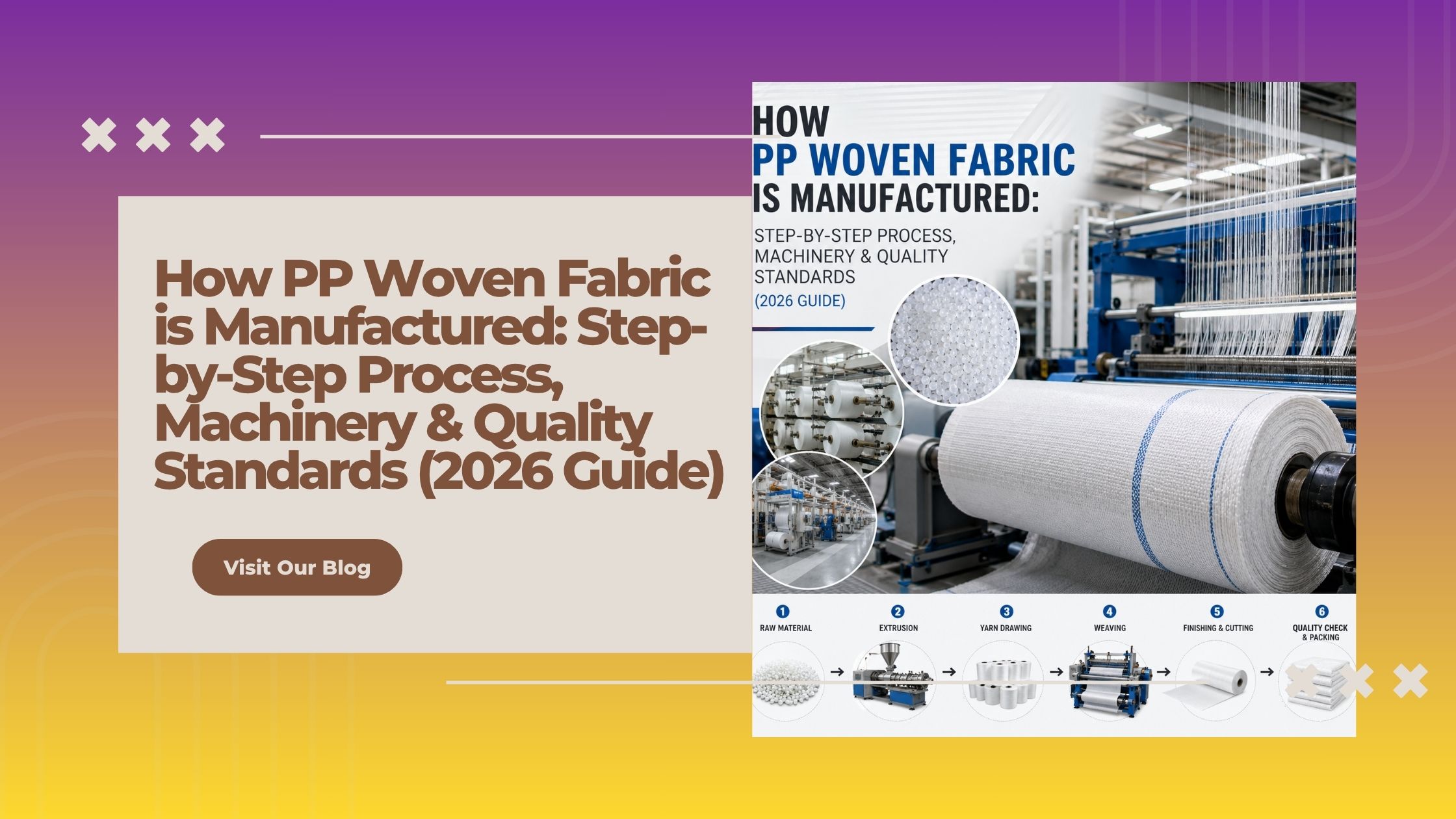
PP woven fabric has become one of the world's most widely used industrial packaging materials, supporting industries ranging from agriculture and food processing to chemicals, construction, and logistics. Every year, billions of woven bags and packaging products are manufactured using polypropylene woven fabric because of its exceptional strength, lightweight structure, and cost-effectiveness. However, producing a durable woven fabric requires far more than weaving plastic tapes together—it involves a carefully controlled manufacturing process where every stage influences the final product's performance.
For businesses purchasing packaging materials, understanding PP Woven Fabric Manufacturing is essential. The production process determines the fabric's tensile strength, durability, GSM, moisture resistance, and suitability for specific applications. Whether you're sourcing material for rice bags, cement sacks, fertilizer packaging, or industrial bulk bags, knowing how the fabric is manufactured helps you evaluate product quality more confidently. If you're exploring the different applications and properties of woven packaging materials, our guide to PP Woven Fabric provides a helpful overview before diving into the manufacturing process.
In this comprehensive guide, you'll learn how polypropylene woven fabric is manufactured step by step, the machinery involved, important quality standards, common testing procedures, and the factors that distinguish export-quality PP woven fabric from standard industrial products.
What Is PP Woven Fabric Manufacturing?
PP Woven Fabric Manufacturing is the industrial process of converting polypropylene resin into strong woven fabric through extrusion, tape stretching, weaving, inspection, and optional lamination. The finished material is supplied in rolls and later converted into packaging products such as woven sacks, BOPP laminated bags, valve bags, FIBC bags, shopping bags, geotextiles, and various industrial packaging solutions.
Unlike traditional textiles that use natural or synthetic fibres, polypropylene woven fabric is produced from thermoplastic polymer granules. These granules are melted and transformed into thin tapes, which are stretched to improve strength before being woven together using high-speed circular loom machines. The result is a lightweight yet highly durable fabric capable of carrying substantial loads while resisting tearing, abrasion, and environmental stress.
Modern woven fabric manufacturing process technology combines advanced automation with precise quality control to maintain consistent fabric width, weave density, tensile strength, and GSM. Every stage, from raw material selection to final inspection, contributes to producing reliable packaging materials that meet the demanding requirements of global industries.
Today, woven polypropylene fabric is available in various widths, colours, GSM ranges, and surface finishes. Depending on the intended application, manufacturers can also add UV stabilisers, anti-slip coatings, coloured masterbatches, or laminated layers to enhance durability and functionality.
Why the Manufacturing Process Matters
The quality of polypropylene woven fabric depends not only on the raw material but also on how precisely each manufacturing stage is controlled. Even small variations in extrusion temperature, tape stretching ratio, weaving tension, or lamination quality can affect the fabric's strength, flexibility, appearance, and long-term performance.
For example, insufficient tape orientation during the extrusion process may reduce tensile strength, while inconsistent weaving can create uneven fabric density that affects bag performance under heavy loads. Similarly, poor lamination may result in weak bonding between layers, reducing moisture resistance and print quality.
Manufacturers serving export markets must consistently produce fabric that meets demanding customer specifications and international quality expectations. This requires advanced machinery, experienced operators, regular quality inspections, and strict process control throughout production.
For buyers, understanding these manufacturing stages makes it easier to evaluate suppliers, compare product quality, and select packaging materials that perform reliably throughout transportation, storage, and end-use applications.
Raw Materials Used in PP Woven Fabric Manufacturing
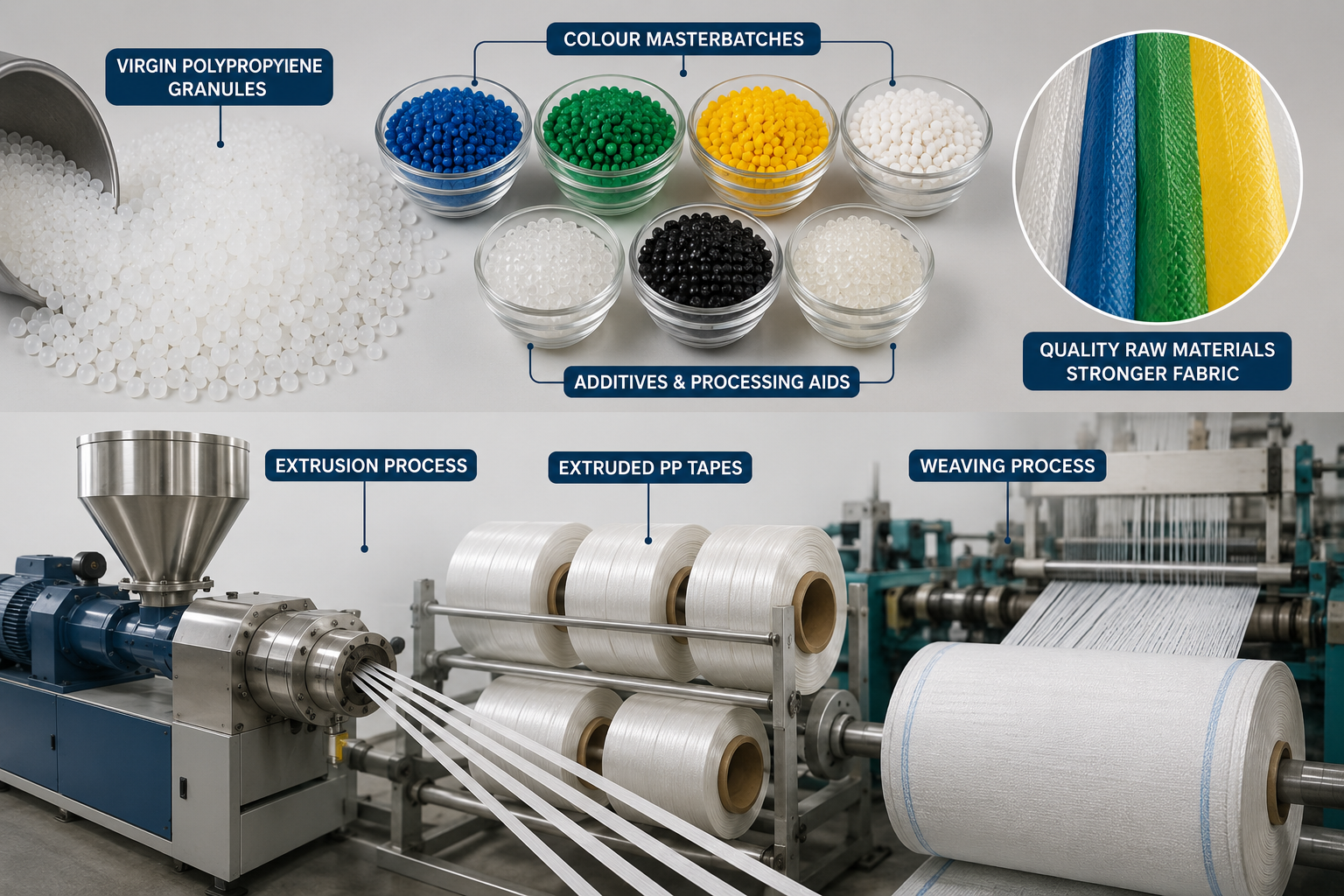
The foundation of high-quality polypropylene woven fabric begins with carefully selected raw materials. Although the manufacturing process involves sophisticated machinery and advanced production technology, the final fabric can only perform as well as the materials used during production.
Manufacturers evaluate resin quality, additives, and processing aids before production begins to ensure the finished fabric achieves the required strength, flexibility, colour consistency, and durability. Premium raw materials also improve processing efficiency while reducing production defects.
Virgin Polypropylene Granules
Virgin polypropylene granules are the primary raw material used in PP Woven Fabric Manufacturing. These small plastic pellets are produced through polymerisation and provide the base material from which polypropylene strip fabric is manufactured.
Virgin resin offers several advantages over recycled alternatives. It delivers better mechanical strength, improved consistency, cleaner appearance, and enhanced process stability during extrusion. For applications involving food packaging, pharmaceuticals, and premium export products, virgin polypropylene is typically the preferred choice because it meets higher quality and hygiene standards.
The quality of these granules directly affects the finished fabric's tensile strength, elongation, flexibility, and resistance to environmental stress. Manufacturers therefore source raw materials from reputable polymer suppliers to ensure consistent product performance across every production batch.
Additives and Masterbatches
Although polypropylene forms the base material, manufacturers often incorporate specialised additives to enhance fabric performance or achieve specific customer requirements.
Colour masterbatches are added to produce woven fabrics in white, blue, green, yellow, or customised colours. UV stabilisers improve resistance to prolonged sunlight exposure, making the fabric suitable for agricultural and outdoor applications. Anti-static additives may also be introduced where packaging is used for sensitive industrial products.
Processing aids help improve material flow during extrusion, while certain additives enhance durability, flexibility, or surface characteristics depending on the intended application. The correct balance of these materials ensures the finished polypropylene woven fabric maintains consistent quality throughout production.
Importance of Raw Material Quality
High-quality raw materials are essential for producing export quality PP woven fabric. Even the most advanced machinery cannot compensate for poor-quality resin or inconsistent additives. Low-grade materials may lead to weaker tapes, uneven weaving, colour variations, reduced load capacity, and shorter service life.
Leading manufacturers implement rigorous incoming material inspections before production begins. Raw materials are tested for melt flow index (MFI), moisture content, contamination, and consistency to ensure they meet predefined production standards.
For businesses sourcing packaging materials internationally, understanding the importance of raw material selection provides valuable insight into why some woven fabrics consistently outperform others in demanding industrial applications.
Before production moves to weaving, the polypropylene granules undergo one of the most critical stages of the entire manufacturing process—the extrusion process, where raw resin is transformed into strong, uniform tapes that form the foundation of every woven fabric roll.
Step-by-Step PP Woven Fabric Manufacturing Process
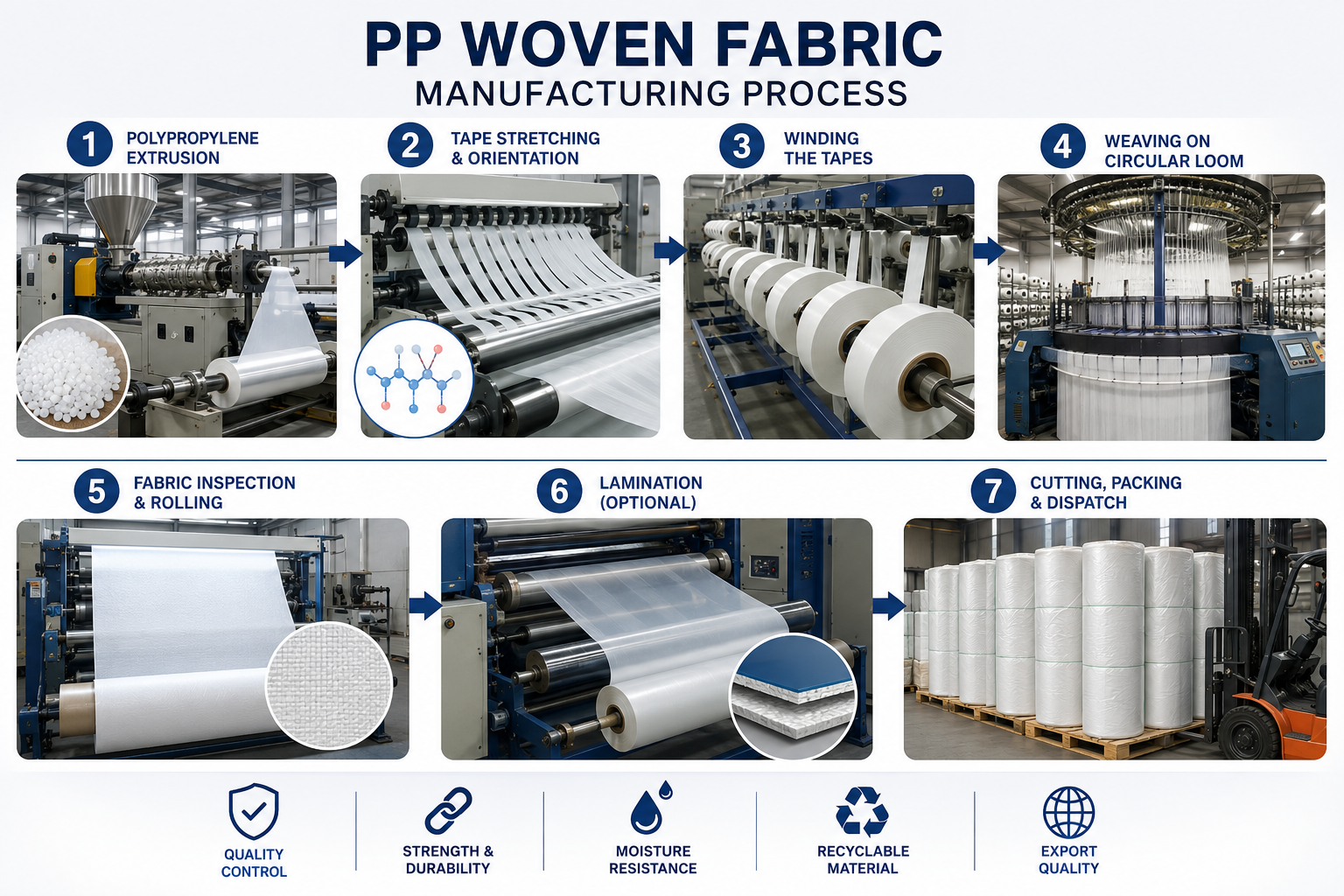
The production of woven polypropylene fabric follows a carefully controlled sequence of operations. Every stage is designed to improve the material's strength, consistency, and performance so that the finished fabric can withstand demanding industrial applications. From melting polypropylene granules to weaving tapes into durable fabric, each process contributes to producing high-quality packaging material that meets customer specifications.
Modern manufacturing facilities rely on automated machinery, real-time quality monitoring, and experienced operators to ensure every PP woven roll maintains consistent dimensions, GSM, weave density, and tensile strength. Understanding these production stages also helps buyers evaluate manufacturing capabilities when selecting a packaging supplier.
Step 1: Polypropylene Extrusion Process
The manufacturing journey begins with the extrusion process, where virgin polypropylene granules are converted into thin plastic sheets that will later become woven tapes. This is one of the most critical stages because the quality of the tapes directly influences the strength and durability of the finished fabric.
Polypropylene granules are fed into an extrusion machine through a hopper. Inside the extruder, the material is gradually heated to a controlled temperature until it melts into a homogeneous molten polymer. The molten polypropylene is then forced through a flat die to form a continuous plastic film with uniform thickness.
After leaving the die, the film passes through a water-cooling system that rapidly stabilises its dimensions and prevents deformation. Maintaining precise temperature, pressure, and cooling conditions during this stage is essential because even slight variations can affect tape quality later in the manufacturing process.
Advanced extrusion lines are equipped with automated control systems that continuously monitor production parameters. These systems help manufacturers maintain consistent output while reducing waste and improving production efficiency.
Step 2: Tape Stretching and Orientation
Once the polypropylene film has cooled, it moves to the tape stretching section. Here, the film is slit into narrow strips that become polypropylene strip fabric after undergoing molecular orientation.
Stretching is much more than simply pulling the plastic. The strips are heated and elongated under carefully controlled conditions, aligning the polymer molecules in one direction. This molecular orientation significantly increases tensile strength while reducing weight, creating lightweight tapes capable of carrying heavy loads.
The stretching ratio is precisely controlled because it determines the balance between strength and flexibility. Insufficient stretching may result in weaker tapes, while excessive stretching can make them brittle and more susceptible to breakage during weaving.
After stretching, the tapes undergo heat-setting to stabilize their dimensions before winding. This ensures that the tapes maintain consistent width and thickness throughout subsequent manufacturing stages.
High-quality tape orientation is one of the defining characteristics of **export-quality PP woven fabri**c, as it contributes directly to the fabric's load-bearing capacity and long-term durability.
Step 3: Winding the Polypropylene Tapes
Following orientation, the finished tapes are wound onto individual bobbins or spools. Although this stage appears straightforward, it plays an important role in maintaining production efficiency and fabric quality.
The winding process must maintain uniform tension to prevent tape deformation, overlapping, or breakage. Properly wound bobbins allow uninterrupted operation of circular loom machines, reducing production downtime and improving weaving consistency.
Automated winding equipment continuously monitors spool diameter, winding speed, and tape tension. If inconsistencies occur, operators can make immediate adjustments before the material progresses to the weaving stage.
Manufacturers also inspect the tapes during winding for visual defects such as width variations, surface imperfections, colour inconsistencies, or damaged edges. Detecting defects early helps prevent quality issues from affecting large quantities of finished fabric.
By the end of this stage, thousands of perfectly wound polypropylene tapes are ready to be loaded into weaving machines, where they will be transformed into strong woven polypropylene fabric.
Step 4: Weaving on Circular Loom Machines
The weaving stage is where individual polypropylene tapes become finished fabric. This transformation takes place on high-speed circular loom machines that interlace warp and weft tapes to produce seamless tubular woven fabric.
Circular looms are specifically designed for manufacturing PP woven sack fabric efficiently and consistently. Hundreds of tape bobbins are mounted on the machine, allowing warp tapes to remain under controlled tension while shuttle systems continuously weave weft tapes through them. This creates a tightly interlocked fabric structure with excellent strength and dimensional stability.
The weave pattern, tape density, and machine settings determine important characteristics such as tensile strength, flexibility, air permeability, and the GSM of PP woven fabric. Modern circular looms operate at high speeds while maintaining exceptional accuracy, enabling manufacturers to produce large volumes of fabric without compromising quality.
During weaving, automated sensors monitor broken tapes, fabric width, weaving tension, and production speed. If abnormalities are detected, the machine can stop automatically, allowing operators to correct the issue before defects spread through the production batch.
Depending on customer requirements, manufacturers can produce woven polypropylene fabric in different widths, colours, weave densities, and fabric constructions. Some fabrics are manufactured for direct bag production, while others continue through lamination or coating processes to achieve additional moisture resistance and improved printability.
The completed fabric exits the loom as a continuous tubular roll, ready for inspection and further processing in the next manufacturing stages.
Why Precision Matters During Manufacturing
Each stage in the woven fabric manufacturing process builds upon the previous one. A small variation during extrusion can influence tape quality, while inconsistent tape stretching may reduce fabric strength during weaving. Similarly, improper loom settings can affect weave density, GSM consistency, and overall product performance.
For this reason, leading manufacturers integrate quality checks throughout production rather than relying solely on final inspection. Continuous monitoring allows defects to be identified early, reducing waste and ensuring every PP woven roll meets customer specifications.
This process-driven approach is one of the reasons high-quality woven polypropylene fabric consistently performs better in demanding applications such as food packaging, fertilizer bags, cement sacks, industrial packaging, and export-grade woven bags.
After the fabric leaves the circular loom, it enters the finishing stages of production. Although the woven structure has already been created, several additional processes are required to ensure the fabric meets customer specifications for appearance, durability, printability, and export quality. These finishing operations play a significant role in determining the overall performance of the final product.
Manufacturers carefully inspect, laminate (when required), cut, roll, and package the fabric before it is supplied to bag manufacturers or industrial customers. Each stage follows strict quality control procedures to maintain consistency across every production batch.
Step 5: Fabric Inspection and Rolling
Once weaving is complete, the fabric undergoes a thorough inspection to identify any defects before further processing. This quality checkpoint ensures that only fabric meeting predefined specifications proceeds to the next stage.
Automated inspection machines and trained quality inspectors examine the woven polypropylene fabric for broken tapes, weaving defects, colour variations, width inconsistencies, holes, loose ends, and surface imperfections. Fabric dimensions, weave density, and GSM are also verified to ensure compliance with customer requirements.
In addition to visual inspection, manufacturers continuously measure the fabric width and monitor production tolerances. Even slight dimensional variations can affect downstream bag manufacturing, making this inspection stage essential for maintaining product consistency.
After passing inspection, the fabric is wound into uniform PP woven rolls. Proper rolling maintains fabric tension, prevents wrinkles, and protects the material during storage and transportation. Each roll is labelled with important production details such as batch number, width, GSM, length, manufacturing date, and inspection status, enabling complete traceability throughout the supply chain.
High-quality rolling also makes subsequent converting operations, including cutting, printing, and bag manufacturing, more efficient.
Step 6: Lamination Process (Optional)
Not every woven fabric requires lamination, but for applications demanding enhanced moisture protection and premium printing, the lamination process becomes an essential manufacturing step.
During lamination, a thin layer of molten polypropylene or BOPP film is bonded to the woven fabric under carefully controlled temperature and pressure. This additional layer creates a smoother surface while significantly improving water resistance, abrasion resistance, and print quality.
Laminated woven fabric is commonly used to manufacture premium packaging products such as rice bags, flour bags, sugar bags, animal feed bags, fertilizer bags, and retail packaging where appearance is almost as important as durability.
The lamination process also improves dimensional stability and allows high-resolution graphics to be applied using advanced printing technologies. As a result, laminated fabric supports vibrant branding, detailed product information, and attractive retail packaging.
To ensure reliable performance, manufacturers regularly monitor coating thickness, bonding strength, surface finish, and adhesion during production. Consistent lamination prevents peeling or delamination during bag conversion and long-distance transportation.
Step 7: Cutting, Packing and Dispatch
The final manufacturing stage prepares the finished fabric for delivery to customers. Based on order specifications, the woven fabric is cut into required roll lengths or supplied as full industrial rolls ready for conversion into packaging products.
Each polypropylene roll is securely wrapped using protective packaging materials to prevent contamination, moisture exposure, and physical damage during storage and transportation. Product labels typically include roll dimensions, GSM, colour, production batch, inspection details, and customer-specific identification codes.
Before dispatch, manufacturers conduct a final verification to ensure the order matches customer specifications. Roll count, packaging quality, weight, documentation, and shipping labels are carefully reviewed to minimise errors before the products leave the factory.
For international shipments, export-quality PP woven fabric is usually palletised, stretch-wrapped, and container-loaded according to established logistics practices. Proper packaging protects the rolls throughout sea freight and helps ensure they arrive in excellent condition.
At this point, the manufacturing process is complete, and the woven fabric is ready to be transformed into finished packaging products such as woven sacks, BOPP laminated bags, valve bags, shopping bags, or other industrial packaging solutions.
Machinery Used in PP Woven Fabric Manufacturing
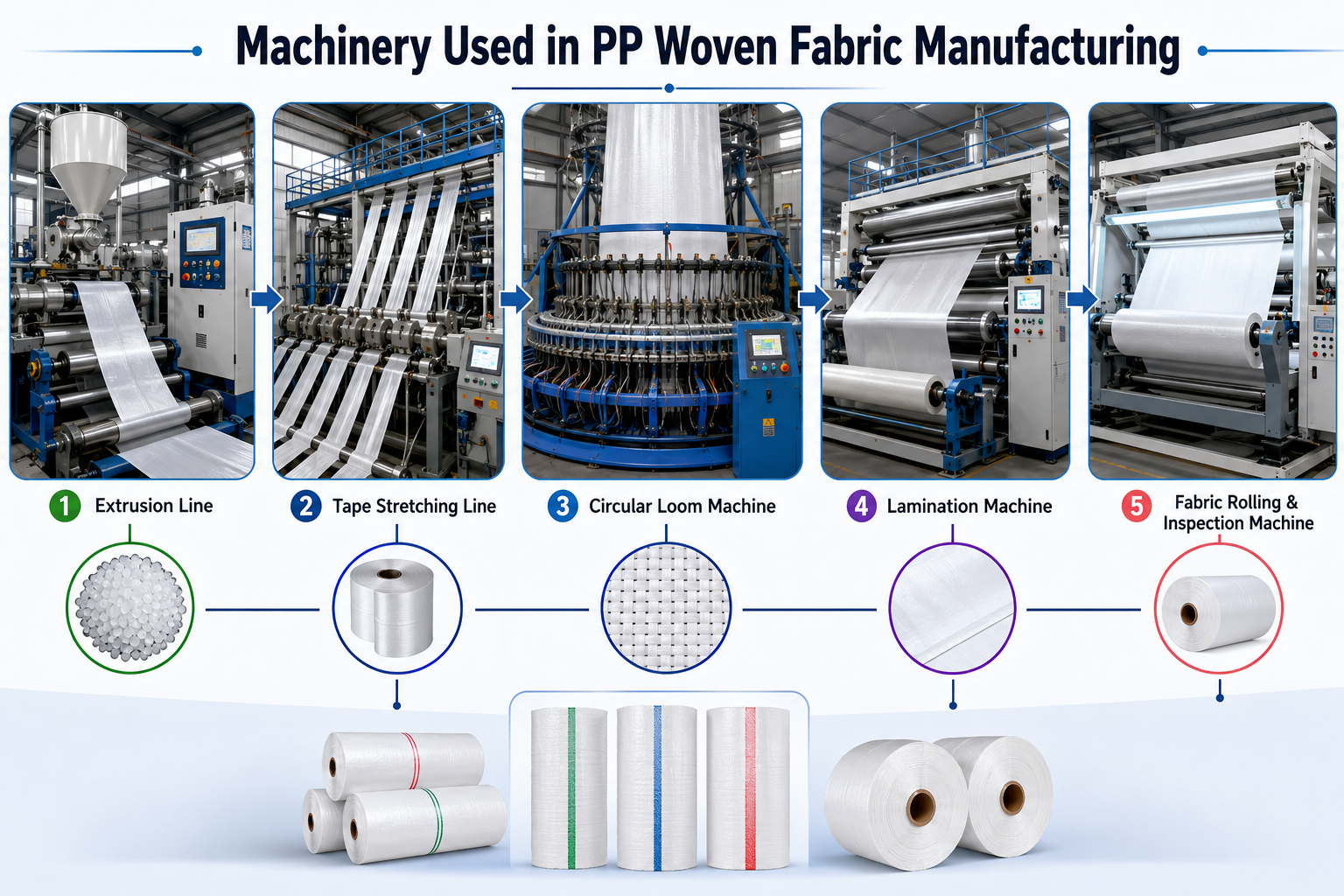
Modern PP Woven Fabric Manufacturing relies on highly specialised machinery designed to deliver consistent quality, high productivity, and efficient production. Each machine performs a specific function within the manufacturing process, and together they create a seamless production line capable of producing thousands of metres of woven fabric every day.
Continuous investment in advanced equipment allows manufacturers to improve product consistency, reduce material waste, and meet increasingly demanding quality standards required by domestic and international customers.
Extrusion Line
The extrusion line is the starting point of the manufacturing process. It melts polypropylene granules and converts them into continuous plastic film before the material is slit into narrow tapes.
Modern extrusion systems feature automated temperature control, precision dies, energy-efficient heating systems, and online monitoring that help maintain consistent tape quality. Accurate extrusion directly influences the strength, uniformity, and overall performance of the finished woven fabric.
Tape Stretching Line
The tape stretching line converts the extruded plastic film into high-strength polypropylene tapes through controlled orientation.
This equipment carefully heats and stretches the tapes to align polymer molecules, increasing tensile strength while maintaining flexibility. Advanced stretching lines continuously monitor tape thickness, width, and stretching ratios to ensure uniform production across every batch.
Circular Loom Machine
The circular loom is the core machine in the manufacturing process. It interweaves stretched polypropylene tapes into seamless tubular woven fabric using high-speed shuttle mechanisms and precisely controlled weaving tension.
Today's circular looms operate with sophisticated electronic monitoring systems that detect broken tapes, weaving interruptions, and production irregularities in real time. This automation improves production efficiency while reducing fabric defects.
Depending on machine specifications, manufacturers can produce various fabric widths, weave densities, and production capacities to meet diverse industrial requirements.
Lamination Machine
For customers requiring coated or laminated fabric, the lamination machine applies a protective layer over the woven surface.
Modern lamination equipment ensures uniform coating thickness, excellent adhesion, and smooth surface finish, enabling superior moisture resistance and improved printability. These machines are particularly important for manufacturing premium packaging materials used in food, agriculture, and retail industries.
Fabric Rolling and Inspection Machine
The final stage of production is supported by automated rolling and inspection machines. These systems inspect fabric quality while simultaneously winding it into neat, uniform rolls ready for storage or shipment.
Integrated sensors monitor roll diameter, winding tension, fabric width, and surface quality throughout the rolling process. By combining inspection with packaging preparation, manufacturers improve production efficiency while ensuring only high-quality fabric reaches customers.
Understanding GSM of PP Woven Fabric
One of the most important technical specifications in PP Woven Fabric Manufacturing is GSM, which stands for Grams per Square Metre. GSM indicates the weight of the woven fabric and provides valuable insight into its strength, thickness, and intended application. While a higher GSM generally suggests a stronger fabric, selecting the right GSM depends on the product being packaged rather than simply choosing the heaviest option.
Manufacturers carefully control GSM during production by adjusting tape denier, weaving density, tape width, and loom settings. Maintaining consistent GSM across every production batch is essential because even minor variations can affect bag performance, printing quality, and overall durability.
What Does GSM Mean?
GSM is a standard measurement that expresses the weight of one square metre of fabric. It allows manufacturers and buyers to compare different woven fabrics objectively and determine whether the material meets the required performance standards.
For example, a lighter woven polypropylene fabric may be suitable for shopping bags or lightweight agricultural products, while heavy-duty industrial packaging requires a higher GSM to withstand greater loads. Choosing the appropriate GSM helps optimize material usage without compromising product safety.
Because GSM influences both performance and production cost, manufacturers carefully balance strength and material efficiency to deliver packaging that meets customer expectations while remaining economically viable.
Standard GSM Ranges
Although specifications vary by application, several GSM ranges are commonly used across the packaging industry.
| Fabric Application | Typical GSM Range |
|---|---|
| Lightweight Shopping Bags | 45–60 GSM |
| Agricultural Packaging | 60–80 GSM |
| Rice & Flour Packaging | 70–90 GSM |
| Sugar & Animal Feed Bags | 75–100 GSM |
| Fertilizer Bags | 80–110 GSM |
| Cement Bags | 90–120 GSM |
| Heavy Industrial Packaging | 110–140 GSM |
These values serve as general industry references. Actual GSM requirements depend on bag dimensions, load capacity, customer specifications, and export market requirements.
Choosing the Right GSM for Different Applications
Selecting the correct GSM involves evaluating the complete packaging application rather than focusing solely on weight. Factors such as transportation conditions, storage duration, filling equipment, environmental exposure, and expected load all influence the ideal fabric specification.
For instance, rice exporters often prefer medium-weight woven fabrics that provide an excellent balance between strength, flexibility, and cost efficiency. Cement packaging, on the other hand, usually requires heavier fabrics capable of resisting punctures and handling repeated stacking during transportation.
Working with an experienced supplier helps ensure the selected GSM aligns with both operational requirements and customer expectations, resulting in packaging that performs consistently throughout the supply chain.
Quality Testing of PP Woven Fabric
Consistent quality is the foundation of reliable packaging. Throughout PP Woven Fabric Manufacturing, quality control is integrated into every production stage—from raw material inspection to final roll packaging. Rather than relying solely on end-product inspection, leading manufacturers continuously monitor production parameters to detect potential issues before they affect finished fabric.
Comprehensive testing ensures that the fabric meets customer specifications for strength, durability, dimensions, appearance, and overall performance. This is particularly important for packaging products intended for export markets, where quality expectations are often more stringent.
Tensile Strength Testing
Tensile strength is one of the most critical performance characteristics of woven polypropylene fabric. This test measures the maximum force the fabric can withstand before breaking, helping determine its suitability for heavy-duty packaging applications.
Laboratory testing equipment applies controlled tension to fabric samples in both warp and weft directions. The results verify whether the woven structure provides sufficient strength for products such as fertilizer bags, cement sacks, food packaging, and industrial woven bags.
Consistent tensile strength also indicates stable extrusion, proper tape orientation, and accurate weaving throughout the manufacturing process.
Fabric Width and Weight Testing
Dimensional accuracy plays a vital role in downstream bag manufacturing. Manufacturers regularly verify fabric width, roll length, and GSM to ensure every production batch remains within specified tolerances.
Accurate width helps maintain efficient bag conversion, while consistent fabric weight supports reliable stitching, printing, and overall bag performance. Precision measuring instruments enable quality inspectors to identify deviations before the material proceeds to finishing or dispatch.
UV Resistance Testing
Some woven fabrics are intended for prolonged outdoor use in agriculture, construction, and industrial storage. For these applications, UV resistance testing evaluates how effectively UV stabilisers protect the fabric from degradation caused by sunlight.
Fabric samples are exposed to accelerated weathering conditions that simulate long-term outdoor exposure. Manufacturers then assess changes in strength, flexibility, and appearance to confirm the material can maintain its performance under demanding environmental conditions.
Lamination Bond Strength Testing
For laminated products, the bond between the woven substrate and laminated layer must remain secure throughout handling and transportation. Lamination bond strength testing measures the adhesion between these layers to ensure they do not separate during normal use.
Strong bonding improves moisture resistance, print durability, and overall product lifespan. It also helps maintain the premium appearance expected in retail packaging applications.
Visual Inspection and Defect Detection
Even after technical testing is complete, every production batch undergoes detailed visual inspection. Experienced quality inspectors examine the fabric for weaving defects, broken tapes, holes, uneven colouring, contamination, loose edges, and surface imperfections.
Many modern manufacturing facilities complement manual inspections with automated optical inspection systems capable of identifying defects in real time. This combination of technology and human expertise helps maintain consistently high production standards while reducing waste.
Together, these testing procedures ensure that every roll of woven polypropylene fabric meets the performance requirements expected by customers worldwide.
Applications of PP Woven Fabric Across Industries
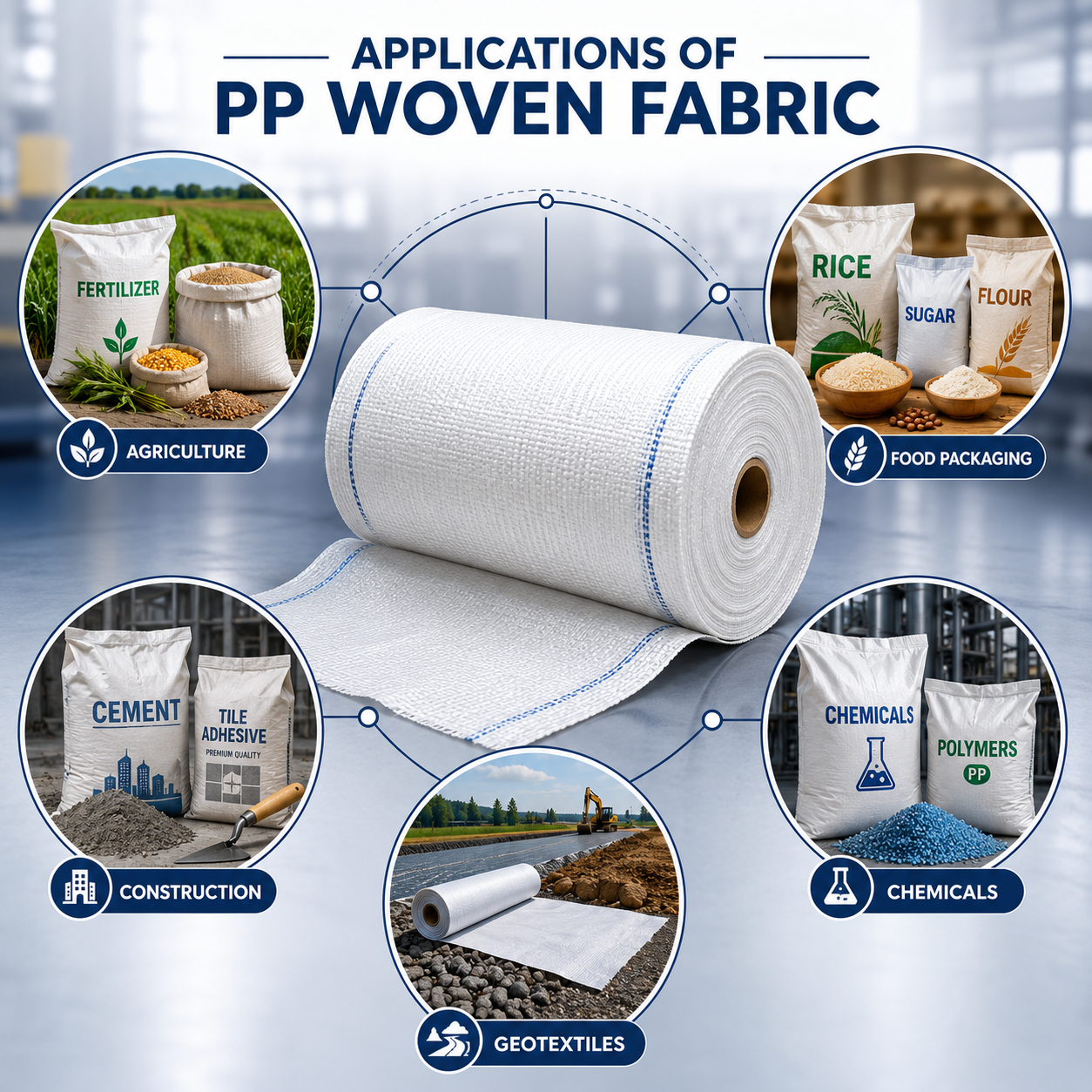
The versatility of woven polypropylene fabric has made it one of the most widely used industrial packaging materials worldwide. Its combination of strength, lightweight construction, flexibility, and cost efficiency allows manufacturers to serve diverse industries with a single base material that can be customized for specific applications.
As production technology continues to advance, the range of applications for PP woven fabric continues to expand, supporting both traditional packaging and emerging industrial uses.
Agriculture and Fertilizer Packaging
Agricultural products require packaging that can withstand rough handling, varying weather conditions, and long storage periods. PP woven sack fabric provides the durability needed for packaging seeds, grains, fertilizers, animal feed, and other agricultural commodities.
Its tear resistance and load-bearing capacity make it an ideal solution for bulk handling while helping reduce product losses during transportation.
Food Packaging and Rice Bags
Food packaging demands consistent quality, hygienic production, and reliable protection against contamination. Food-grade woven polypropylene fabric is widely used to manufacture rice bags, flour bags, sugar bags, pulse packaging, and other food products.
When combined with lamination and high-quality printing, woven fabric also delivers attractive retail packaging that enhances brand presentation while maintaining product freshness.
If you're interested in selecting the right packaging for food products, our guide to Rice Packaging Bags explains how materials, sizes, and printing options influence packaging performance.
Cement and Construction Materials
Construction materials place significant demands on packaging because of their weight and abrasive nature. Heavy-duty woven fabrics with higher GSM provide the strength required for cement bags, tile adhesives, dry mortar products, sand packaging, and construction chemicals.
Their durability helps minimise bag failures during transportation, warehousing, and on-site handling.
Chemicals and Industrial Packaging
Chemical manufacturers often require packaging capable of handling powders, granules, minerals, polymers, and industrial raw materials. Woven polypropylene fabric offers excellent strength and customisation options that allow packaging to be tailored to specific handling and storage requirements.
Additional features such as liners, anti-static additives, or UV stabilisers can further enhance performance for specialised industrial applications.
Geotextiles and Other Industrial Uses
Beyond packaging, woven polypropylene fabric is increasingly used in civil engineering, landscaping, flood control, road construction, and erosion prevention. Woven geotextiles provide soil stabilisation, drainage, and reinforcement while offering long service life in demanding environments.
This versatility demonstrates why polypropylene woven fabric remains one of the most valuable engineered textile materials available today.
PP Woven Fabric vs Other Industrial Packaging Fabrics
Selecting the appropriate packaging material depends on the application, performance requirements, and budget. The following comparison highlights how woven polypropylene fabric differs from other commonly used industrial fabrics.
| Feature | PP Woven Fabric | Non-Woven PP Fabric | HDPE Woven Fabric |
|---|---|---|---|
| Manufacturing Method | Woven polypropylene tapes | Bonded fibres | Woven HDPE tapes |
| Tensile Strength | Excellent | Moderate | Good |
| Load Capacity | High | Low to Medium | Medium to High |
| Durability | Excellent | Moderate | Good |
| Moisture Resistance | Excellent | Good | Excellent |
| Printability | Excellent (especially laminated) | Good | Moderate |
| Common Applications | Food, agriculture, cement, chemicals | Shopping bags, medical products | Fertilizer, industrial packaging |
| Reusability | High | Limited | High |
| Cost Efficiency | Excellent | Moderate | Good |
For most heavy-duty packaging applications, woven polypropylene fabric offers the best balance of strength, versatility, durability, and production efficiency. Its ability to be customised through weaving, lamination, coating, and printing makes it the preferred choice for manufacturers serving global packaging markets.
How to Choose a Reliable PP Woven Fabric Manufacturer
Selecting the right supplier is just as important as understanding the manufacturing process itself. Even if two manufacturers use similar machinery, differences in raw material quality, process control, quality assurance, and technical expertise can significantly affect the performance of the finished fabric. A reliable supplier consistently delivers woven fabric that meets agreed specifications while maintaining production consistency across every order.
When evaluating a manufacturer, look beyond pricing and consider their manufacturing capabilities, quality systems, export experience, and ability to provide customized solutions. A long-term partnership with an experienced manufacturer often delivers greater value through consistent product quality, dependable delivery schedules, and responsive technical support.
Manufacturing Capacity
Production capacity directly influences a manufacturer's ability to fulfil large orders while maintaining consistent lead times. Modern manufacturing facilities equipped with multiple extrusion lines, high-speed circular looms, automated lamination systems, and efficient inspection equipment are generally better prepared to handle both standard and customised production requirements.
For exporters managing recurring orders, consistent production capacity reduces the risk of supply chain interruptions and helps ensure timely deliveries.
Quality Certifications
Quality certifications demonstrate a manufacturer's commitment to maintaining recognised production standards. Buyers should verify whether the supplier follows established quality management systems and whether their production processes support the intended application, particularly for food packaging and export markets.
In addition to certifications, request quality documentation such as inspection reports, GSM records, tensile strength data, and batch traceability information whenever possible.
Customisation Capabilities
Every packaging application has unique requirements. A capable manufacturer should be able to customize fabric width, colour, GSM, weave density, lamination, UV stabilisation, and other specifications according to customer needs.
Flexible production capabilities allow businesses to optimise packaging performance without compromising operational efficiency or brand requirements.
Export Experience
Export markets often require stricter quality standards, specialised documentation, and reliable logistics support. Manufacturers with international experience generally understand country-specific packaging expectations, shipping requirements, and quality consistency needed for global supply chains.
Choosing a supplier with export expertise can simplify procurement while reducing the risk of product rejection or shipment delays.
Technical Support
An experienced manufacturer does more than simply produce fabric. They also provide technical guidance when selecting appropriate GSM, fabric construction, lamination options, and production specifications for different applications.
This collaborative approach helps customers choose packaging materials that balance performance, durability, and cost-effectiveness while meeting long-term business objectives.
Common Manufacturing Challenges and How They Are Solved
Even with modern production technology, manufacturers continuously monitor the production line to prevent defects that could affect finished fabric quality. Effective process control and preventive maintenance play a crucial role in maintaining consistent output.
Some of the most common manufacturing challenges include:
- Uneven tape width caused by extrusion inconsistencies.
- Broken tapes during weaving due to improper stretching or tension control.
- GSM variations resulting from inaccurate weaving density.
- Weak lamination adhesion caused by incorrect bonding temperature or pressure.
- Fabric defects such as missing tapes, holes, or irregular weave patterns.
- Colour variations caused by inconsistent masterbatch mixing.
Leading manufacturers minimize these challenges through automated monitoring systems, preventive equipment maintenance, routine calibration, operator training, and continuous quality inspections throughout production. Early defect detection significantly reduces waste while ensuring every production batch meets customer specifications.
Sustainability in PP Woven Fabric Manufacturing
Sustainability is becoming an increasingly important focus for manufacturers and buyers worldwide. While polypropylene remains a high-performance industrial material, continuous improvements in manufacturing technology are helping reduce environmental impact without compromising product quality.
One of the key advantages of woven polypropylene fabric is its durability. Stronger fabrics generally have longer service lives, reducing the need for frequent replacement and lowering overall material consumption. In many applications, polypropylene products can also be reused before entering recycling systems where suitable facilities exist.
Manufacturers are also investing in energy-efficient extrusion lines, optimised heating systems, automated production controls, and waste reduction initiatives that improve resource efficiency. Scrap generated during production is often recovered and reprocessed where technically appropriate, helping reduce manufacturing waste.
As global demand for sustainable packaging continues to grow, responsible manufacturing practices are becoming an important factor when selecting packaging suppliers. Businesses that prioritise quality, durability, and efficient production contribute to a more sustainable packaging ecosystem while maintaining reliable product performance.
Conclusion
Understanding PP Woven Fabric Manufacturing provides valuable insight into how high-performance industrial packaging materials are produced. From selecting premium polypropylene granules and controlling the extrusion process to weaving on circular looms, lamination, and rigorous quality testing, every manufacturing stage contributes to producing durable woven fabric capable of meeting demanding global packaging requirements. Businesses that understand these processes are better equipped to evaluate product quality, compare suppliers, and choose packaging solutions that deliver long-term value.
If you're looking for dependable woven polypropylene solutions manufactured to international quality standards, Oberon Polypack offers customised woven fabric designed for diverse industrial applications. Whether you require export-grade fabric, specialised GSM specifications, or tailored packaging solutions, our team can help you identify the right product for your business. To learn more, explore our PP Woven Fabric product page or Contact Us to request a customised quotation.
For additional information about polypropylene materials and international plastics standards, you can refer to the Plastics Industry Association (PLASTICS) or ASTM International for industry resources and testing standards.
Frequently Asked Questions
1. What is PP Woven Fabric Manufacturing?
PP Woven Fabric Manufacturing is the process of converting polypropylene granules into durable woven fabric through extrusion, tape stretching, weaving, inspection, and optional lamination. The finished fabric is supplied in rolls and used to manufacture packaging products such as woven sacks, BOPP laminated bags, FIBC bags, and industrial packaging materials.
2. Which machines are used to manufacture PP woven fabric?
The manufacturing process typically involves an extrusion line, tape stretching unit, winding system, circular loom, lamination machine, inspection equipment, and fabric rolling machine. Each machine performs a specific function that contributes to the strength, consistency, and quality of the finished woven fabric.
3. What is the extrusion process in PP woven fabric manufacturing?
The extrusion process begins by melting polypropylene granules and converting them into a continuous plastic film. This film is cooled, slit into narrow tapes, and prepared for stretching. Proper extrusion is essential because it directly influences tape quality and the overall performance of the finished woven fabric.
4. What GSM is best for PP woven sack fabric?
The ideal GSM depends on the intended application. Lightweight packaging generally uses lower GSM fabrics, while heavy-duty products such as cement, fertilizer, and industrial packaging require higher GSM for improved strength. Manufacturers typically recommend the most suitable GSM based on bag size, load capacity, and customer requirements.
5. How is the quality of PP woven fabric tested?
Quality testing includes tensile strength measurement, GSM verification, fabric width inspection, UV resistance testing where required, lamination bond evaluation, and detailed visual inspection. These tests help ensure that the finished fabric consistently meets customer specifications and performs reliably in demanding applications.