In today’s global trade environment, sourcing packaging materials like PP woven bags from international markets has become standard practice for many businesses. However, one critical factor that often gets overlooked is the choice of shipping terms—commonly known as Incoterms.
When dealing with Incoterms for PP woven bag imports, understanding responsibilities related to shipping, insurance, and customs clearance is essential. A small misunderstanding can result in unexpected costs, shipment delays, or supply chain disruptions.
Among all Incoterms, FOB (Free on Board) and CIF (Cost, Insurance, and Freight) are the most widely used. Choosing between them can significantly impact your cost structure, risk exposure, and level of control.
This guide explains FOB vs CIF explained for imports in a clear, practical way—helping you make smarter and more cost-effective decisions.
What Are Incoterms and Why Do They Matter in Imports?
Incoterms, short for International Commercial Terms, are globally recognized rules published by the International Chamber of Commerce. These rules define the responsibilities of buyers and sellers in international trade transactions. They clearly outline who handles shipping, insurance, export duties, import clearance, and when the risk transfers from seller to buyer.
For businesses involved in PP woven bag import Incoterms, these terms are not just technical jargon—they directly affect your profit margins and operational efficiency. Whether you are importing large volumes or small consignments, Incoterms determine how smoothly your shipment moves from the supplier’s factory to your warehouse.
One of the key reasons Incoterms matter is clarity. Without them, misunderstandings between buyer and seller can lead to disputes, delays, or unexpected costs. For example, confusion about who pays for freight or insurance can significantly increase your total landed cost.
Another important aspect is risk management. Incoterms specify the exact point at which ownership risk transfers. In some cases, the buyer takes responsibility once the goods leave the supplier’s port, while in others, the seller bears more responsibility until the shipment reaches the destination port.
In the context of Incoterms for PP woven bag imports, choosing the right term ensures:
- Better control over shipping costs
- Clear responsibility for logistics
- Reduced risk of hidden charges
- Improved coordination with freight forwarders
Ultimately, understanding Incoterms helps importers make informed decisions, negotiate better deals, and maintain smoother supply chain operations.
Overview of PP Woven Bag Imports
PP woven bags, made from polypropylene, are one of the most widely used packaging solutions across industries. Known for their strength, flexibility, and cost-effectiveness, these bags are commonly used for packaging products like grains, cement, fertilizers, chemicals, and various industrial materials.
In recent years, global demand for PP woven bags has grown steadily due to expanding industries such as agriculture, construction, and logistics. Countries like China, India, and Vietnam are among the major exporters, offering competitive pricing and large-scale production capabilities. This makes importing an attractive option for businesses looking to reduce costs while maintaining quality.
However, importing these bags is not just about selecting a supplier. It involves multiple stages including manufacturing, packaging, inland transport, international shipping, customs clearance, and final delivery. Each step comes with its own responsibilities and potential risks.
This is where understanding PP woven bag import Incoterms becomes crucial. The chosen Incoterm determines who is responsible for each stage of the journey—from the supplier’s factory to your warehouse. Without clarity, importers may face unexpected costs such as port handling charges, insurance gaps, or freight markups.
Some common challenges importers face include:
- Fluctuating freight rates
- Hidden logistics charges
- Delays in customs clearance
- Miscommunication with suppliers
- Lack of shipping control
By having a clear understanding of Incoterms for PP woven bag imports, businesses can avoid these issues and create a more predictable and cost-efficient supply chain.
FOB vs CIF Explained for PP Woven Bag Imports (Complete Comparison)
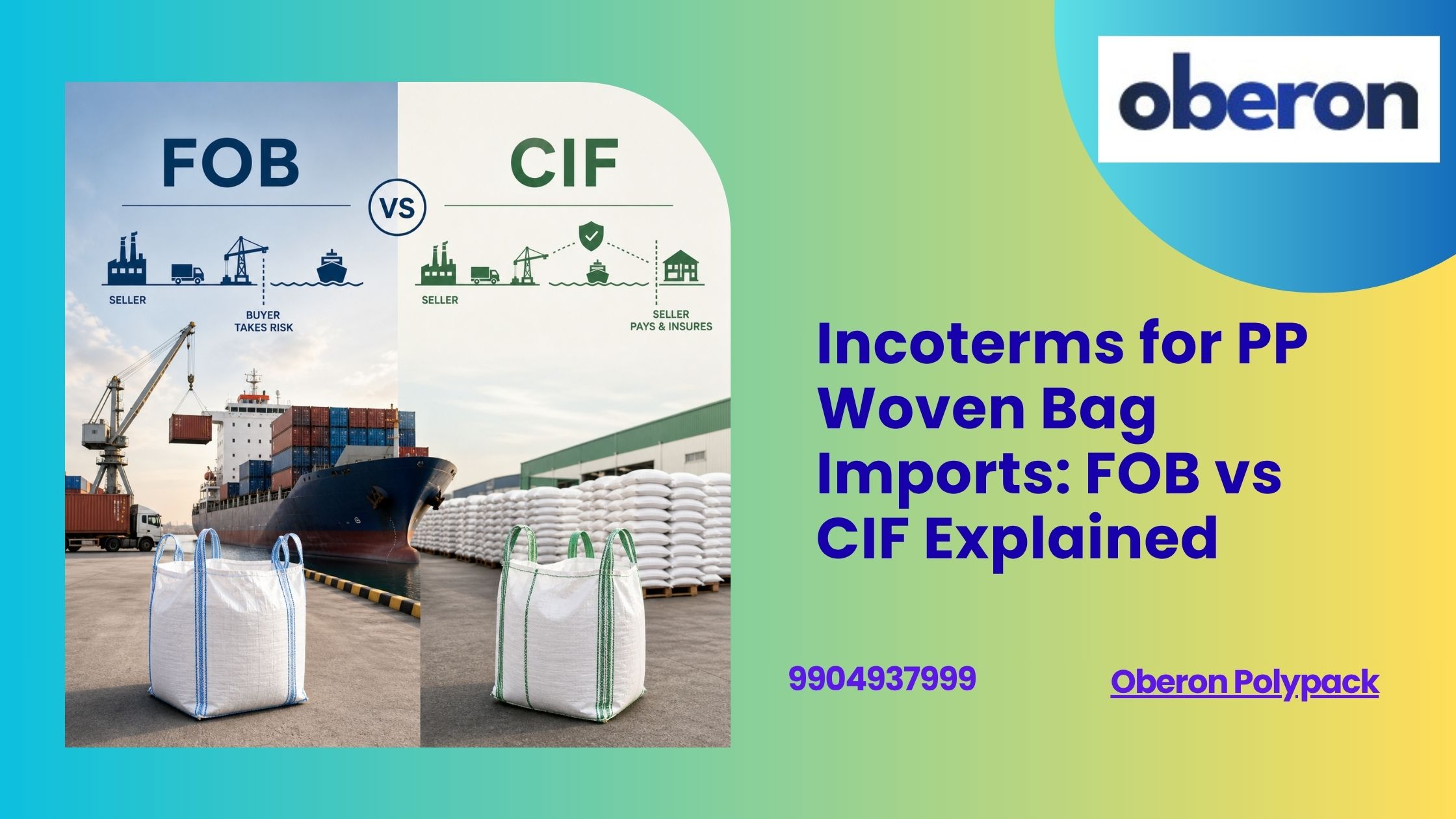
When importing PP woven bags, understanding the difference between FOB (Free on Board) and CIF (Cost, Insurance, and Freight) is essential. These two Incoterms define who is responsible for shipping, insurance, and risk at different stages of the supply chain.
This section provides a clear and practical breakdown of FOB vs CIF explained for imports, helping you choose the right option based on cost, control, and business needs.
What is FOB (Free on Board)?
Under FOB, the seller is responsible for delivering the goods to the export port and loading them onto the vessel. Once the goods are loaded, the responsibility shifts to the buyer.
In FOB:
- Seller handles production, packaging, and export clearance
- Seller loads goods onto the ship
- Buyer manages freight, insurance, and import process
FOB is ideal for importers who want greater control over shipping and cost management.
What is CIF (Cost, Insurance, and Freight)?
Under CIF, the seller takes responsibility for arranging and paying for shipping, freight, and basic insurance until the goods reach the destination port.
In CIF:
- Seller manages shipping and insurance
- Seller pays freight cost
- Buyer handles customs clearance and final delivery
CIF is more convenient, especially for beginners or those who prefer a simplified process.
FOB vs CIF – Key Differences
| Factor | FOB (Free on Board) | CIF (Cost, Insurance, Freight) |
|---|---|---|
| Responsibility | Buyer takes control after loading | Seller manages shipping to destination port |
| Shipping Cost | Paid by buyer | Included in seller’s price |
| Insurance | Buyer arranges | Seller provides basic coverage |
| Risk Transfer | At origin port (once loaded) | At origin port (same as FOB) |
| Control | High | Limited |
| Cost Transparency | Clear and negotiable | May include hidden costs |
| Best For | Experienced importers | Beginners or small shipments |
Cost and Transparency
FOB gives importers better cost visibility because they can negotiate directly with freight forwarders. This often results in lower overall shipping costs.
In CIF, freight and insurance are included in the seller’s quote. While convenient, this may involve hidden markups, making it harder to evaluate actual costs.
Risk and Insurance
A common misconception is that CIF reduces risk for buyers. In reality, risk transfers at the same point in both FOB and CIF—once goods are loaded onto the vessel.
The difference is:
- FOB → Buyer controls insurance
- CIF → Seller provides limited insurance
For bulk shipments like PP woven bags, FOB allows better protection through customized insurance coverage.
Control Over Logistics
FOB offers flexibility in choosing:
- Shipping lines
- Transit time
- Freight partners
CIF limits this control since the seller manages shipping. This can impact delivery timelines and efficiency.
Which One Should You Choose?
Choose FOB if you want cost control, flexibility, and long-term savings
Choose CIF if you prefer convenience and minimal involvement
What is FOB in PP Woven Bag Imports?
FOB (Free on Board) is one of the most commonly used shipping terms in international trade, especially for bulk products like PP woven bags. Under FOB, the seller is responsible for delivering the goods to the designated port and loading them onto the shipping vessel. Once the goods are safely loaded, the responsibility—and risk—shifts to the buyer.
In the context of FOB vs CIF for PP woven bags, FOB gives importers greater control over logistics and cost management, making it a preferred option for businesses that have experience in handling international shipments.
Seller Responsibilities Under FOB
- Manufacturing and packaging of PP woven bags
- Transporting goods to the export port
- Handling export documentation and customs clearance
- Loading goods onto the vessel
Buyer Responsibilities Under FOB
- Booking and paying for international freight
- Arranging insurance coverage
- Managing import customs clearance
- Paying duties, taxes, and local charges
- Organizing delivery from port to warehouse
Advantages of FOB for Importers
One of the biggest benefits of FOB is cost transparency. Since the buyer controls freight and insurance, there is less risk of hidden charges being added by the supplier. This allows better negotiation with freight forwarders and improved control over the total landed cost.
FOB also provides flexibility. Importers can choose their preferred shipping partners, optimize routes, and consolidate shipments if needed. This is especially useful when importing large volumes of PP woven bags regularly.
Risks and Considerations
While FOB offers more control, it also comes with added responsibility. Importers must coordinate shipping, insurance, and documentation carefully. Any delay in booking freight or handling paperwork can lead to additional costs.
Additionally, risk transfers once the goods are loaded at the origin port. This means any damage or loss during transit becomes the buyer’s responsibility, making proper insurance coverage essential.
For businesses looking to scale imports and optimize costs, FOB can be a highly effective choice. However, it requires a good understanding of logistics and reliable coordination with shipping partners.
What is CIF in PP Woven Bag Imports?
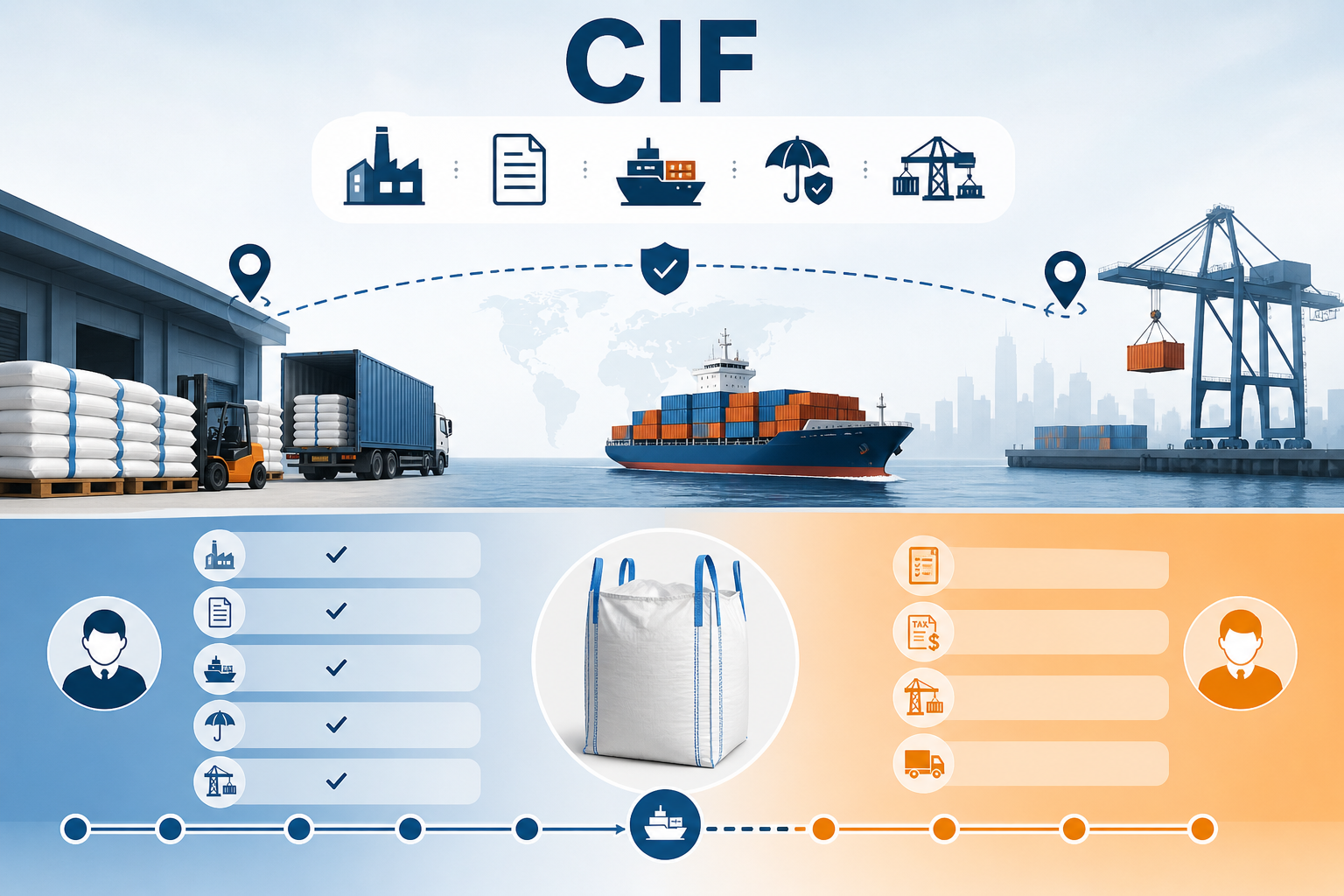
CIF (Cost, Insurance, and Freight) is another widely used Incoterm in global trade, especially for importers who prefer a more hands-off approach. Under CIF, the seller takes responsibility for arranging and paying for transportation, freight charges, and basic insurance until the goods reach the destination port.
In simple terms, the supplier manages most of the shipping process, making CIF a convenient option for those new to Incoterms for PP woven bag imports or businesses that do not want to handle complex logistics.
Seller Responsibilities Under CIF
- Manufacturing and packaging of PP woven bags
- Export documentation and customs clearance
- Booking and paying for international freight
- Providing insurance coverage (minimum level)
- Delivering goods to the destination port
Buyer Responsibilities Under CIF
- Import customs clearance
- Payment of duties and taxes
- Port handling and unloading charges
- Final delivery from port to warehouse
Advantages of CIF for Importers
The biggest advantage of CIF is convenience. Since the seller manages shipping and insurance, the buyer does not need to deal with freight forwarders or complex coordination. This makes it an ideal choice for beginners or businesses importing smaller quantities.
CIF can also simplify the procurement process. Importers receive a single combined price that includes product cost, freight, and insurance, making budgeting easier in the initial stages.
Drawbacks and Risks
Despite its convenience, CIF has some limitations. One major concern is lack of cost transparency. Sellers may include higher freight charges or margins, which can increase the overall cost without the buyer realizing it.
Another important point is insurance coverage. While CIF includes insurance, it is usually minimal. In case of damage or loss, the compensation may not fully cover the value of goods, especially for high-volume shipments like PP woven bags.
Also, even though the seller pays for freight, the risk technically transfers once the goods are loaded onto the ship. This can be confusing for new importers who assume the seller bears full responsibility until delivery.
CIF is a practical choice for those who prioritize ease and simplicity. However, for long-term cost optimization and better control, many experienced importers eventually shift from CIF to FOB.
Best Incoterms for PP Woven Bag Import – Which One Should You Choose?
Choosing the right shipping term is not about picking what’s popular—it’s about what fits your business model, experience level, and cost strategy. When evaluating the Best Incoterms for PP woven bag import, the decision usually comes down to how much control you want versus how much convenience you need.
Both FOB and CIF have their place, but the “best” option depends on your specific situation.
1. Consider Your Experience Level
If you are new to importing, CIF is often the safer starting point. The supplier handles most of the logistics, reducing the chances of errors in shipping or documentation.
On the other hand, experienced importers usually prefer FOB. It allows them to negotiate better freight rates and optimize shipping over time.
2. Evaluate Cost Sensitivity
If your goal is to minimize total landed cost, FOB is generally the better choice. It gives you transparency and the ability to compare freight prices independently.
CIF may look cheaper initially, but bundled pricing can sometimes hide additional costs. For long-term imports, this can impact profitability.
3. Control Over Logistics
FOB is ideal if you want full control over:
- Shipping schedules
- Freight forwarders
- Transit time
CIF is better if you prefer a hands-off approach and want the supplier to manage shipping.
4. Supplier Reliability Matters
If you are working with a highly reliable and transparent supplier, CIF can work smoothly. However, if there is any doubt about pricing clarity or shipping practices, FOB gives you more control and reduces dependency.
5. Business Size and Import Volume
- Small businesses / low volume: CIF is simpler and easier to manage
- Growing businesses: Transitioning to FOB can reduce costs
- Large-scale importers: FOB is usually the preferred option for efficiency and scalability
Practical Recommendation
For most businesses importing PP woven bags:
- Start with CIF if you are new and want simplicity
- Gradually shift to FOB as you gain experience
- Use FOB for bulk or repeat orders to maximize savings
When planning Incoterms for PP woven bag imports, the smartest approach is not choosing one forever, but adapting based on your growth stage and operational capability.
Making the right choice here can significantly improve your supply chain efficiency, reduce hidden costs, and give you better control over your imports.
Hidden Costs to Consider in FOB and CIF
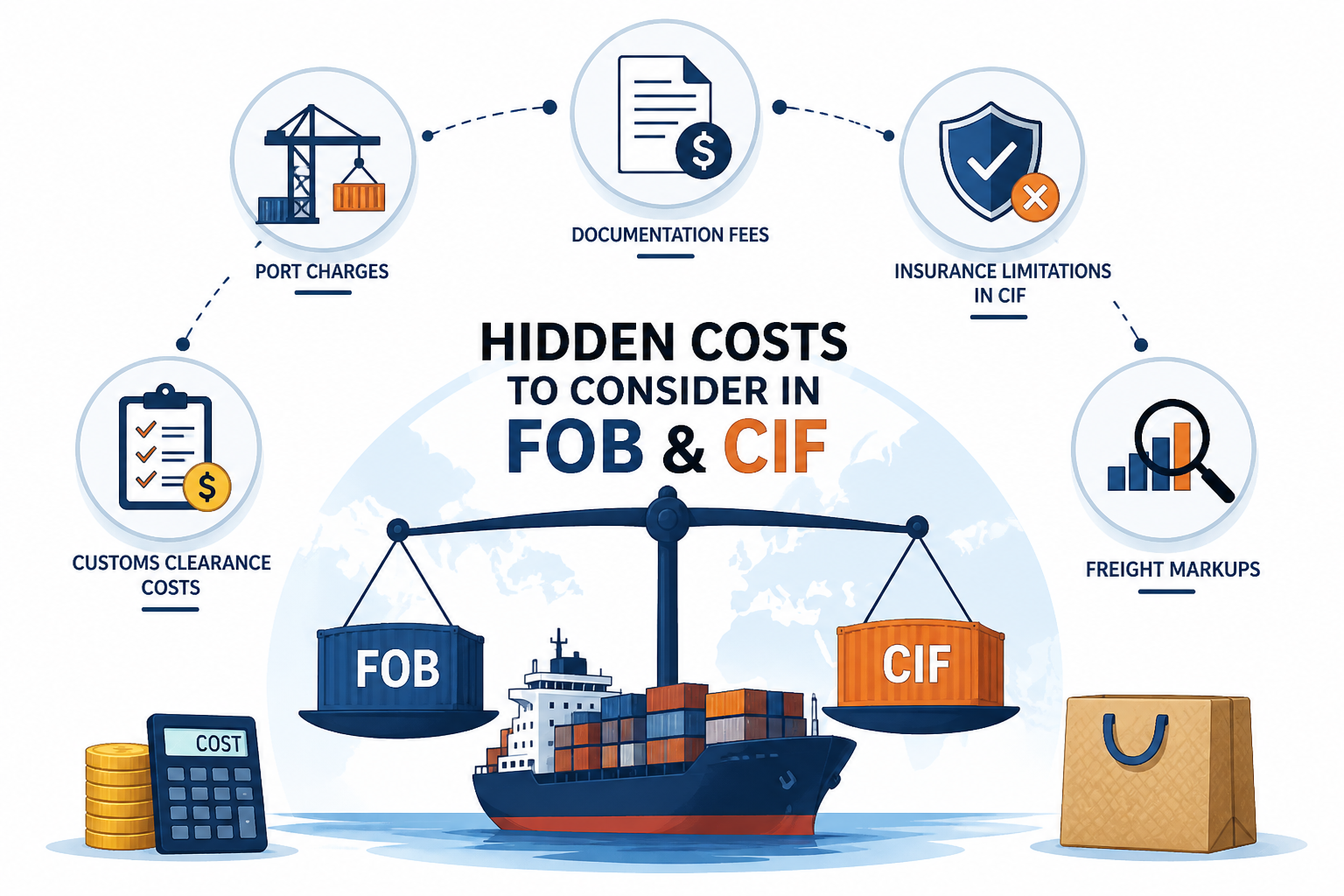
While FOB and CIF may seem straightforward at first, many importers underestimate the hidden costs involved. These additional expenses can significantly impact your total landed cost, especially when importing in bulk. Understanding these factors is essential when working with Incoterms for PP woven bag imports.
1. Port Charges
Port charges are one of the most common unexpected costs. These include:
- Terminal handling charges (THC)
- Container unloading fees
- Port storage charges (if delayed)
Under both FOB and CIF, these costs are usually paid by the buyer at the destination port. Many importers assume CIF covers everything, but that’s not the case.
2. Documentation Fees
International shipping requires multiple documents such as:
- Bill of Lading
- Packing List
- Commercial Invoice
- Import permits
Shipping lines and agents often charge fees for processing these documents. In CIF shipments, these charges may be handled by the seller initially but are often passed on indirectly.
3. Customs Clearance Costs
Customs clearance is another area where costs can add up quickly. These include:
- Customs duty
- GST/VAT
- Customs broker fees
- Inspection charges
Regardless of whether you choose FOB or CIF, the buyer is responsible for clearing goods at the destination. Poor planning here can lead to delays and extra penalties.
4. Insurance Limitations in CIF
One major misconception about CIF is that it provides complete insurance coverage. In reality, the insurance included is usually minimal and may only cover basic risks.
For high-volume shipments like PP woven bags:
- Coverage may not match actual cargo value
- Claims can be difficult or slow
- Certain damages may not be included
This is why many experienced importers prefer arranging their own insurance under FOB.
5. Freight Markups
In CIF shipments, the seller controls freight booking. This can sometimes lead to:
- Higher-than-market freight rates
- Limited visibility into actual shipping costs
- Use of less efficient shipping routes
These hidden markups can make CIF more expensive than it appears upfront.
Final Insight
Whether you choose FOB or CIF, hidden costs are unavoidable—but they can be managed with the right knowledge. By carefully analyzing these expenses, importers can make smarter decisions and avoid unexpected financial surprises in their supply chain.
Common Mistakes Importers Make While Choosing Incoterms
Selecting the right shipping term is critical, yet many importers make avoidable mistakes that increase costs and create operational challenges. When dealing with Incoterms for PP woven bag imports, even small misunderstandings can lead to delays, disputes, or unexpected expenses.
Here are the most common mistakes you should avoid:
1. Not Reading Terms Carefully
Many importers rely on assumptions instead of fully understanding the Incoterm they are using. FOB and CIF may sound simple, but each comes with specific responsibilities and risk transfer points.
Failing to read the details can result in confusion about:
- Who pays for freight
- Who handles documentation
- When risk shifts from seller to buyer
A clear understanding upfront prevents costly misunderstandings later.
2. Assuming CIF Covers All Risks
One of the biggest misconceptions is that CIF means the seller is responsible for everything until delivery. In reality, risk transfers once the goods are loaded onto the ship—even under CIF.
Additionally, the insurance provided in CIF is usually basic and may not fully cover:
- Damage during transit
- Theft or loss
- High-value shipments
Relying completely on CIF without reviewing insurance coverage can be risky.
3. Ignoring Local Charges
Many buyers focus only on the supplier’s quote and overlook destination costs. Charges such as:
- Port handling fees
- Customs clearance costs
- Inland transportation
can significantly increase the total landed cost. This is especially common in CIF shipments, where buyers assume all costs are included.
4. Lack of Freight Negotiation
In FOB shipments, buyers have the opportunity to negotiate directly with freight forwarders. However, some importers fail to take advantage of this and accept higher rates.
Not comparing freight options can result in:
- Increased shipping costs
- Longer transit times
- Reduced profitability
Effective negotiation is key to optimizing logistics expenses.
5. Choosing the Wrong Term for Business Size
Not every Incoterm suits every business. A common mistake is selecting terms based on convenience rather than strategy.
- Small businesses may struggle with FOB due to lack of logistics experience
- Large importers may lose money using CIF due to hidden costs
Choosing the wrong term can limit scalability and affect long-term efficiency.
Final Thought
Avoiding these mistakes is essential for smooth and cost-effective importing. By clearly understanding responsibilities and aligning them with your business capabilities, you can make smarter decisions when selecting PP woven bag import Incoterms and build a more reliable supply chain.
Expert Tips for Importing PP Woven Bags Smoothly
Importing PP woven bags can be highly profitable when done right, but it requires careful planning and smart decision-making. Whether you choose FOB or CIF, following a few expert practices can help you avoid common pitfalls and improve efficiency when working with Incoterms for PP woven bag imports.
1. Work with Reliable and Verified Suppliers
Your supplier plays a crucial role in the entire import process. Always choose manufacturers with a proven track record in quality, timely delivery, and transparent pricing.
Working with experienced manufacturers like Oberon Polypack can simplify sourcing, ensure consistent product quality, and reduce risks associated with international shipping.
Before finalizing:
- Check certifications and export experience
- Request product samples
- Review client feedback or past projects
A reliable supplier reduces risks, especially when dealing with CIF shipments.
2. Always Verify Freight Costs Independently
Even if you are opting for CIF, it’s a good practice to cross-check freight rates with independent freight forwarders. This helps you:
- Identify inflated shipping charges
- Compare market rates
- Make informed cost decisions
For FOB shipments, negotiating freight directly can significantly reduce your total landed cost.
3. Review Insurance Coverage Carefully
Do not assume that CIF insurance is enough. Always check:
- Coverage value
- Risk inclusions and exclusions
- Claim process
For high-volume imports, consider upgrading insurance or arranging your own policy for better protection.
4. Plan Customs Clearance in Advance
Delays at customs can lead to storage charges and supply chain disruptions. To avoid this:
- Prepare all documents in advance
- Work with an experienced customs broker
- Understand import duties and regulations
Proper planning ensures faster clearance and fewer unexpected costs.
5. Choose the Right Incoterm Based on Growth Stage
Your choice of Incoterms should evolve with your business:
- Start with CIF for simplicity
- Shift to FOB as you gain experience
- Optimize logistics for bulk imports
This flexible approach helps balance convenience and cost efficiency over time.
6. Build Strong Relationships with Logistics Partners
Having trusted freight forwarders and clearing agents can make a big difference. Strong partnerships help in:
- Faster communication
- Better freight rates
- Smooth handling of issues
This becomes especially important when managing regular FOB shipments.
Final Insight
Success in importing is not just about choosing between FOB and CIF—it’s about managing the entire process strategically. By applying these expert tips, you can reduce risks, control costs, and build a more efficient supply chain for your PP woven bag imports.
Conclusion
Understanding Incoterms for PP woven bag imports is key to successful international sourcing. FOB and CIF both offer advantages, but the right choice depends on your experience, cost priorities, and operational capabilities.
FOB provides control and long-term savings, while CIF offers simplicity and convenience.
By evaluating FOB vs CIF for PP woven bags, considering hidden costs, and avoiding common mistakes, you can build a more efficient import strategy.
As your business grows, your approach to PP woven bag import Incoterms should evolve—helping you reduce costs, manage risks, and scale effectively.
Questions Importers Ask (People Also Ask Section)
When researching Incoterms for PP woven bag imports, many buyers have similar concerns. Answering these common questions not only improves clarity but also helps you make confident decisions while importing.
1. Which is better, FOB or CIF for PP woven bags?
There is no one-size-fits-all answer. FOB is better for importers who want cost control and have experience handling logistics. CIF is more suitable for beginners who prefer convenience and want the supplier to manage shipping.
For long-term cost savings and scalability, many businesses eventually shift to FOB.
2. Is CIF more expensive than FOB?
In many cases, yes—CIF can be more expensive in the long run. While it appears convenient, the freight and insurance costs included by the seller may have added margins.
FOB, on the other hand, allows buyers to negotiate shipping rates directly, often resulting in lower overall costs.
3. Who pays for shipping in FOB vs CIF?
In FOB, the buyer pays for shipping, insurance, and all costs after the goods are loaded onto the vessel
In CIF, the seller pays for freight and basic insurance up to the destination port
However, the buyer still pays for import duties, port charges, and final delivery in both cases.
4. Can I switch Incoterms after agreement?
Switching Incoterms after finalizing a contract is possible, but it requires mutual agreement between buyer and seller. It may also involve renegotiating pricing, responsibilities, and documentation.
To avoid complications, it’s always better to finalize the correct Incoterm before placing the order.
5. Which Incoterm is safest for beginners?
CIF is generally considered safer for beginners because the seller handles most of the shipping process. This reduces the risk of logistical errors and simplifies the import process.
However, beginners should still review all terms carefully and understand what is included—and what is not.