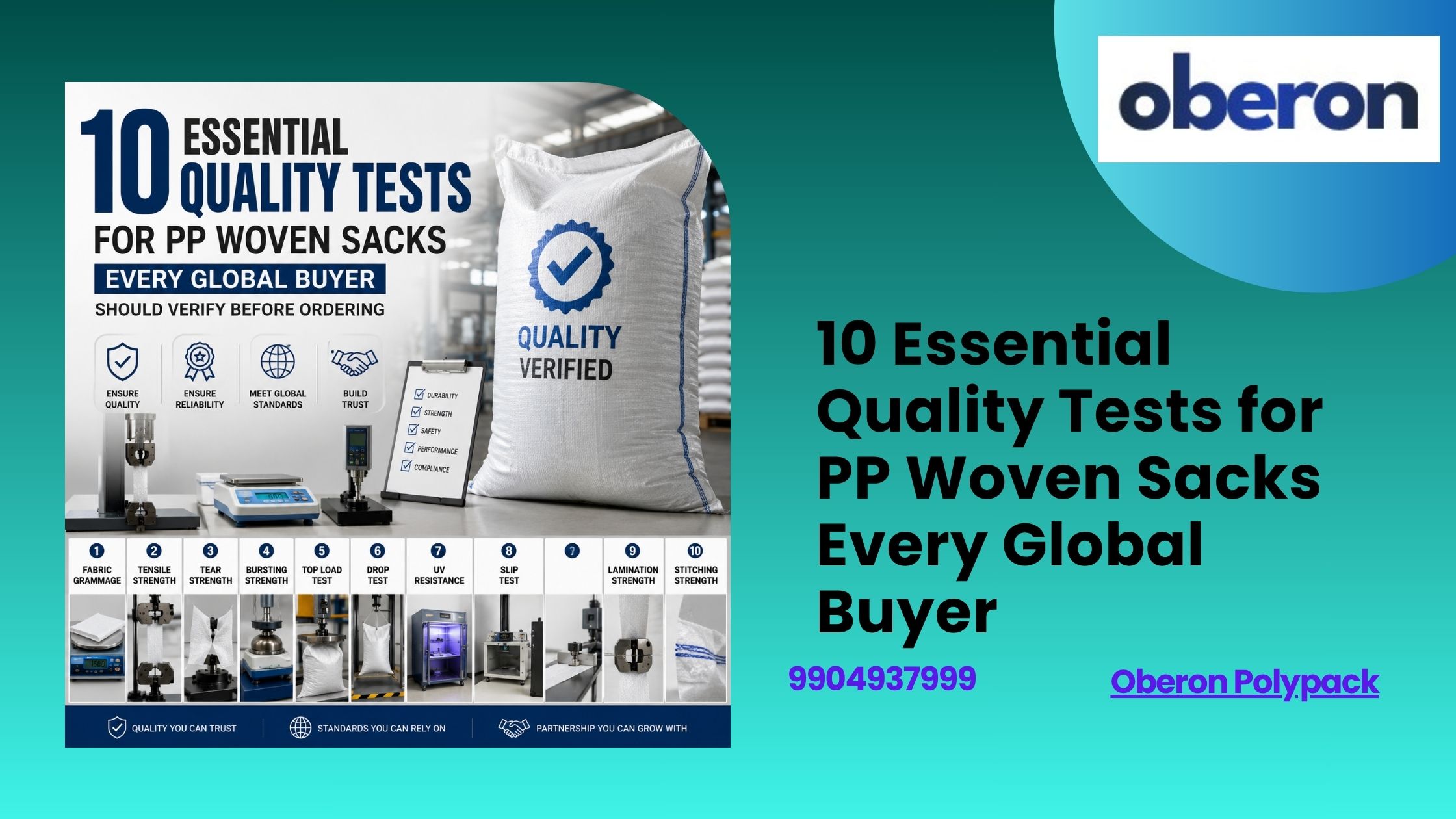
Introduction
Imagine ordering a large shipment of packaging for an international export project, only to discover that the sacks split during loading or fail after weeks at sea. It sounds like a logistics nightmare, but it happens more often than many buyers realise. In global supply chains, packaging isn't just a container—it is the first line of defence against product loss, contamination, and costly delays.
For businesses exporting agricultural products, fertilisers, chemicals, food ingredients, or industrial materials, selecting high-quality pp woven sacks is a critical purchasing decision. A visually appealing sack may look impressive during a supplier presentation, but appearance alone cannot guarantee performance. That's why experienced procurement teams rely on quality testing before approving orders.
At Oberon Polypack, we understand that buyers need packaging solutions that perform consistently under real-world conditions. Explore our PP woven sacks and packaging solutions on the products page to see how quality-focused manufacturing supports global supply chains.
At Oberon Polypack, we regularly supply pp woven sacks for agricultural exporters, fertiliser manufacturers, food processors, and industrial packaging buyers across global markets. Based on our experience, one of the most common issues during international shipping is product damage caused by moisture exposure, repeated handling at ports, and long storage durations. For this reason, many export-focused customers choose laminated pp woven sacks, reinforced stitching, and higher-strength fabric specifications to improve cargo protection and maintain product quality throughout the supply chain.
What Are Quality Tests for PP Woven Sacks?
Quality tests for pp woven sacks are inspection and performance evaluation methods used to verify strength, durability, load-bearing capacity, moisture resistance, stitching integrity, and overall packaging reliability. These tests help buyers determine whether sacks can withstand transportation, storage, handling, and export conditions without compromising product safety or packaging performance.
Why Quality Testing Matters for Global Buyers
When sourcing polypropylene woven sacks, quality testing provides objective evidence that the packaging meets performance expectations. Without testing, buyers are often relying on product specifications alone, which can create unnecessary risks.
A quality-tested sack reduces the likelihood of product loss, damaged shipments, customer complaints, and supply chain disruptions. More importantly, testing helps buyers compare suppliers based on measurable performance rather than price alone. In international trade, where products may travel thousands of kilometres before reaching their destination, these quality checks can save significant time and money.
The difference between tested and untested packaging can have a significant impact on product protection, supply chain efficiency, and overall procurement costs.
| Untested PP Woven Sack | Quality-Tested PP Woven Sack |
|---|---|
| Unknown tensile strength | Verified tensile strength performance |
| Higher risk of tearing or failure | Proven durability under load conditions |
| Limited quality documentation | Comprehensive testing and inspection reports |
| Greater risk of product loss or damage | Improved cargo protection during transportation |
| Inconsistent manufacturing quality | Consistent production and quality standards |
| Unverified moisture resistance | Tested moisture protection performance |
| Higher long-term procurement risk | Greater reliability and buyer confidence |
For global buyers, investing in quality-tested pp woven sacks is often more cost-effective in the long run because it helps reduce packaging failures, minimise product losses, and improve supply chain reliability.
10 Essential Quality Tests for PP Woven Sacks Before Ordering
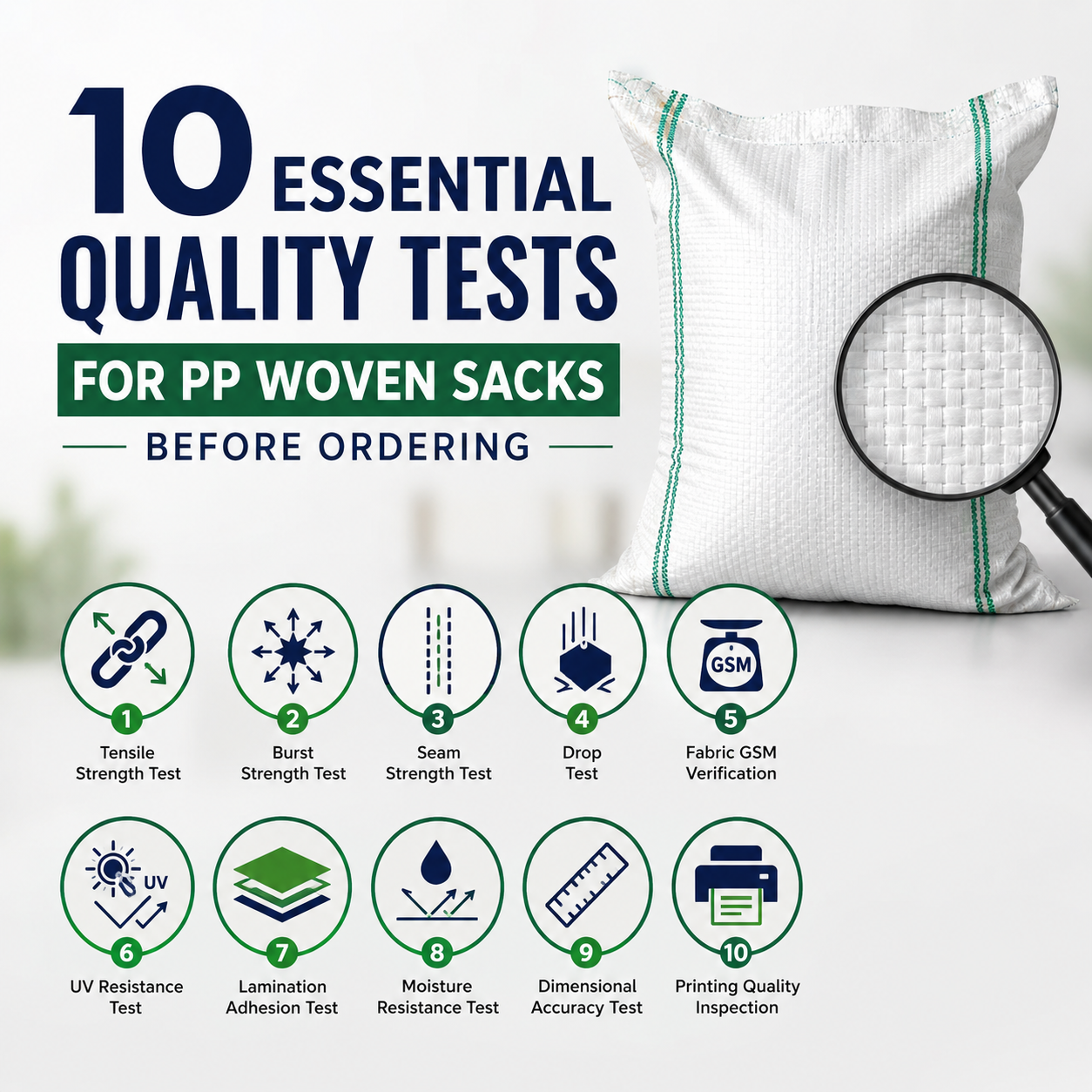
1. Tensile Strength Test
One of the most important quality tests for pp woven sacks is tensile strength testing. This test measures the amount of force the woven fabric can withstand before breaking.
High tensile strength is particularly important for bulk packaging sacks used in agriculture, construction, and industrial applications. Strong fabrics reduce the risk of tearing during lifting, stacking, and transportation.
Export-grade pp woven sacks typically utilise woven polypropylene fabrics designed to deliver consistent tensile performance, ensuring reliable handling across the supply chain.
2. Burst Strength Test
Burst strength testing evaluates the sack's ability to withstand pressure from inside the package. This becomes especially important when packaging powders, granules, fertilisers, and chemical products.
Imagine filling a sack with heavy material and then stacking multiple units on top of it during storage. The internal and external pressures can quickly expose weak packaging materials.
A strong burst strength rating indicates that the packaging can safely contain products without splitting or rupturing during storage and transportation.
3. Seam Strength Test
Even the strongest woven fabric can fail if the stitching is poor. Seam strength testing evaluates how well stitched areas perform under stress.
For woven sacks for international shipping, seam integrity is often one of the most overlooked quality factors. During loading and unloading operations, significant stress is concentrated around stitched areas.
Reliable manufacturers conduct seam testing to verify that stitching patterns, thread quality, and construction methods can withstand demanding handling conditions.
4. Drop Test
The drop test simulates accidental handling incidents that may occur during transportation and warehouse operations.
Products are typically dropped from predetermined heights to evaluate how the packaging performs under impact conditions. While no exporter wants their products dropped, real-world logistics environments are rarely perfect.
This test helps buyers understand whether their selected pp woven sacks can maintain structural integrity during unexpected handling situations.
5. Fabric GSM Verification
Fabric GSM (grams per square metre) is one of the most important technical specifications in woven packaging.
Export-grade pp woven sacks are generally produced using fabrics ranging from approximately 60 GSM to 140 GSM, depending on the application. Lower GSM fabrics may be suitable for lighter products, while heavier applications often require stronger fabric constructions.
Buyers should verify that the supplied GSM matches the agreed specification, as variations can directly impact packaging strength and durability.
| Specification | Typical Export Range |
|---|---|
| Fabric Weight | 60–140 GSM |
| Load Capacity | 5–50+ kg |
| UV Protection | Optional UV Stabilisation |
| Lamination | Single or Double Side |
| Printing Options | Multi-Colour Custom Printing |
6. UV Resistance Test
Many products spend extended periods in outdoor storage areas before shipment. Exposure to sunlight can gradually weaken polypropylene materials if UV protection is insufficient.
UV resistance testing evaluates how well the fabric performs after exposure to ultraviolet radiation. This is particularly important for pp woven sacks for agriculture, construction materials, and products stored outdoors.
High-quality manufacturers often offer UV-stabilised fabrics to improve performance in demanding environmental conditions.
7. Lamination Adhesion Test
Laminated pp woven sacks are commonly used for moisture-sensitive products. However, the effectiveness of lamination depends on how well it adheres to the woven substrate.
This test evaluates the bonding strength between the woven fabric and the laminated layer. Poor adhesion can lead to delamination, reducing moisture protection and overall packaging performance.
For products exposed to humid climates or long-distance transportation routes, strong lamination performance is essential.
8. Moisture Resistance Test
Moisture remains one of the biggest threats to product quality during international shipping.
Moisture resistance testing evaluates how effectively packaging prevents water vapour and environmental humidity from affecting packaged goods. This test is especially important for food packaging woven sacks, fertilizer packaging sacks, and chemical packaging woven sacks.
At Oberon Polypack, we frequently see buyers prioritising moisture resistant pp sacks when shipping products through tropical regions where humidity can significantly impact product quality.
9. Dimensional Accuracy Test
Consistency matters in logistics. Dimensional accuracy testing verifies that sacks meet specified size tolerances.
Even small variations in dimensions can affect palletisation efficiency, container utilisation, storage capacity, and automated filling operations.
Global buyers often require dimensional verification to ensure packaging performs consistently throughout their production and logistics systems.
10. Printing Quality Inspection
Packaging often serves as both a protective solution and a branding tool. Custom printed pp woven sacks must maintain clear, durable, and accurate printing.
Quality inspections evaluate print alignment, colour consistency, readability, and durability. This becomes particularly important when packaging includes handling instructions, safety information, regulatory markings, or brand messaging.
Branded pp woven sacks help improve product identification while strengthening brand visibility in competitive markets.
Understanding International Quality Standards
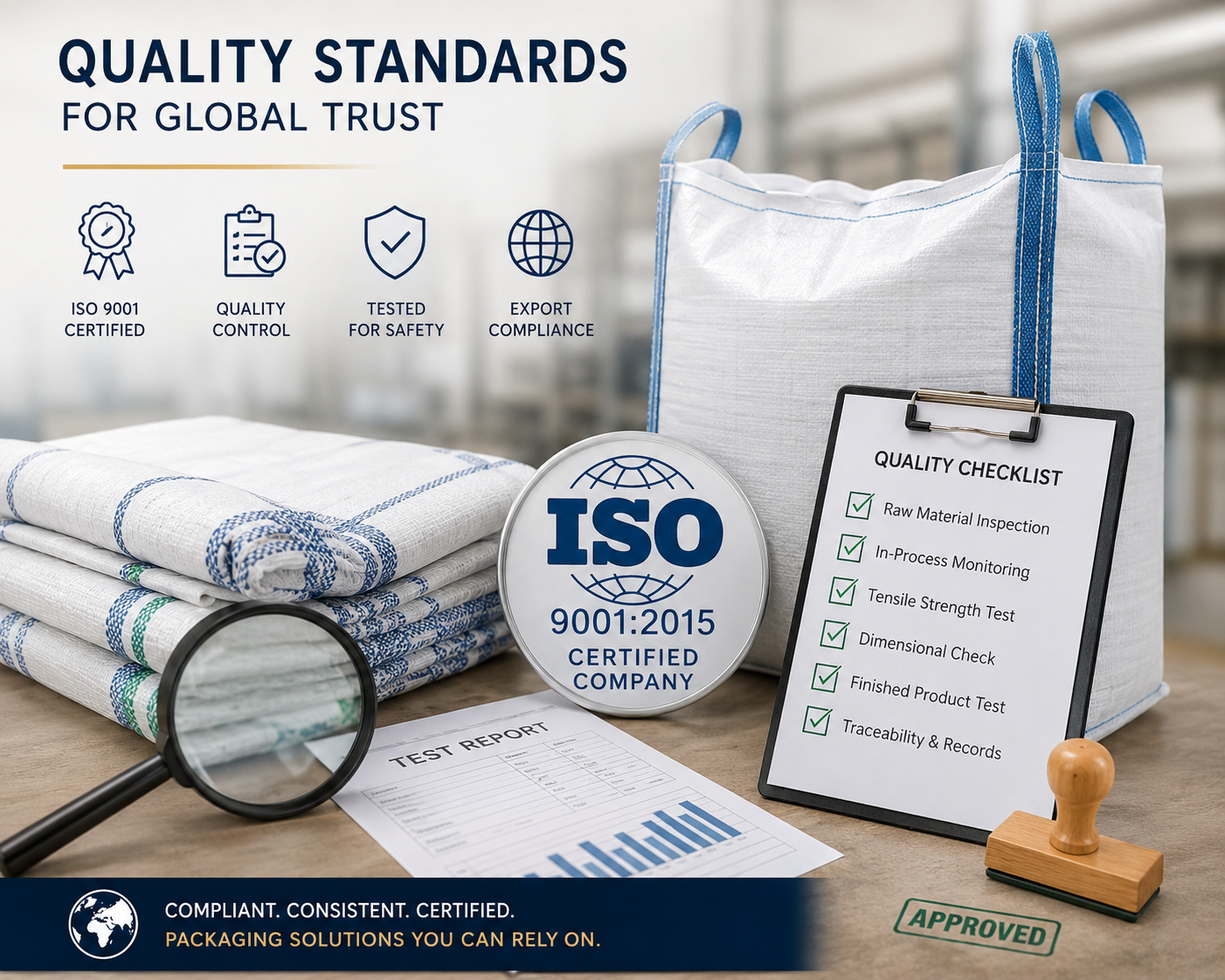
Quality testing becomes even more valuable when supported by recognised manufacturing and compliance systems.
When sourcing pp woven sacks for export markets, buyers should assess whether suppliers operate under recognised quality management frameworks such as ISO 9001. These systems help ensure structured quality control, documented manufacturing procedures, and continuous improvement processes.
For food packaging woven sacks, buyers may also request evidence of compliance with relevant food-contact material requirements and hygiene practices. Products intended for specialised industries may require additional performance testing depending on destination market regulations.
Beyond certifications, buyers should evaluate the quality assurance procedures used throughout production. Reliable manufacturers typically implement raw material inspections, production monitoring, finished-product testing, and traceability systems to help maintain consistent quality standards.
In many export supply chains, buyers may also request product samples and pre-shipment evaluations before placing large-volume orders. Reviewing physical samples alongside quality documentation, testing reports, and specification sheets provides additional confidence that the packaging meets performance expectations and application requirements. This step can help buyers verify product consistency before committing to long-term procurement agreements.
For guidance on export compliance and international trade requirements, businesses can review information available through the Australian Government export compliance resources.
For guidance on export compliance and international trade requirements, businesses can review information available through the Australian Government export compliance resources
How Oberon Polypack Maintains Quality Standards
Quality is not something that can be added after production—it must be built into every stage of manufacturing. At Oberon Polypack, quality considerations begin with raw material selection and continue through weaving, lamination, printing, stitching, and final inspection processes.
Depending on customer specifications and application requirements, export-grade pp woven sacks may undergo multiple quality checkpoints throughout the manufacturing process. These evaluations can include fabric GSM verification, dimensional accuracy inspections, seam strength assessments, lamination quality checks, printing inspections, and visual quality reviews before dispatch. This systematic approach helps ensure consistent product performance, supports compliance with buyer requirements, and reduces the risk of packaging issues during storage, handling, and international transportation.
Our focus is on delivering export quality pp woven sacks that meet customer specifications while supporting reliable performance across diverse industries. Whether supplying industrial pp woven sacks, customised woven sack packaging solutions, or heavy duty woven sacks, maintaining consistent quality standards remains a core priority.
Buyers can review our industrial packaging solutions to better understand the quality specifications, customisation options, and performance features available for different applications. From food packaging woven sacks and fertilizer packaging sacks to heavy-duty industrial packaging, selecting the right solution helps ensure reliable performance throughout storage, handling, and international transportation.
Common Red Flags Buyers Should Watch For
Quality problems often reveal themselves before an order is placed. Buyers should be cautious when suppliers cannot provide testing reports, manufacturing documentation, or product specifications.
Other warning signs include inconsistent sample quality, unclear raw material sourcing, poor communication regarding quality processes, and an unwillingness to discuss testing procedures.
The best suppliers are transparent about their manufacturing methods and quality assurance systems because they understand that trust plays a vital role in long-term business relationships.
Conclusion
Quality testing is one of the most effective ways to reduce procurement risks when sourcing pp woven sacks. By verifying tensile strength, burst resistance, seam integrity, drop performance, GSM consistency, UV stability, lamination adhesion, moisture resistance, dimensional accuracy, and printing quality, buyers can make more informed purchasing decisions and improve packaging reliability throughout the supply chain.
If you're searching for a trusted packaging partner that understands global quality expectations, Oberon Polypack can help. From export quality pp woven sacks and bulk storage packaging bags to customised packaging solutions for agriculture, food, chemical, and industrial applications, our team is committed to delivering reliable performance and consistent quality. Explore our products and contact Oberon Polypack today to discuss your packaging requirements.
FAQs
1. Why is tensile strength important in pp woven sacks?
Tensile strength measures how much force a woven sack can withstand before breaking. Higher tensile strength helps reduce tearing during transportation, storage, and handling, making it an essential quality factor for export packaging.
2. What is the ideal GSM for export quality pp woven sacks?
The ideal GSM depends on the application and product weight. Export-grade sacks commonly range between 60 GSM and 140 GSM, with heavier products generally requiring stronger fabric constructions.
3. Are laminated pp woven sacks better for international shipping?
Laminated pp woven sacks offer improved moisture protection and are often recommended for products sensitive to humidity. They are particularly useful for long-distance shipping routes and challenging environmental conditions.
4. How can buyers verify a supplier's quality standards?
Buyers can request testing reports, quality assurance documentation, production traceability records, audit reports, and information regarding recognised quality management systems such as ISO 9001.
5. Which industries benefit most from quality-tested pp woven sacks?
Industries including agriculture, food processing, chemicals, fertilisers, construction, mining, and industrial manufacturing benefit significantly from quality-tested packaging because reliable performance helps reduce product loss and transportation risks.