Introduction
Pet food packaging has become far more than a container for kibble. Walk into any supermarket or pet store in 2026 and you’ll see bags competing for attention with bold graphics, premium finishes, practical handles and claims about freshness, durability and sustainability. Behind that polished appearance, however, the packaging still has one serious job: protect the product from moisture, contamination, handling damage and the everyday chaos of transport.
That is where BOPP Bags for Pet Food have become an interesting option for manufacturers, distributors and private-label brands. BOPP, or biaxially oriented polypropylene, can combine strong visual presentation with the structural benefits of woven polypropylene packaging. For businesses selling dry dog food, cat food, treats and similar products, choosing the right bag construction can influence shelf appeal, product protection and operating costs.
For buyers exploring packaging materials, it helps to understand the difference between ordinary pet food woven bags, laminated structures and premium printed formats before placing a large order. A useful starting point is to review available BOPP packaging solutions and then consider how the bag needs to perform throughout filling, warehousing, shipping and retail display.
What Are BOPP Bags for Pet Food?
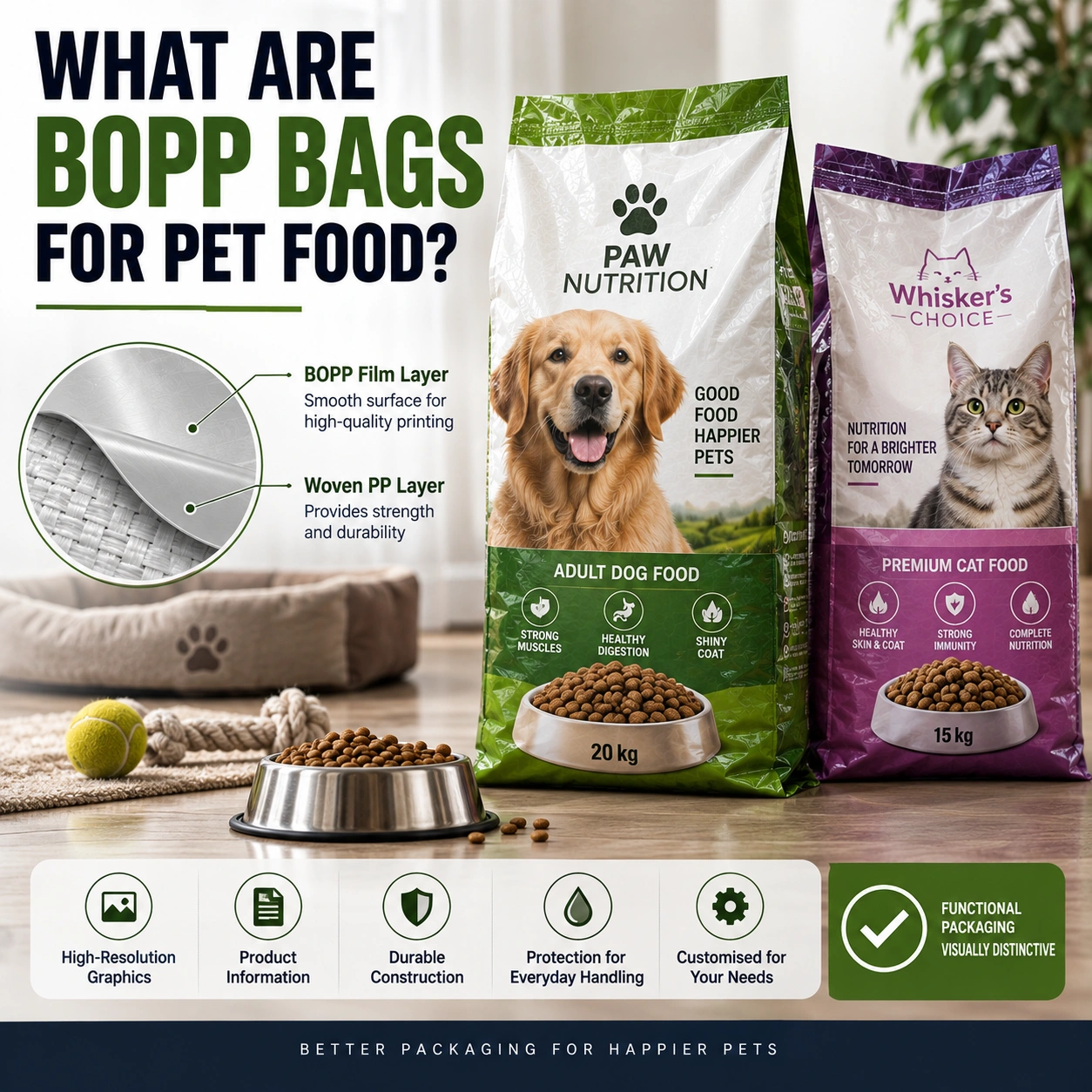
BOPP Bags for Pet Food typically use woven polypropylene as the structural base with a BOPP film layer applied to improve print quality and surface performance. The woven layer provides strength, while the outer film creates a smooth surface suitable for high-resolution graphics. This combination makes the format particularly attractive when packaging needs to be both functional and visually distinctive.
Unlike a basic woven sack, a BOPP-laminated structure can give brands more control over appearance. Product information, feeding instructions, ingredient details, barcodes and brand graphics can appear sharper and more consistent. For premium pet food, that matters because the packaging often becomes part of the product's identity.
The construction also offers useful protection against normal handling and environmental exposure. However, buyers should avoid treating every BOPP bag as automatically waterproof or completely moisture-proof. Performance depends on the specific film, lamination, seams, closure system and overall bag design. Good packaging starts with matching construction to the actual product and supply chain.
Why BOPP Packaging Works Well for Pet Food
Pet food packaging has a slightly awkward challenge: the product needs to stay protected, but the package also needs to look good enough to earn attention. BOPP Bags for Pet Food address both sides of that equation. Their woven polypropylene foundation can provide the strength required for heavier fills, while the BOPP surface supports detailed printing.
For brands competing in crowded retail categories, this visual advantage can be significant. A clean photograph of the product, strong typography and consistent colours can create a more premium impression than graphics printed directly on a rough woven surface. In other words, the bag gets to work as a salesperson before anyone opens it.
The material also suits larger pack sizes where strength matters. A bag containing 10, 15 or 20 kilograms of kibble needs to survive filling, palletising, transportation and repeated handling. The exact weight capacity depends on the construction, but polypropylene woven packaging generally provides a practical foundation for demanding applications.
BOPP Pet Food Bags vs Standard Woven Bags
The choice between BOPP pet food bags and conventional pet food woven bags usually comes down to priorities rather than one material being universally better. Standard woven bags can offer a straightforward, economical solution when visual presentation is less important. BOPP construction becomes more attractive when a manufacturer wants stronger branding, detailed graphics and a more polished retail appearance.
| Feature | Standard Woven Bag | BOPP-Laminated Bag |
|---|---|---|
| Print appearance | Good | High-resolution |
| Surface finish | Textured | Smooth |
| Branding potential | Moderate | Strong |
| Structural strength | Good | Good to very high |
| Moisture protection | Depends on construction | Improved with suitable lamination |
| Premium appearance | Moderate | High |
| Custom graphics | Available | Excellent |
The smartest decision comes from looking beyond the unit price. If better presentation helps a product stand out, the additional packaging investment may make commercial sense. Conversely, if the bag mainly serves bulk distribution, a simpler structure might provide better value.
Printed Pet Food Bags and Brand Presentation
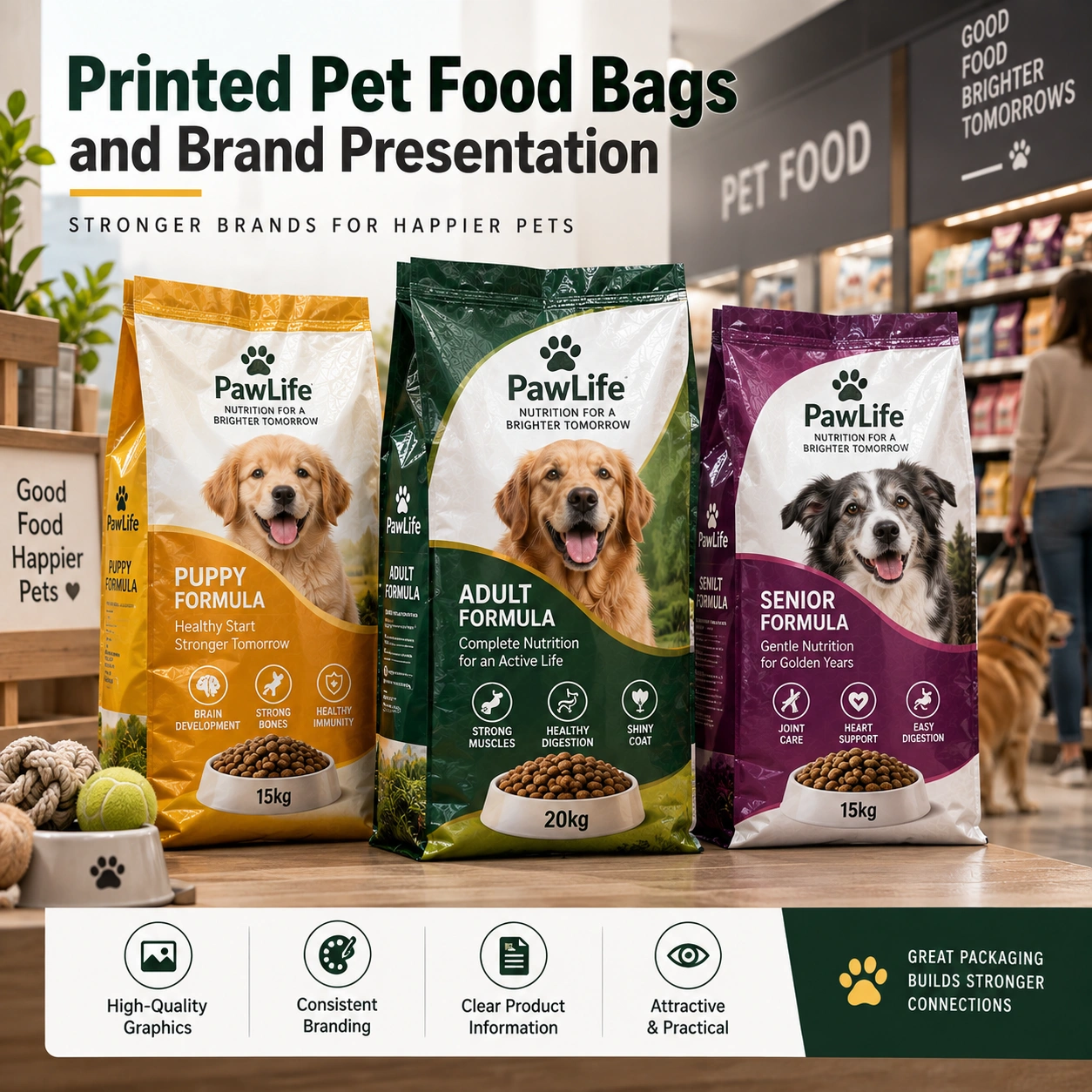
Modern pet owners often make quick purchasing decisions. They may compare protein claims, ingredients, feeding information and brand positioning while standing in an aisle or scrolling through an online product page. That makes printed pet food bags an important part of communication.
BOPP Bags for Pet Food provide a smooth printing surface that can support detailed images, sharp text and strong branding. This makes them useful for brands that want packaging to look consistent across multiple product sizes or flavours. A puppy formula, adult formula and senior formula can share the same visual identity while using different colours or design elements for easy recognition.
Good design should still serve usability. Essential information needs to remain readable, while regulatory and product details should not disappear beneath decorative graphics. The best packaging usually looks attractive at a distance and remains practical when a customer picks it up.
How BOPP Lamination Helps Protect Pet Food
Dry pet food can lose quality when packaging allows unwanted moisture or contaminants to reach the contents. BOPP laminated pet food bags can provide an additional protective layer, although the final barrier performance depends on the complete packaging structure rather than the BOPP film alone.
A buyer should therefore discuss the product's moisture sensitivity, expected storage conditions and transportation environment with the manufacturer. A bag designed for dry kibble stored in a controlled warehouse may have different requirements from packaging shipped through humid climates or exposed to lengthy outdoor handling.
This is also where bag closure becomes important. Even a well-designed laminate cannot compensate for a poor closure system. The complete package—including fabric, film, seams, valve or mouth, stitching and closure—needs to work as one system.
Moisture Resistance, Strength and Durability
One reason businesses consider BOPP Bags for Pet Food is their balance of physical strength and surface protection. The woven polypropylene substrate can handle demanding logistics, while the laminated exterior can improve resistance to everyday scuffs and surface contamination.
That does not mean every bag performs identically. Fabric GSM, tape construction, coating, lamination quality and seam design all influence performance. A buyer ordering heavy pet food packs should ask for specifications rather than choosing solely from a product photograph.
Durability also matters after the bag leaves the factory. Warehouse workers move sacks, retailers stack them and customers drag them from shelves into shopping carts. Packaging that survives this journey without excessive tearing, seam failure or print damage creates fewer headaches across the supply chain.
Choosing the Right Bag Size and Construction
There is no universal “best” BOPP bag. The right specification depends on the fill weight, density of the pet food, packaging equipment and distribution requirements. A 2 kg retail pack and a 20 kg professional-size bag face very different mechanical demands.
Buyers should communicate the intended fill weight and dimensions before requesting a quotation. Bag length, width, gusset requirements and opening style all affect how efficiently the package works with filling equipment and storage systems.
For bulk pet food bags, strength and handling usually take priority. Retail packaging often places greater emphasis on print quality, convenience and shelf presentation. Understanding that difference helps prevent the common mistake of buying packaging based on appearance alone.
Custom Pet Food Bags: What Can Be Changed?
Customisation allows brands to adapt packaging around their product rather than forcing the product into a generic format. Depending on the manufacturer, custom pet food bags may include different dimensions, print designs, finishes, closures and carrying features.
A business launching a premium organic pet food line might prioritise sophisticated graphics and a clean matte appearance. A high-volume economy brand could instead focus on efficient production and robust construction. Both can use BOPP technology, but their specifications would look quite different.
Before approving a custom design, request a physical sample whenever possible. Digital artwork can look fantastic on a screen while producing a very different result on the actual packaging surface. A sample lets you inspect print sharpness, dimensions, seams, handling and overall appearance before committing to bulk production.
What to Look for in a Pet Food Packaging Supplier
Choosing a pet food packaging supplier requires more than comparing quotations. A reliable supplier should understand material specifications, production consistency, printing requirements and the practical demands of filling and distribution.
Ask about production capacity, quality checks, material specifications and lead times. If you require thousands of bags every month, consistency matters just as much as the first shipment's appearance. A small variation in dimensions or construction can create problems when packaging runs through automated equipment.
It also helps to clarify minimum order quantities and replacement policies before placing an order. These details may seem boring during the buying process, but they become extremely interesting when something goes wrong. Good communication early on can save a lot of frustration later.
Sustainability Trends in Pet Food Packaging
Sustainability has become a major conversation around pet food packaging, but buyers should approach the subject carefully. Sustainable pet food packaging does not simply mean choosing a material and calling it environmentally friendly. Packaging performance, material composition, recyclability, production efficiency and end-of-life infrastructure all influence its environmental profile.
BOPP-based packaging can support lightweighting strategies because manufacturers can engineer bags around required performance instead of simply adding material. Reducing unnecessary packaging weight can lower material consumption and transportation load. Still, businesses should evaluate sustainability claims against the actual packaging structure and the recycling systems available in their target market.
The practical lesson is simple: ask suppliers for clear material information rather than relying on vague green language. A credible packaging decision balances product protection, manufacturing efficiency, durability and end-of-life considerations.
BOPP Bags for Pet Food and Bulk Supply
Large-scale buyers often need predictable supply more than flashy packaging promises. BOPP Bags for Pet Food can work well for bulk programmes when manufacturers maintain consistent specifications across production runs.
A business ordering large quantities should establish the exact bag dimensions, fabric weight, lamination structure, print requirements and closure method before production begins. These specifications become the reference point for future orders and help maintain consistency as volumes grow.
Bulk supply also changes the economics of packaging. Larger production runs can improve manufacturing efficiency, but buyers should still compare total value rather than simply chasing the lowest per-bag quotation. A cheaper bag that causes filling problems, damage or inconsistent presentation can quickly become an expensive choice.
How Much Do BOPP Pet Food Bags Cost?
There is no single fixed price for BOPP Bags for Pet Food because the final cost depends on several variables. Bag size, fabric GSM, printing coverage, number of colours, lamination, order quantity, closure style and special features can all influence the quotation.
For example, a simple bulk sack with limited printing will generally have a different cost structure from a fully printed, laminated retail bag with customised dimensions. Raw material market movements can also affect pricing over time.
For an accurate comparison, ask suppliers to quote the same specification. Comparing one supplier's standard bag with another supplier's premium construction does not reveal much. Like comparing a basic sedan with a luxury SUV and wondering why the numbers look strange.
Quality Checks Before You Place a Large Order
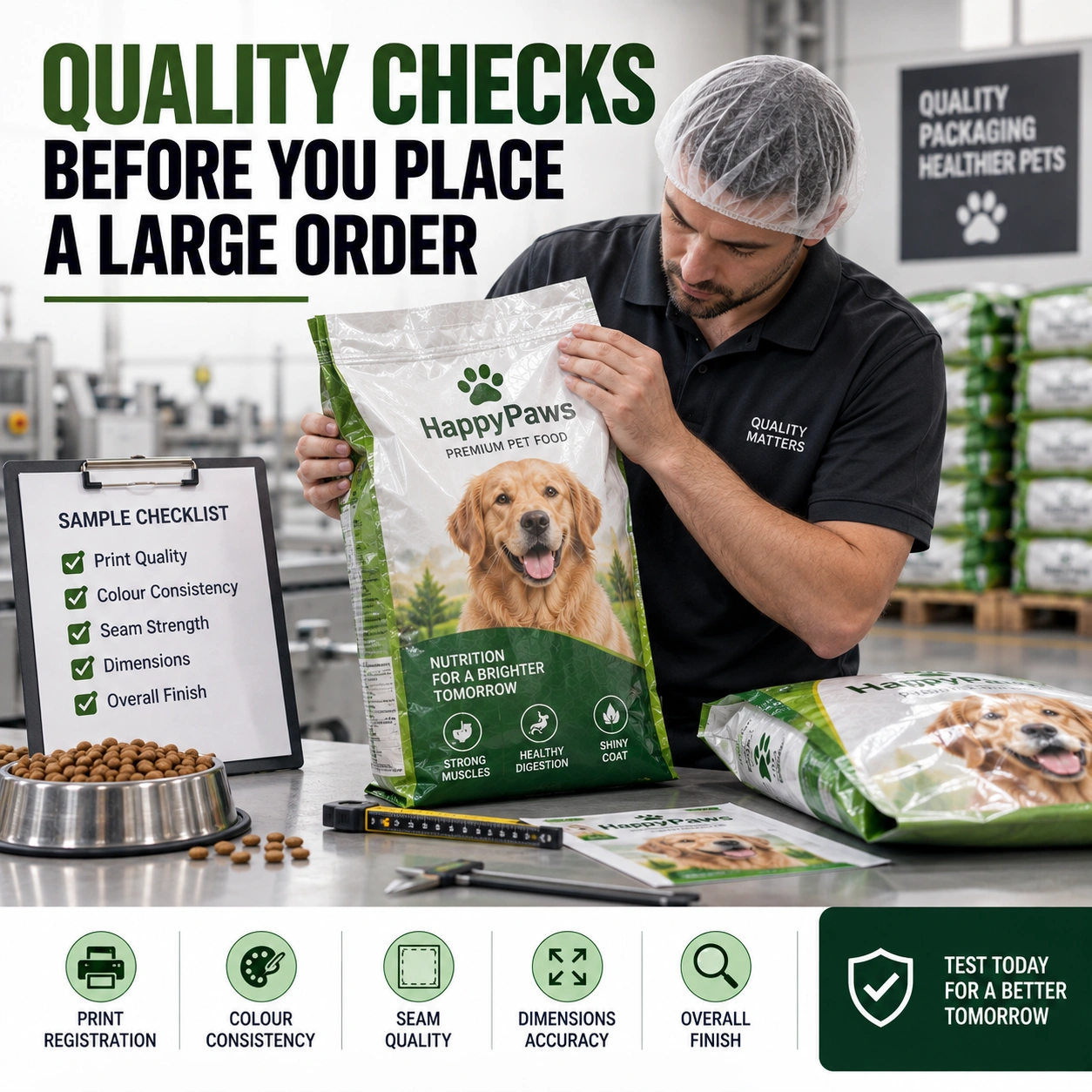
Before ordering, examine samples and confirm that the proposed construction matches your application. Look at print registration, colour consistency, seam quality, dimensions and overall finish. If possible, test the bag using the actual pet food product and filling process.
Pay particular attention to handling. Lift filled samples, stack them, move them through your normal workflow and inspect the seams afterward. Real-world testing often reveals issues that a specification sheet cannot.
For serious buyers, documentation also matters. Confirm the material composition and any relevant product or packaging requirements for your intended market. If the packaging will contact food products, discuss applicable compliance requirements with the supplier before production.
Why Businesses Are Choosing More Custom Packaging in 2026
The pet food market continues to become more segmented. Consumers can choose products for puppies, senior dogs, indoor cats, sensitive digestion, high-protein diets and countless other niches. Packaging needs to help customers understand those differences quickly.
That trend makes BOPP Bags for Pet Food especially useful for brands building a distinct visual identity. A flexible printing surface gives manufacturers room to create packaging families rather than a collection of unrelated bags.
At the same time, buyers increasingly expect packaging to perform efficiently. Strong branding means little if the bag tears during transport, while excellent durability means less if the design looks dated. The strongest packaging strategy combines both.
Common Mistakes Buyers Should Avoid
One of the biggest mistakes involves choosing packaging purely on price. A low quotation can look attractive until you account for poor print quality, unsuitable dimensions or inadequate strength. Packaging represents a relatively small part of the overall product cost, but its failure can create outsized problems.
Another mistake involves skipping sample approval. Buyers sometimes approve artwork and specifications without testing the physical bag. That approach can lead to unpleasant surprises once thousands of units arrive.
Finally, avoid assuming that every “BOPP bag” has the same performance. Construction details matter. Ask questions, compare specifications and make your supplier explain why a particular structure suits your pet food.
Conclusion
BOPP Bags for Pet Food offer a practical combination of structural strength, attractive printing and useful surface protection, making them a strong option for many dry pet food applications. The right choice still depends on fill weight, dimensions, GSM, lamination, closure, storage conditions and distribution requirements. By testing samples and comparing like-for-like specifications, buyers can make a much more informed packaging decision.
If you are planning a new pet food range, upgrading existing packaging or arranging bulk production, the next step is to discuss your exact requirements with an experienced manufacturer. Oberon Polypack can help you evaluate suitable construction, printing and sizing options for your application. Request a tailored quotation and turn your packaging idea into a production-ready solution.
FAQs
1. Are BOPP Bags for Pet Food suitable for heavy pet food packs?
Yes, BOPP-laminated woven polypropylene bags can suit heavy pet food packs when the manufacturer designs the fabric, GSM, seams and closure system for the required load. Always confirm the tested or recommended capacity before production.
2. Are BOPP Bags for Pet Food moisture resistant?
They can provide improved moisture resistance compared with an uncoated woven structure, but the exact barrier depends on the complete construction. Lamination, seams and closure design all contribute to final performance.
3. Can BOPP pet food bags be fully customised?
Yes, manufacturers can commonly customise dimensions, printing, finishes and other construction details. The available options depend on the supplier's production capabilities and the required order volume.
4. Are BOPP Bags for Pet Food recyclable?
Recyclability depends on the precise material structure and the recycling infrastructure available in the target market. Buyers should request the complete material specification and verify local recycling requirements rather than assuming recyclability from the BOPP label alone.
5. How should I choose a BOPP pet food bag supplier?
Start with the supplier's ability to consistently meet your required specifications. Compare samples, material construction, print quality, production capacity, lead times, quality control and total pricing rather than judging suppliers only by their lowest quotation.