Australia exports billions of dollars' worth of agricultural products, minerals, chemicals, and manufactured goods every year. Behind many of those shipments is something surprisingly simple but incredibly important: reliable packaging. When goods travel thousands of kilometres across oceans, through warehouses, ports, and customs checkpoints, packaging becomes the silent hero that protects products and preserves value.
That's where pp woven sacks come into the picture. Whether you're exporting grains from Australia, fertilisers to Asia, or industrial materials across Europe, choosing export-compliant packaging can make the difference between a smooth delivery and a costly logistics headache.
At Oberon Polypack, we regularly supply pp woven sacks for agricultural exporters, fertiliser manufacturers, food processors, and industrial packaging buyers across global markets. Based on our experience, one of the most common issues during international shipping is product damage caused by moisture exposure, repeated handling at ports, and long storage durations.
For this reason, many export-focused customers choose laminated pp woven sacks, reinforced stitching, and higher-strength fabric specifications to improve cargo protection and maintain product quality throughout the supply chain. These practical packaging decisions often help reduce losses, improve buyer satisfaction, and support smoother international deliveries.
What Are Export Packaging Standards for PP Woven Sacks?
Export packaging standards for pp woven sacks refer to the manufacturing, performance, and compliance requirements that ensure products remain protected throughout international shipping and storage. These standards typically cover material quality, fabric strength, load-bearing capacity, moisture resistance, stitching integrity, product safety, and quality assurance processes. Buyers use these standards to evaluate whether packaging is suitable for global transportation, regulatory requirements, and long-term product protection.
Why Are Export Standards Important?
Export standards help reduce the risk of product damage, contamination, moisture exposure, and packaging failure during transportation. They also support compliance with buyer specifications and industry requirements, making them an important consideration for businesses involved in international trade.
Why Export Standards Matter for PP Woven Sacks
Global trade is becoming increasingly regulated. Buyers today don't simply want packaging that looks good; they need packaging that complies with international standards, protects cargo, and supports efficient transportation.
When products cross international borders, they face multiple handling stages. Forklifts, shipping containers, changing weather conditions, and long storage periods can all test packaging durability. High-quality pp woven sacks are designed to withstand these challenges while maintaining product integrity.
Think of packaging like a passport for your product. If the packaging fails to meet expectations, your shipment may face delays, damage claims, or even rejection. Export quality pp woven sacks help minimise these risks while creating confidence among international buyers.
What Are PP Woven Sacks and Why Are They Popular Globally?
PP stands for polypropylene, a thermoplastic polymer known for its exceptional strength-to-weight ratio. Polypropylene woven sacks are manufactured by weaving polypropylene tapes into durable fabric that can hold substantial weight while remaining lightweight.
One reason pp woven sacks dominate international shipping is versatility. They are widely used across agriculture, construction, food processing, chemicals, mining, and industrial manufacturing. Unlike many traditional packaging materials, they offer excellent durability without significantly increasing transportation costs.
Many exporters also prefer heavy duty woven sacks because they provide outstanding resistance against tearing, punctures, and rough handling. This balance between strength and efficiency makes them one of the most trusted bulk packaging sacks available worldwide.
For businesses looking for customised packaging, custom printed pp woven sacks allow branding, handling instructions, and compliance markings to be printed directly onto the packaging surface.
The Global Compliance Checklist Every Buyer Should Follow
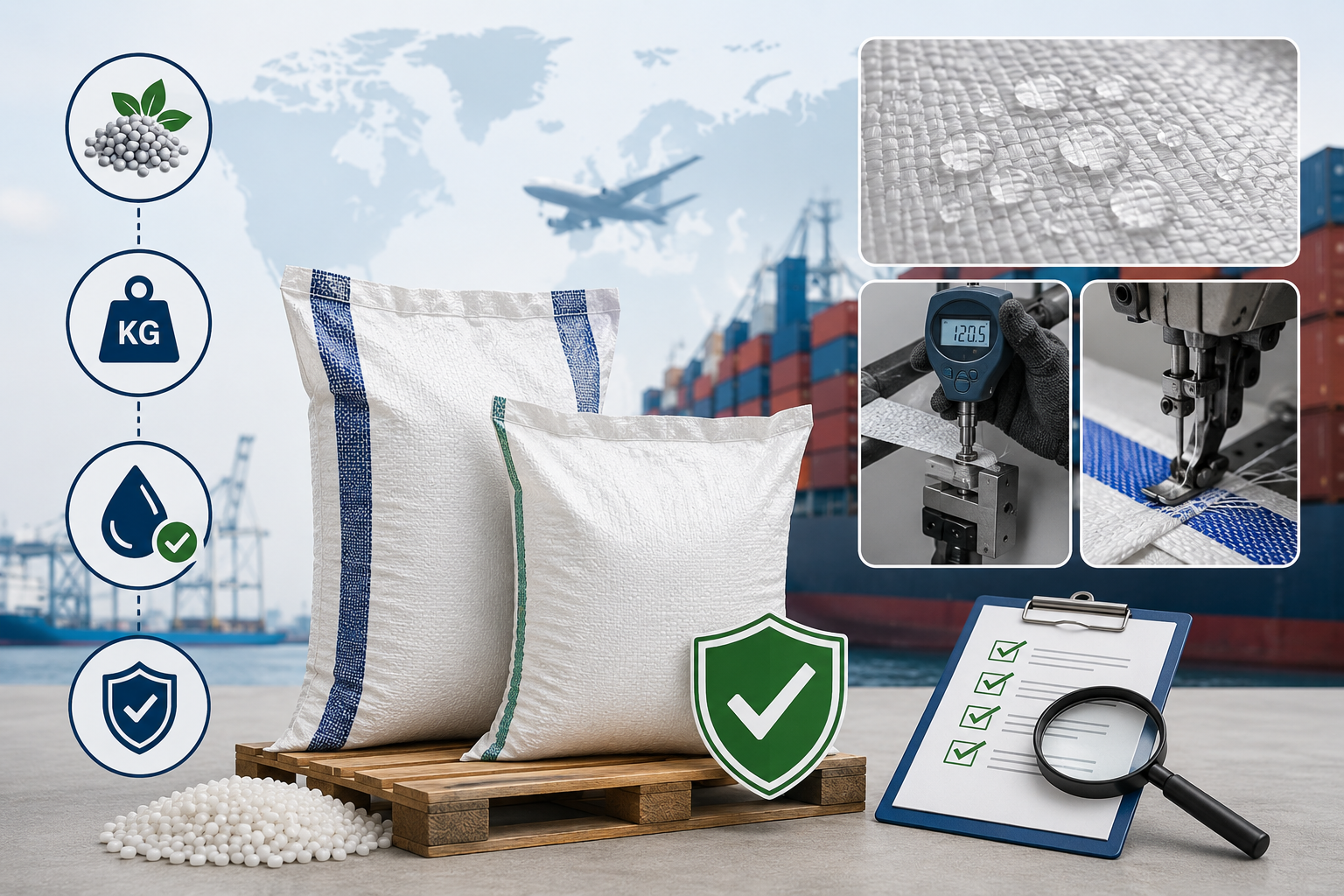
When evaluating pp woven sacks for export use, buyers should examine several critical compliance factors before placing an order.
Material Quality and Virgin Polypropylene Content
The foundation of every export-grade sack starts with raw material quality. High-grade polypropylene ensures consistent strength, durability, and reliability throughout the supply chain.
Premium pp woven sacks manufactured from virgin polypropylene typically deliver superior performance compared to lower-grade alternatives. This becomes especially important for long-distance shipping where environmental conditions can vary dramatically.
Export-grade pp woven sacks are generally produced using woven polypropylene fabrics ranging from 60 GSM to 140 GSM, depending on the intended application and performance requirements.
Common packaging capacities range from 5 kg to 50 kg, while industrial-grade solutions can be engineered for heavier loads. For exports involving extended storage or outdoor handling, UV-stabilised fabrics are often specified to improve durability and reduce material degradation caused by sunlight exposure.
Where moisture protection is critical, manufacturers may recommend laminated pp woven sacks with either single-side or double-side lamination to help maintain product integrity throughout international transportation and warehousing.
A reputable pp woven sacks manufacturer should provide transparency regarding material specifications, tensile strength, and quality control procedures.
Weight Capacity and Load Testing
Export packaging must match the weight requirements of the product being transported. Overloaded sacks increase the risk of breakage, while underutilised packaging creates unnecessary shipping costs.
Buyers should verify:
- Safe working load capacity
- Burst strength ratings
- Tensile strength specifications
- Drop test performance
- Stitching integrity
These performance indicators help ensure woven sacks for international shipping can withstand real-world transportation conditions.
Moisture Protection Requirements
Moisture remains one of the biggest threats to exported goods. Agricultural products, fertilisers, powders, and chemicals can suffer significant losses if exposed to humidity during transit.
This is why laminated pp woven sacks continue to grow in popularity. Their additional protective layer helps reduce moisture penetration and supports product preservation during long export journeys.
Moisture resistant pp sacks are particularly valuable when shipping through tropical regions or areas with unpredictable weather conditions.
Industry-Specific Packaging Standards
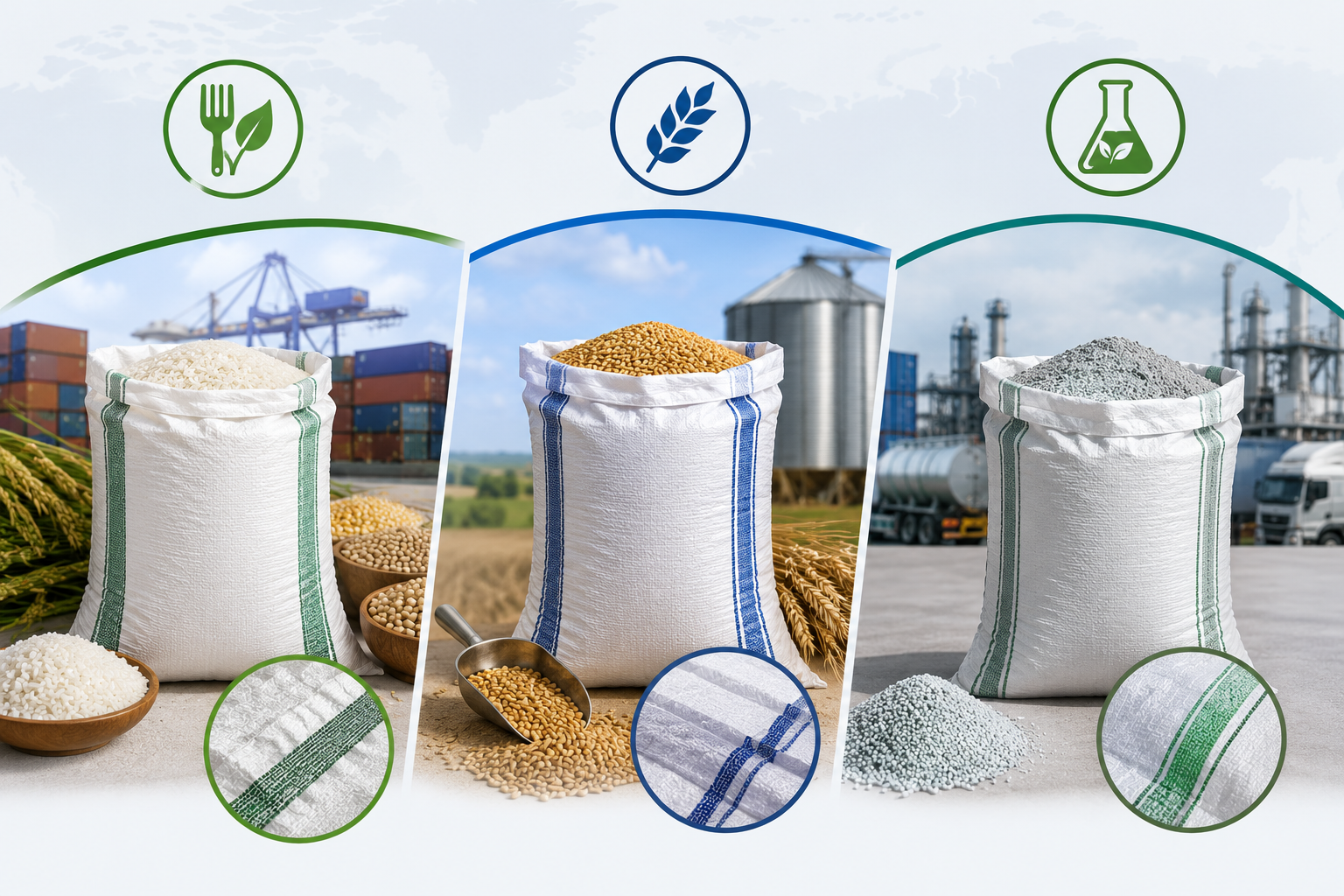
Different industries have unique packaging requirements, and buyers should align their packaging strategy accordingly.
Food Industry Requirements
Food packaging woven sacks must prioritise cleanliness, contamination prevention, and product safety. Exporters dealing with rice, flour, sugar, grains, or animal feed should ensure packaging materials meet relevant food-contact requirements.
Clean manufacturing environments and strict quality control processes play a crucial role in maintaining food-grade standards. International buyers often request documentation verifying compliance with industry requirements.
Agriculture Sector Expectations
The agricultural sector remains one of the largest users of pp woven sacks for agriculture. Farmers and exporters rely on durable packaging for seeds, grains, animal feed, and harvested produce.
Agricultural products often face extended storage periods before export. Strong, breathable, and durable packaging helps preserve product quality while reducing spoilage risks.
Chemical and Fertiliser Packaging
Chemical packaging woven sacks and fertilizer packaging sacks require enhanced durability because of the nature of their contents. Products may be abrasive, corrosive, or particularly heavy.
Exporters in this sector typically prioritise reinforced stitching, higher GSM fabrics, and specialised lamination options to ensure packaging performance throughout transportation.
Understanding International Quality Certifications
Certifications serve as evidence that packaging products meet recognised quality benchmarks. Buyers should always request documentation and verification from suppliers before placing large export orders.
When sourcing pp woven sacks for export markets, buyers should look beyond product specifications and assess the supplier's quality management systems. Manufacturers operating under internationally recognised frameworks such as ISO 9001 typically follow documented quality control procedures, traceability measures, and continuous improvement processes.
For food packaging woven sacks, buyers may also request evidence of compliance with relevant food-contact material requirements and hygiene practices. Where products involve chemicals, industrial materials, or regulated goods, additional packaging performance testing or transportation compliance requirements may apply depending on the destination market.
Verifying certifications, audit reports, and product testing documentation can help minimise supply chain risks and improve confidence in supplier capabilities.
Beyond certifications, buyers should evaluate the quality assurance processes used throughout manufacturing. Reliable suppliers typically implement routine quality inspections, raw material verification, production monitoring, and finished-product testing to help ensure consistent performance. Traceability systems can also play an important role by allowing manufacturers to track production batches, material sources, and testing records when required.
For larger procurement projects, some international buyers may request supplier audits or factory assessments to verify manufacturing capabilities, quality standards, and operational processes before entering long-term supply agreements.
For guidance on Australian export compliance and international trade requirements, businesses can review information available through Australian Government export regulations.
A reliable pp woven sacks supplier should be able to provide testing reports, quality assurance documentation, and production traceability information when requested.
Features That Define Export Quality PP Woven Sacks
Not every woven sack is designed for international trade. Export quality pp woven sacks typically share several distinguishing characteristics.
| Feature | Export Benefit |
|---|---|
| High tensile strength | Reduces tearing during transit |
| Reinforced stitching | Prevents seam failure |
| Lamination options | Improves moisture protection |
| UV stabilisation | Enhances outdoor durability |
| Custom printing | Supports branding and compliance |
| Consistent dimensions | Simplifies logistics handling |
These features work together to create packaging capable of meeting demanding international transportation requirements.
The Growing Importance of Sustainable Packaging
Sustainability is no longer a trend. It has become a procurement requirement for many global buyers.
Many businesses now actively seek recyclable woven polypropylene sacks as part of broader environmental initiatives. Modern manufacturing techniques allow suppliers to create durable packaging while supporting sustainability objectives.
The transition towards eco-conscious packaging solutions reflects changing consumer expectations and corporate responsibility goals. Buyers increasingly favour suppliers that can demonstrate environmental awareness alongside product performance.
As sustainability requirements evolve, packaging manufacturers are investing heavily in innovation to balance durability, cost efficiency, and environmental responsibility.
How Customisation Supports International Trade
Packaging serves both practical and marketing purposes. Customised woven sack packaging solutions help businesses stand out while improving logistics efficiency.
Custom printing can include product information, handling instructions, safety warnings, regulatory markings, and branding elements. Branded pp woven sacks also create stronger market recognition, particularly in competitive export environments.
Imagine arriving at a busy international warehouse filled with hundreds of nearly identical products. Branded packaging acts like a well-tailored suit at a crowded event—it instantly makes your product easier to identify and remember.
Businesses exploring specialised packaging options can review available solutions through the Oberon Polypack product range, where different configurations support diverse export requirements.
Selecting the Right PP Woven Sacks Supplier
Choosing the right supplier is just as important as selecting the right product.
Experienced suppliers understand export requirements, quality control processes, and industry-specific challenges. They can recommend suitable packaging solutions based on product type, destination, storage conditions, and transportation methods.
When evaluating a supplier, consider:
- Manufacturing capabilities
- Quality control systems
- Export experience
- Customisation options
- Production capacity
- Customer support responsiveness
The best partnerships are built on transparency, consistency, and long-term reliability.
Common Mistakes Buyers Should Avoid
Many buyers focus exclusively on price during procurement. While cost matters, packaging failures often prove far more expensive than initial savings.
Choosing low-quality materials, ignoring testing documentation, or overlooking environmental conditions can lead to damaged products and dissatisfied customers.
Another common mistake involves selecting packaging without considering destination-specific requirements. Climate, transportation methods, and product sensitivity all influence packaging performance.
The most successful exporters view packaging as part of their risk management strategy rather than a simple commodity purchase.
Before finalising your sourcing decision, reviewing the complete product portfolio available from Oberon Polypack can help identify packaging solutions aligned with your export goals and operational requirements.
Future Trends in Export Packaging
Global packaging standards continue to evolve. Buyers increasingly demand traceability, sustainability, stronger branding capabilities, and enhanced product protection.
High strength polypropylene sacks are expected to remain a preferred solution because they combine durability, versatility, and cost efficiency. At the same time, innovations in recyclable materials and smart packaging technologies are creating exciting opportunities for exporters worldwide.
Bulk storage packaging bags will also continue adapting to changing logistics environments as supply chains become more complex and customer expectations increase.
The businesses that stay ahead of these trends will be better positioned to compete in international markets while maintaining product quality and customer satisfaction.
Conclusion
Export success depends on more than product quality alone. Packaging plays a critical role in protecting goods, maintaining compliance, reducing losses, and strengthening buyer confidence. By focusing on material quality, load performance, moisture resistance, industry requirements, certifications, sustainability, and supplier expertise, buyers can make smarter decisions when sourcing pp woven sacks for international trade.
If you're looking for reliable export-ready packaging backed by manufacturing expertise and global quality standards, Oberon Polypack is ready to help. Our team provides tailored solutions ranging from industrial pp woven sacks to customised export packaging options designed for demanding international markets. Explore our packaging solutions through the products section and connect with Oberon Polypack today to discuss your specific export requirements.
FAQs
1. What makes pp woven sacks suitable for international exports?
PP woven sacks are suitable for international exports because they offer high strength, durability, lightweight handling, and resistance to tearing. These qualities help protect products throughout shipping, warehousing, and distribution processes while supporting cost-effective logistics.
2. Are laminated pp woven sacks better than standard woven sacks?
Laminated pp woven sacks provide an additional protective barrier against moisture and environmental exposure. They are particularly useful for products sensitive to humidity, including agricultural goods, fertilisers, and certain industrial materials.
3. Can pp woven sacks be customised for branding purposes?
Yes, custom printed pp woven sacks can include company logos, product details, handling instructions, regulatory information, and marketing messages. This helps improve product visibility and brand recognition across international markets.
4. Are polypropylene woven sacks environmentally friendly?
Many polypropylene woven sacks are recyclable and reusable, making them a practical option for businesses seeking sustainable packaging solutions. Advances in manufacturing continue to improve environmental performance without compromising strength and reliability.
5. How do I choose the right pp woven sacks supplier?
Selecting the right supplier involves evaluating manufacturing capabilities, quality control systems, export experience, customisation options, certifications, and customer support. A reliable supplier should provide transparent documentation and consistent product quality for global shipments.