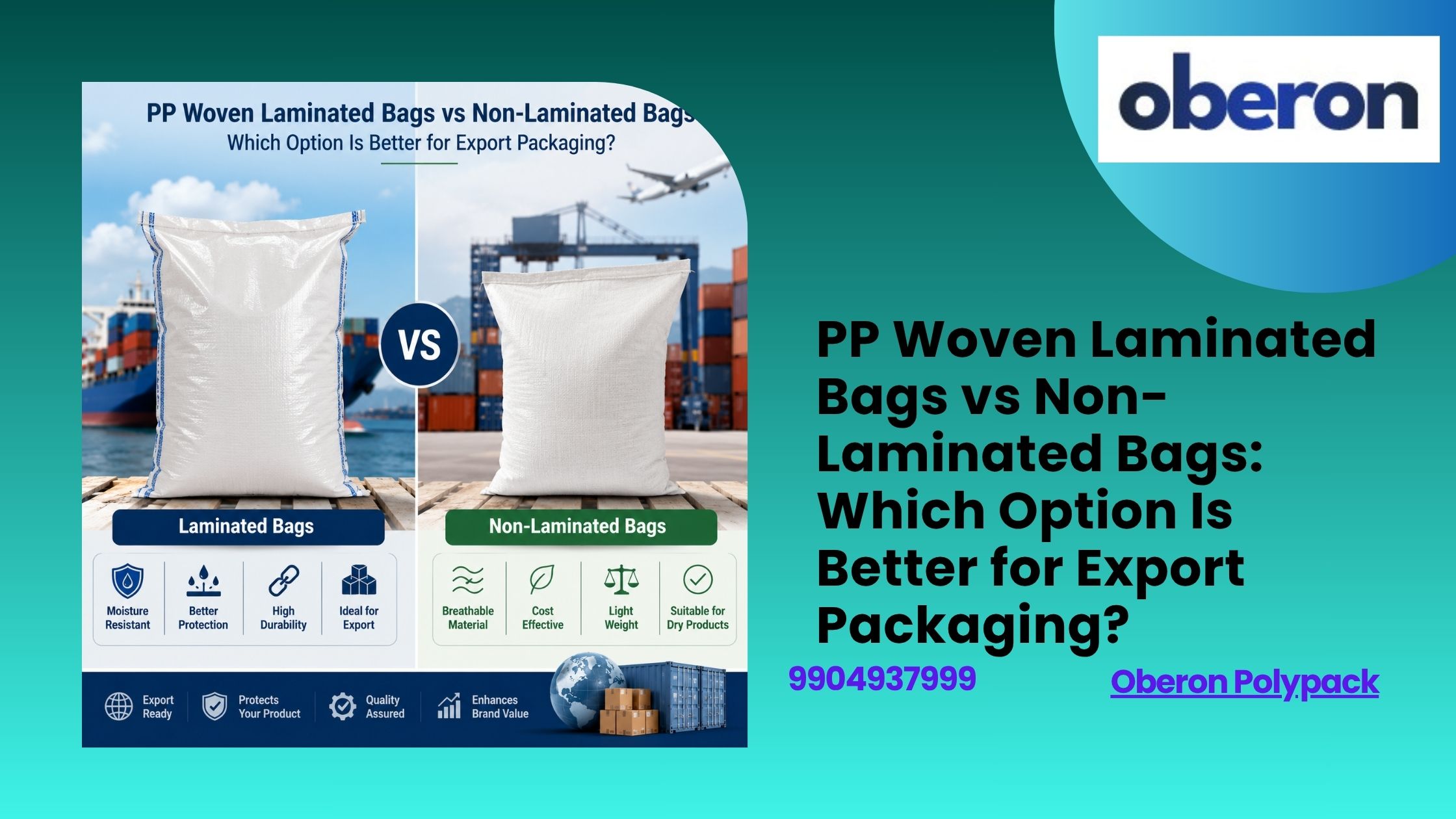
Introduction
Whether you're exporting fertilisers from Greece, packaging rice in Vietnam, or shipping industrial materials across international markets, one packaging decision can significantly influence product protection, transportation efficiency, and customer satisfaction. At first glance, laminated and non-laminated woven bags may look similar. However, their performance during storage, handling, and export logistics can be very different.
In export packaging, even a small amount of moisture intrusion, product leakage, or packaging damage can result in costly losses. That's why many businesses across Greece and Vietnam carefully evaluate packaging specifications before placing bulk orders. The choice between laminated and non-laminated bags often comes down to balancing protection, durability, and overall return on investment.
At Oberon Polypack, we help businesses identify packaging solutions that match their product requirements, transportation conditions, and export goals. Explore our PP woven packaging solutions through the products page to understand how different bag constructions support modern supply chains.
At Oberon Polypack, we regularly work with agricultural exporters, food processors, fertiliser manufacturers, and industrial packaging buyers evaluating different woven bag configurations. One common challenge we see is protecting products from moisture exposure during transportation and long-term storage. This is one reason why many export-focused buyers increasingly choose laminated woven packaging for moisture-sensitive applications.
What Are PP Woven Laminated Bags?
PP woven laminated bags are woven polypropylene bags that include an additional laminated coating applied to one or both sides of the fabric. This coating creates a protective barrier that improves moisture resistance, reduces product leakage, and enhances overall packaging performance.
Unlike standard woven bags, laminated pp woven bags provide extra protection against environmental conditions that may affect product quality during transportation and storage. This makes them particularly useful for products exposed to humidity, varying temperatures, and long-distance shipping conditions.
Common applications include agricultural products, fertilisers, food ingredients, chemicals, minerals, animal feed, and industrial materials.
Are PP Woven Laminated Bags Better for Export Packaging?
For most export packaging applications, pp woven laminated bags provide better protection than non-laminated bags because they offer improved moisture resistance, reduced product leakage, enhanced durability, and stronger performance during transportation and storage.
They are widely used for food products, fertilisers, agricultural commodities, chemicals, minerals, and industrial materials where packaging reliability is critical. For businesses exporting products across different climates and supply chains, laminated packaging often helps reduce product damage, improve handling performance, and support long-term cost efficiency.
Why Are Laminated Bags Preferred for International Shipping?
International shipments often involve multiple handling points, long transit periods, and varying environmental conditions. The additional laminated layer helps protect products from moisture exposure while improving containment and packaging durability. This is one of the key reasons why many exporters in Greece, Vietnam, and other global markets prefer laminated woven packaging for products that require enhanced protection during transportation and storage.
Which Packaging Option Is Better for Export Packaging?
For most export applications involving moisture-sensitive, fine-particle, or high-value products, pp woven laminated bags typically offer superior protection compared to non-laminated alternatives. The laminated layer helps reduce moisture penetration, supports product integrity, and improves packaging durability during transportation and storage.
Non-laminated bags remain suitable for many applications, particularly where breathability is required or moisture exposure is less of a concern. However, for products travelling through multiple warehouses, ports, and distribution centres, laminated polypropylene sacks often provide greater long-term value and reliability.
Why Do Many Exporters Prefer Laminated Bags?
The answer is simple. Export packaging must perform under unpredictable conditions.
Products may spend weeks inside shipping containers, travel through humid climates, or remain in storage before reaching the final customer. Moisture resistant pp sacks help reduce the risks associated with these conditions while supporting product quality and reducing potential losses.
For many exporters, the additional protection offered by lamination outweighs the relatively small increase in packaging cost.
Why Packaging Performance Matters in Greece and Vietnam
Both Greece and Vietnam have strong agricultural and industrial sectors that rely heavily on reliable packaging solutions.
Greece exports products such as grains, fertilisers, minerals, animal feed, and food ingredients to international markets. Vietnam is one of the world's leading exporters of rice, coffee, seafood feed, agricultural products, and industrial materials. In both countries, packaging performance plays a direct role in maintaining product quality throughout the export journey.
Imagine packaging as a rain jacket for your product. A standard jacket may work fine on a sunny day, but during a storm, extra protection becomes invaluable. The same principle applies when comparing laminated and non-laminated packaging solutions.
PP Woven Laminated Bags vs Non-Laminated Bags: Key Differences
.png)
Understanding the differences between these packaging options helps buyers make more informed procurement decisions.
Moisture Resistance
The most obvious advantage of laminated packaging is moisture protection.
The laminated coating acts as a barrier that helps reduce moisture penetration into the bag. This feature is particularly valuable for food grade laminated pp bags, fertilizer packaging laminated bags, and laminated bags for moisture sensitive products.
Non-laminated bags offer less protection against humidity and environmental moisture. While they remain suitable for certain applications, they may not provide the same level of performance in challenging export environments.
Product Leakage Control
Fine powders and granular products often present packaging challenges.
Laminated polypropylene sacks help minimise product leakage by creating a tighter packaging structure. This can be especially beneficial for chemicals, fertilisers, food ingredients, and industrial powders.
For products with small particle sizes, improved leakage control often translates into reduced product loss and cleaner handling processes.
Durability During Transportation
International transportation places significant stress on packaging materials.
Export quality laminated woven bags are designed to withstand handling, stacking, loading, unloading, and long transportation routes. The laminated layer contributes additional structural support while helping preserve product integrity.
Non-laminated bags can still offer excellent strength, but they may be more vulnerable to environmental exposure over extended periods.
Print Quality and Branding
Packaging also serves as a marketing tool.
Custom printed laminated woven bags often provide a smoother surface for printing, resulting in improved graphics, sharper branding, and better visual presentation.
Businesses using branded packaging frequently prefer laminated surfaces because they help maintain print quality throughout the supply chain.
PP Woven Laminated Bags vs Non-Laminated Bags Comparison Table
| Feature | PP Woven Laminated Bags | Non-Laminated PP Woven Bags |
|---|---|---|
| Moisture Resistance | Excellent | Moderate |
| Product Leakage Protection | High | Moderate |
| Export Performance | Excellent | Good |
| Print Quality | Excellent | Good |
| Product Protection | High | Moderate |
| Durability in Storage | Excellent | Good |
| Suitable for Humid Environments | Yes | Limited |
| Long-Term ROI | Higher | Moderate |
For businesses shipping products across multiple regions and climate zones, these differences often influence both product quality and overall packaging performance.
How Lamination Improves Packaging Performance
Lamination does more than simply create a protective coating.
It enhances packaging functionality by reducing moisture transmission, improving surface characteristics, and supporting product containment. This becomes particularly important when dealing with products that must maintain strict quality standards throughout transportation and storage.
Many pp woven laminated bags supplier networks serving Greece and Vietnam recommend laminated solutions for export applications involving food ingredients, fertilisers, chemicals, and agricultural commodities.
Which Industries Benefit Most from PP Woven Laminated Bags?
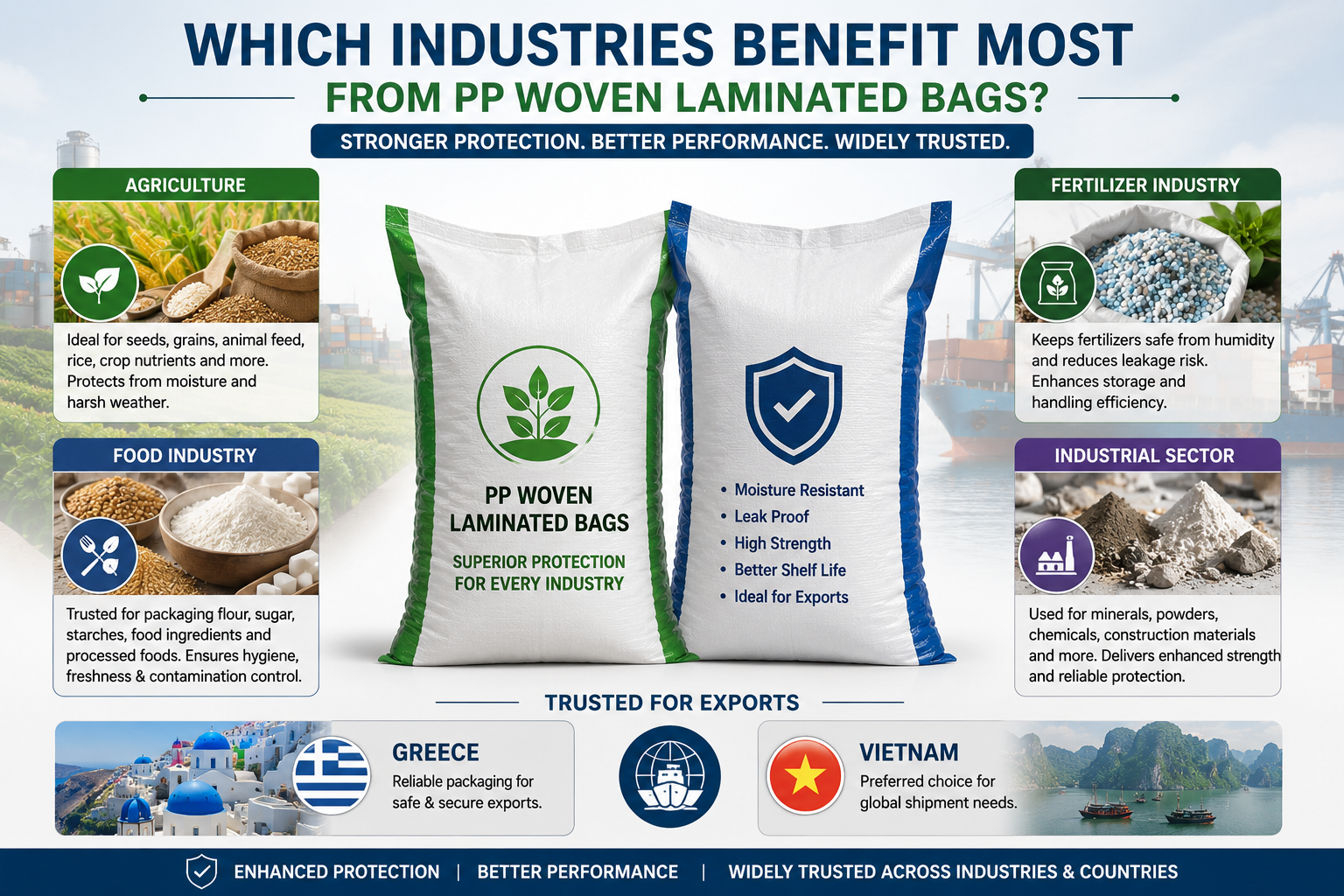
While both packaging options have their place in the market, certain industries consistently favour laminated solutions because of the additional protection they provide.
The agricultural sector is one of the largest users of agricultural packaging woven bags. Products such as seeds, animal feed, rice, grains, and crop nutrients are often exposed to changing environmental conditions during transportation and storage. For these applications, moisture control can be critical to preserving product quality.
Food manufacturers also rely heavily on food grade laminated pp bags when packaging flour, sugar, starches, ingredients, and processed food products. Product contamination, moisture exposure, and packaging integrity are major concerns in food supply chains, making laminated packaging an attractive option.
The fertiliser industry presents another strong use case. Fertilizer packaging laminated bags help protect products from humidity while reducing leakage risks. Similarly, industrial laminated pp sacks are frequently used for minerals, powders, chemicals, and construction materials that require enhanced packaging performance.
Across Greece and Vietnam, businesses involved in export operations often prioritise packaging reliability because transportation conditions can vary significantly from one destination to another.
When Are Non-Laminated Bags the Better Choice?
Although laminated packaging offers many advantages, non-laminated bags should not be overlooked.
Some products require breathability rather than moisture protection. Agricultural commodities such as certain grains, fresh produce, or products requiring airflow may perform better in non-laminated packaging.
Non-laminated bags may also be preferred when packaging costs need to be minimised and environmental conditions are relatively controlled. For domestic transportation and short-term storage applications, non-laminated options can often provide sufficient performance.
The most effective packaging strategy is not about choosing the most advanced option every time. It is about selecting the packaging solution that best matches the product and supply chain requirements.
Cost vs Long-Term Value: Looking Beyond Price
One of the most common procurement mistakes is focusing exclusively on packaging cost.
A non-laminated bag may offer a lower purchase price, but if product losses increase because of moisture exposure, leakage, or packaging failures, the total cost of ownership can quickly rise. This is particularly important for export-oriented businesses where damaged goods may result in replacement costs, delayed deliveries, and customer dissatisfaction.
In our experience, businesses that focus only on packaging price often underestimate the costs associated with damaged goods, replacement shipments, customer complaints, and operational disruptions.
Packaging performance can have a direct impact on profitability, particularly when products move through complex domestic and international supply chains. While the initial cost difference between packaging options may appear significant, the long-term financial impact of packaging failures is often much greater than expected.
When evaluating ROI, buyers should consider:
- Product protection and spoilage prevention
- Transportation durability
- Moisture resistance performance
- Storage reliability
- Product leakage reduction
- Customer satisfaction
- Replacement and claim expenses
These factors often reveal that woven laminated bags for export provide stronger long-term value despite a slightly higher initial investment.
Sustainability Considerations
Sustainability continues to influence purchasing decisions across international markets.
Many buyers assume that additional packaging layers automatically result in lower environmental performance. In reality, the sustainability discussion is far more nuanced.
Longer packaging lifespan, reduced product waste, improved reusability, and better transportation efficiency can all contribute to sustainability goals. Recyclable woven polypropylene packaging remains an important part of modern packaging strategies because reducing product loss often delivers significant environmental benefits.
For guidance on packaging compliance and international trade requirements, businesses can review information available through the Australian Government export compliance resources.
The most sustainable packaging solution is often the one that successfully protects the product while minimising waste throughout the supply chain.
Understanding Quality Standards and Packaging Performance
Packaging performance should always be supported by quality control systems and manufacturing expertise.
Businesses sourcing pp woven laminated bags Greece or pp woven laminated bags Vietnam often request product specifications, quality documentation, and performance data before placing large-volume orders. This is particularly important when products will be transported internationally or stored for extended periods.
Buyers should evaluate:
- Material quality
- Lamination consistency
- Fabric strength
- Dimensional accuracy
- Printing quality
- Product testing procedures
- Traceability systems
Buyers should also confirm whether manufacturers operate under recognised quality management systems such as ISO 9001 and maintain documented quality control procedures throughout production. These systems help support consistency, traceability, and continuous improvement across manufacturing operations.
For food-grade applications, additional hygiene standards, material compliance requirements, and product safety protocols may apply depending on the destination market and end-use application.
Reliable manufacturers understand that packaging quality is not determined by a single feature. It results from consistent manufacturing processes and ongoing quality assurance practices.
In many export supply chains, buyers request product samples, performance reports, and pre-shipment evaluations before placing large-volume orders.
Reviewing physical samples alongside technical specifications, quality documentation, and testing reports can help verify product consistency, assess packaging performance, and reduce procurement risks. This additional level of verification often provides buyers with greater confidence when selecting long-term packaging partners.
Businesses involved in international trade may also benefit from understanding the export packaging standards for PP woven sacks that influence packaging performance and compliance requirements.
Similarly, buyers can strengthen supplier evaluations by reviewing the quality tests for PP woven sacks commonly used to verify strength, durability, and packaging reliability.
How Oberon Polypack Supports Export Packaging Requirements
Quality packaging begins long before the finished bag reaches the customer.
At Oberon Polypack, quality considerations are integrated throughout the manufacturing process. From raw material selection and fabric weaving to lamination, printing, stitching, and final inspection, each stage contributes to overall packaging performance.
Depending on customer requirements and application specifications, pp woven laminated bags may undergo multiple quality checkpoints before dispatch. These evaluations can include fabric GSM verification, dimensional inspections, lamination adhesion testing, seam strength assessments, print quality reviews, and final visual inspections. This systematic approach helps ensure consistent packaging performance, supports customer specifications, and helps maintain packaging reliability across domestic and international supply chains.
In many export projects, customers may also request product samples, technical specifications, or performance documentation before confirming large-volume orders. This additional verification process helps ensure the selected packaging solution aligns with application requirements and transportation conditions.
Our focus is on delivering export quality laminated woven bags that support product protection, transportation reliability, and customer satisfaction across a wide range of industries.
Buyers can review our industrial packaging solutions to better understand the specifications, customisation options, and packaging configurations available for different applications. Whether the requirement involves food grade laminated pp bags, fertilizer packaging laminated bags, or industrial laminated pp sacks, selecting the appropriate packaging structure is essential for long-term performance.
Common Mistakes Buyers Make When Choosing Export Packaging
Many buyers focus heavily on product specifications while overlooking real-world transportation conditions.
One common mistake is selecting packaging without considering humidity levels along the shipping route. Another is assuming that all woven bags offer the same level of moisture protection.
Some buyers also prioritise initial cost savings without evaluating the potential impact of product losses, leakage, or damaged shipments. Others fail to request product samples or performance documentation before committing to large procurement volumes.
Successful packaging decisions are usually based on balancing performance, cost, product requirements, and supply chain conditions rather than relying on a single purchasing factor.
PP Woven Laminated Bags vs Non-Laminated Bags: Which Option Is Better for Export Packaging?
For most export applications involving food products, fertilisers, chemicals, agricultural commodities, and industrial materials, pp woven laminated bags generally provide superior packaging performance. Their enhanced moisture resistance, improved product containment, stronger branding capabilities, and long-term durability make them well suited for international transportation and storage.
Non-laminated bags remain a practical option for specific applications where breathability is required or environmental exposure is limited. However, when product protection and export reliability are priorities, laminated solutions often deliver greater long-term value.
The right packaging decision ultimately depends on product characteristics, destination markets, storage conditions, and transportation requirements. For many exporters in Greece and Vietnam, laminated packaging offers the balance of protection and performance needed to support successful global trade.
Conclusion
Choosing between laminated and non-laminated woven bags involves more than comparing specifications on a product sheet. Factors such as moisture resistance, product protection, leakage control, transportation durability, branding requirements, and long-term ROI all influence packaging performance. While non-laminated bags continue to serve important applications, pp woven laminated bags often provide stronger protection and greater value for export-oriented businesses.
If you are evaluating packaging options for agriculture, food processing, fertilisers, chemicals, or industrial products, Oberon Polypack can help. Explore our complete range of woven packaging solutions and connect with our team to discuss your specific requirements. We help businesses select packaging systems designed to protect products, improve operational efficiency, and support long-term export success.
FAQs
1. What are PP woven laminated bags?
PP woven laminated bags are woven polypropylene bags coated with a laminated layer that improves moisture resistance, reduces product leakage, and enhances packaging durability. They are commonly used for export packaging, food products, fertilisers, chemicals, and industrial materials.
2. Are laminated bags better than non-laminated bags for exports?
For many export applications, laminated bags offer superior protection because they help reduce moisture penetration and improve product containment. This makes them particularly useful for products travelling through humid environments or long international supply chains.
3. Which industries commonly use laminated polypropylene sacks?
Industries such as agriculture, food processing, fertiliser manufacturing, chemical production, construction materials, and industrial manufacturing frequently use laminated polypropylene sacks because of their protective properties and durability.
4. Are PP woven laminated bags recyclable?
Many woven polypropylene packaging products can be recycled through appropriate recycling systems. Businesses should consult local recycling guidelines and packaging regulations when evaluating disposal and sustainability practices.
5. How do I choose the right laminated woven bag supplier?
When selecting a supplier, buyers should evaluate manufacturing capabilities, quality control systems, product testing procedures, customisation options, export experience, and the ability to provide documentation supporting packaging performance and compliance requirements.